

Hereward the Wake
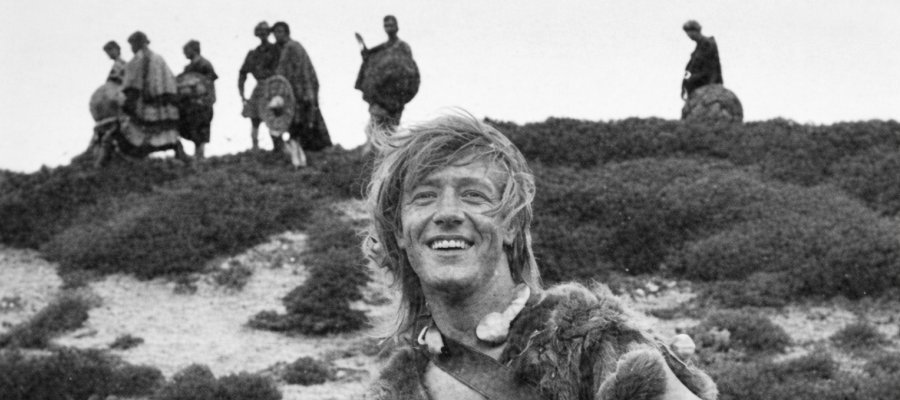
1965 United KingdomThe Last of the English—that was the proud title and epitaph earned by Hereward the Wake: Anglo-Norse nobleman, outlawed son of the legendary Lady Godiva, roving adventurer and berserker, and leader of a sustained and gallant resistance to the Duke of Normandy. The best account of Hereward Leofricsson’s turbulent life was written by the Rev. Charles Kingsley, and it was this vivid, sweeping narrative that formed the basis of the BBC television series which debuted in September 1965.
Dramatised by Anthony Steven, who the previous year had adapted The Count of Monte Cristo, the story unfolded across sixteen weekly episodes—the longest classic serial the BBC had mounted at that time. It makes the loss of the series all the more acute that not a single episode survives in the archives, leaving modern audiences dependent on written accounts to piece together its impact.
What emerges from those contemporary reports is a production of remarkable energy and confidence. For its opening episode, critic Marjorie Norris was full of enthusiasm, praising Alfred Lynch’s performance in particular. She described his Hereward as “tough and strong,” entirely convincing in both appearance and presence, and credited him with bringing the period to life more effectively than strict historical reconstruction ever could. Alongside Bryan Pringle as Hereward’s attendant Martin Lightfoot, Lynch carried much of the burden of introducing a complex narrative filled with exposition, and did so with force and clarity. Norris suggested that without their performances, even a writer as experienced as Steven might have struggled to weave together the many narrative threads.
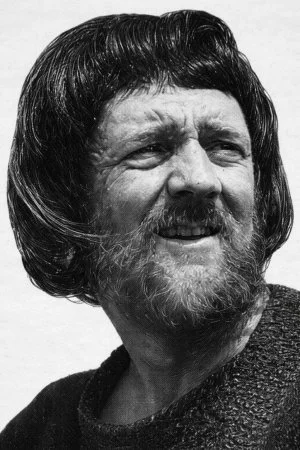
The supporting cast also received generous praise. Dorothy Reynolds as Lady Godiva and David Swift as Herluin were singled out, as were Peter Arne (Earl Harold), John Wentworth (Prior Brand), and Tony Steedman (Earl Leofric). Norris drew particular attention to the dialogue, noting its strength and literate quality at a time when a growing emphasis on realism had often come at the expense of such richness. She concluded that director Peter Hammond and producer Campbell Logan had delivered another well-deserved success following their efforts on Monte Cristo.
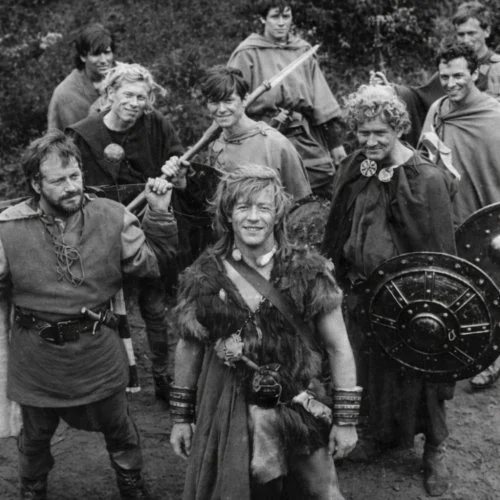
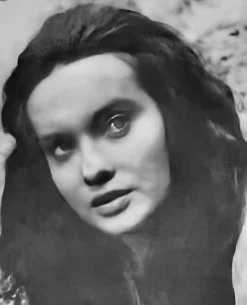
Subsequent reviews only deepen the sense of loss. By the third episode, the series was being commended for its sheer spectacle and excitement. It was described as essential viewing for anyone who enjoyed vigorous swordplay, with weapons “almost the size of the one wielding it.” Lynch’s performance remained a focal point, described as thrilling, while Pringle continued to impress in the role of Martin. The episode titled The Brain Biter—named after an enormous sword—featured Archie Duncan and Nicola Pagett, the latter noted for her striking presence as Princess Anja. William Hobbs not only appeared as Sir Frotho but also arranged the combat sequences, which reportedly involved axes, spears, swords, and even a formidable hook weapon, suggesting a production that embraced physical drama on an ambitious scale.
The story itself, rooted in Kingsley’s 1865 novel, carries the hallmarks of Victorian historical romance: larger-than-life heroism, sweeping adventure, and a strong moral undercurrent. Although the book did not achieve the curious distinction of lending its name to a seaside town, as Kingsley’s Westward Ho! did, it enjoyed immediate popularity for its saga-like qualities. Beneath the action, however, lies a current of social awareness, with sympathy for oppressed communities and resistance to foreign domination woven into the narrative.
As the tale begins, Hereward is far from a polished hero. He is a reckless and undisciplined young man, a source of frustration to his stern father, and even more so to his devout mother. England is still under the rule of the last of the Saxon Kings, Edward the Confessor (played in the series by George Howe), but Norman influence is already taking hold, particularly within the Church, and Edward favours William of Normandy (John Carson) as his successor. A clash with a Norman cleric—provoked by Hereward and his drunken housecarls (attendants or servants)—leads to his outlawing. Declared “Wolf’s Head,” he is cast out, and his long period of exile begins.
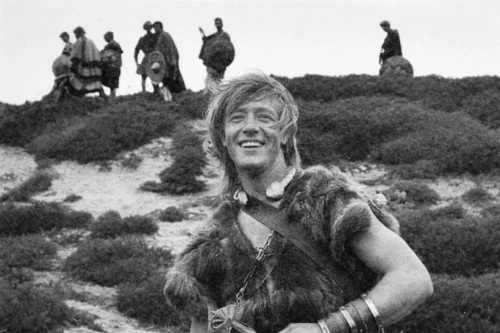
Legend places him abroad at eighteen, and by the time of the Norman Conquest he is still in Europe, working as a mercenary for Baldwin V and taking part in tournaments in Cambrai. His return to England in 1067 is marked by personal tragedy: his family lands seized, his brother murdered and displayed as a warning. His retaliation is swift and brutal, reportedly killing fifteen Normans with the help of a single ally. From there he gathers followers, seeks knighthood from his uncle at Peterborough Abbey, and continues his resistance, moving between England and Flanders as circumstances demand.
While Hereward’s existence is not in doubt, the details of his life are likely embellished, with some stories bordering on myth. Indeed, elements of his legend may have fed into or influenced later tales of Robin Hood. For centuries he remained a relatively minor historical figure, but the Victorian revival of interest in Anglo-Saxon identity elevated him to the status of a national hero, largely through Kingsley’s novel.
All of this makes the BBC adaptation seem, from the surviving evidence, like a production of rare ambition and vitality—one that combined muscular performances, rich dialogue, and dynamic action with a story that resonated both as myth and as cultural expression. That it can no longer be seen only heightens its reputation, leaving behind the outline of what must have been a striking and memorable achievement in 1960s television drama.
Seen this show? How do you rate it?
Seen this show? How do you rate it?
Share on...
Published on March 28th, 2026. Written by Laurence Marcus for Television Heaven.