

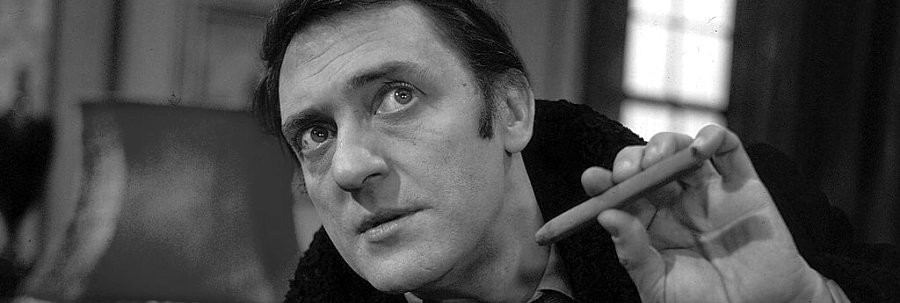
Mr Aitch
1967 United KingdomStarring vehicle for Harry H. Corbett in an attempt to break away from his most renowned role as Harold Steptoe. With scripts by Dick Clement and Ian La Frenais and Ray Galton and Alan Simpson, amongst others, and starring one of Britain's best loved actors, this series had the perfect pedigree for success. It lasted only one series. "Mr. Aitch is really an extension of part of me." Corbett wrote in a 1967 TV Times article. "Although, unlike Mr. Aitch, I wasn't found in a bag in Harrods. This is why Harry Aitch wants status more than money. If status means he's got to have money then he'll go out and get the money. Any way that's practically legal. But he spends most of the time conning himself...
"He is a "manufactured" man. He has no real background. He would like one, but he hasn't got it. Therefore he is behoven only to himself and his ego. But he's never a moron and the only way he's a fool is to himself. He doesn't drop his 'h's,' does our Mr. Aitch. He's far too well educated. The rest of the world is only there to dance attendance to him, as long as he can con them into paying the piper to play the tune. For instance, there was a time-and there still is in most people's morality-where a debt incurred would have to be repaid. Mr. Aitch doesn't like to pay his debts. Not because he's bad and nasty. The thing that caused the debt is gone and finished and not worth the bother. It's much easier to go on from where you are than it is to go back to a fresh beginning.
"With Mr. Aitch I feel I've reproduced a character which has been boiling up in my mind for a long time now. Most of my life I have been lucky. I've not always had the money, but I have always been able to act out any part I want to play, whether it's professional on stage or before a real camera; or what passes for real life. And this is probably where Mr. Aitch and Harry H. Corbett come closest together: we are both dedicated to slaving ourselves to death-just so we can be lazy..."
The series also starred Norman Chappell as Mr. Aitch's chauffeur, Albie, and Gordon Gostelow as 'Leftie' was the only other regular cast member. Guest stars included Rita Webb, Bernard Cribbins and John Junkin (who also wrote one episode). Barry Cryer did the studio warm-up act for the live audience but it seemed that no amount of warming was enough for the TV audience who failed to tune in regularly. Three years later Harry H. Corbett would return to Steptoe and Son and help create some of British television's most enduring comedy half hours.
Seen this show? How do you rate it?
Seen this show? How do you rate it?
Share on...
Published on January 8th, 2019. Written by Laurence Marcus (19 April 2008) for Television Heaven.