

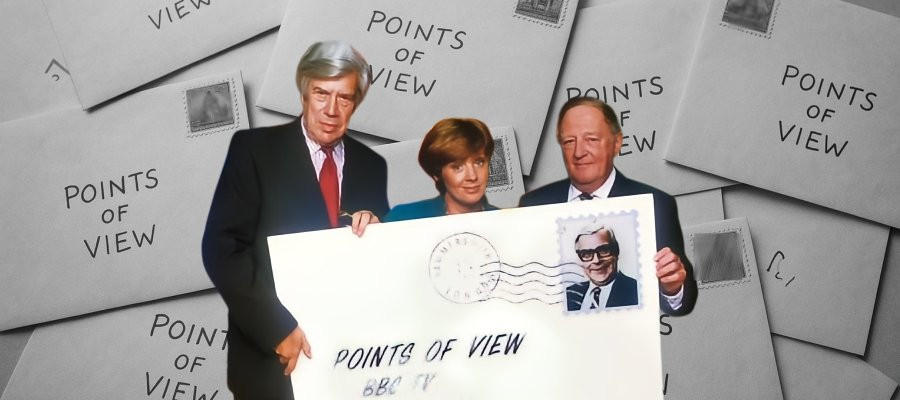
Points of View
1961 United KingdomBefore social media gave every man, woman, child, and bored houseplant the ability to unleash their opinions directly into the public ether—before you could tweet outrage about a misplaced apostrophe in Bake Off—there was Points of View: the BBC’s genteel, lightly passive-aggressive, impeccably enunciated venting machine.
Launched in 1961, Points of View began life as a modest five-minute “filler,” the TV equivalent of a biscuit you find in your coat pocket—unexpected, slightly crumbly, and strangely satisfying. Robert Robinson was the first brave soul to read aloud the nation’s grievances, which ranged from the earnest to the “Did someone actually write this?” variety. Soon enough, what began as a gap-plugger became the proud home of the great British tradition: complaining politely but very firmly.
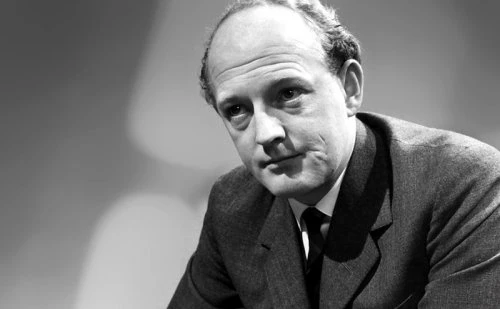
By the mid-60s, the show had already spawned Junior Points of View, assuring children that they, too, could criticise adults’ work with all the confidence of someone who still needed help tying their shoes. After a brief disappearance in the early ’70s—presumably while the nation cooled down over a particularly heated letter about the weather map—the show triumphantly returned in 1979, now hosted by Barry Took and brimming with the sort of dry humour that could evaporate a cup of tea at twenty paces.
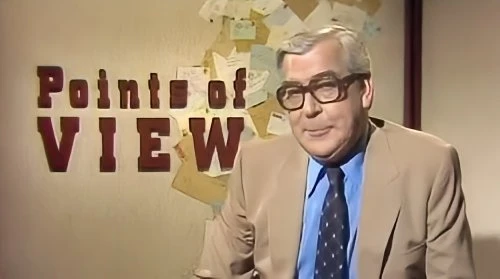
From there, it became a revolving door of beloved presenters (in no particular order): Anne Robinson (gloriously sharp), Des Lynam (charm personified), and Terry Wogan, who could read out a letter about a pigeon as though it were Shakespeare. Eventually Jeremy Vine took over until the show entered its narrator era, because nothing says “modernisation” like removing the face everyone’s shouting at.
Through it all, the British public kept writing. And writing. And writing. The show became a sanctuary for the nation’s great letter-writing archetypes:
“Disgusted of Tunbridge Wells”, who never once failed to be disgusted
“Upset of Leyton”, who was always upset, though only mildly
And later, a new breed: people with email, all of whom believed their message would arrive with the same gravitas as a parchment letter delivered by a herald.
Victoria Wood once said that while Russians respond to outrage with revolution, Britons respond with a strongly worded letter to Points of View. And if you’ve ever heard a viewer begin their message with “Why, oh why, oh why…” you’ll know she was not exaggerating.
The show was even brave enough to ask the really burning questions:
Why are there not more disabled people on TV?
To pleas for reshowings:
Could the BBC please repeat that clip of Vera Lynn for the seventeenth time?
And crucially: Why has someone moved Antiques Roadshow to a different time, causing me to miss the bit about the pewter tankard?
Critics occasionally accused Points of View of being a thinly disguised BBC self-congratulation session—something gleefully mocked by Monty Python and Not the Nine O'Clock News. The latter including a Points of View sketch where one letter stated: “I think the licence fee is far too low. I would willingly sell my house and all its contents to help the BBC.” A sentiment no doubt shared by no viewers whatsoever! And yet, it persisted, evolving gently with the times.
And for all the ribbing, the impact was real. It was the first BBC TV programme to accept emails (in 1994!), thanks to a producer who apparently had the only internet connection in Television Centre—effectively making Points of View the BBC’s original influencer.
Over the years, the programme changed theme tunes more often than some people change their smoke alarm batteries. The show’s original theme was the opening 13 seconds of Kid Ory’s jaunty trad-jazz number “Yaaka Hula Hickey Dula,” as performed by the Dutch Swing College Band—a tune guaranteed to put a spring in the step of even the most irate letter-writer. When Points of View resurfaced in 1979, it debuted with a new theme, the enigmatically titled “Northern Soul,” before switching in 1982 to the Beatles’ “When I’m Sixty-Four.” The choice inspired by Paul McCartney’s lyric; “Send me a postcard, drop me a line, stating point of view,” on the Sgt. Pepper album, which can only mean Macca was an avid viewer—or perhaps he was simply reacting to John Lennon’s nod to Meet the Wife in “Good Morning, Good Morning.”
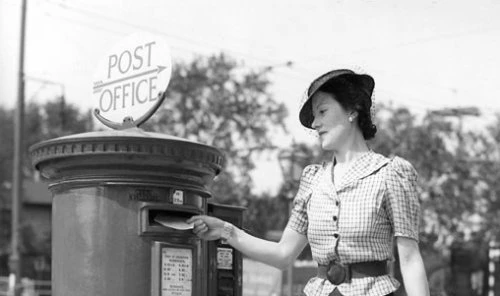
Now, in the age where public opinion flows like a burst hydrant across TikTok, Reddit, and whatever platform was invented last Thursday, Points of View stands as a charming relic of a bygone era: a time when people took the effort to craft proper sentences, find an envelope, locate a stamp, and exercise their right—nay, their duty—to gently admonish the BBC for putting Doctor Who on too late.
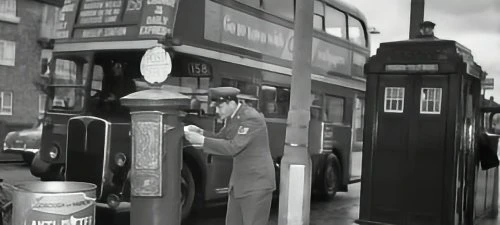
And perhaps that’s why the show endures. Because while social media may allow us to shout into the void, Points of View allowed us to complain with dignity, decorum, and all the glorious British understatement of someone who is absolutely furious but will still offer you a cup of tea.
Why, oh why, oh why would we ever want it any other way?
Seen this show? How do you rate it?
Seen this show? How do you rate it?
Share on...
Published on December 10th, 2025. Written by Laurence Marcus for Television Heaven.