

Strangers and Brothers
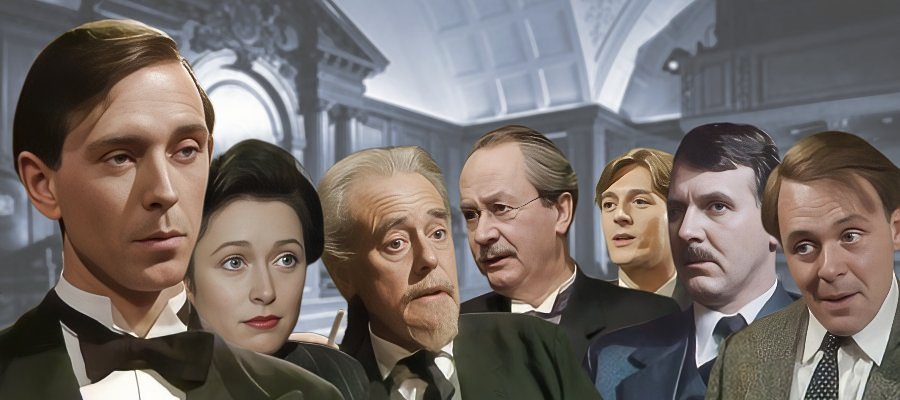
1984 United KingdomWatching Strangers and Brothers feels a bit like being invited into a long, quiet conversation about power, ambition, and conscience in twentieth-century Britain. Based on the sequence of novels by C. P. Snow and adapted by Julian Bond for BBC2 in 1984, the 13-part series traces nearly four decades in the life of Lewis Eliot, played with measured intelligence by Shaughan Seymour (Drummonds). Rather than relying on spectacle, it unfolds through ideas, personalities, and the subtle manoeuvring that takes place in institutions where influence is often exercised behind closed doors.
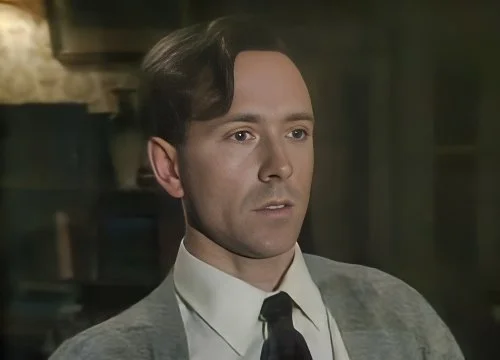
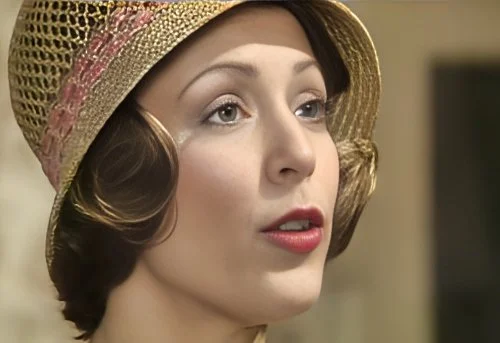
The story begins in the late 1920s with Eliot as a young barrister whose career seems set on a dazzling path. Yet his life quickly becomes complicated by his attachment to the mercurial Sheila Knight (played by Sheila Ruskin - Doctors). Their relationship introduces one of the drama’s recurring tensions: Eliot is disciplined and analytical in professional life but far less controlled in matters of the heart. Judith Simons, writing in the Daily Express after the first episode, neatly captured this contrast when she described Eliot as almost emotionally parched in public yet deeply vulnerable in private. Ruskin gives Sheila an elusive quality that helps explain why Eliot remains devoted even when the warning signs are obvious.
As the series moves into the 1930s, Eliot drifts away from the bar and into the world of Cambridge academia. Here the drama finds one of its richest settings: the cloistered politics of a college modelled closely on Christ’s. What might appear to outsiders as a quiet scholarly environment is revealed to be a miniature arena of rivalry, loyalty and intrigue. Decisions are made collectively, but only after delicate alliances, private resentments and careful persuasion. The election of a new Master after Vernon Royce’s decline becomes a fascinating study in institutional psychology, with factions forming around the humane but uninspiring Paul Jago (John Carson – Dombey and Son) and the formidable scientist Thomas Crawford (Clifford Rose - Callan).
These college episodes also introduce Roy Calvert, played with restless energy by Nigel Havers (Don't Wait Up). Brilliant but unpredictable, Calvert embodies the sort of gifted outsider who both fascinates and unsettles the establishment. His friendships and controversies ripple through Eliot’s life long after their Cambridge days. Meanwhile a separate thread involving the March family and an old financial scandal shows how political agitation and private secrets can suddenly resurface, linking personal morality with public consequence.
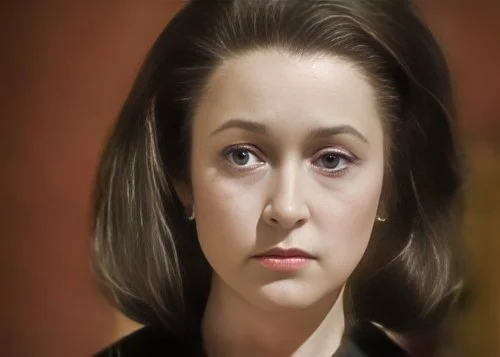
By the outbreak of the Second World War, Eliot has left academic life and entered government service. The story widens from college common rooms to Whitehall offices and even pre-war Berlin, where old friendships take on a more troubling dimension. Eliot’s wartime work recruiting scientists for atomic research reflects the series’ interest in the mechanics of power: the quiet administrative decisions that shape vast historical outcomes. Around this time he begins an affair with the lively Margaret Davidson (Cherie Lunghi – The Manageress), whose presence introduces warmth and spontaneity into Eliot’s otherwise carefully ordered life.
The post-war episodes shift again, this time toward politics. Eliot becomes involved with the ambitious Conservative MP Roger Quaife, played by Anthony Hopkins in one of the drama’s most compelling performances. Their campaign for nuclear disarmament unfolds against the shifting tensions of the early Cold War, only to be derailed by scandal and the turbulence surrounding the Suez Crisis. Through these events the series keeps returning to the question that runs through Snow’s novels: how does a decent person navigate institutions built on compromise and ambition?
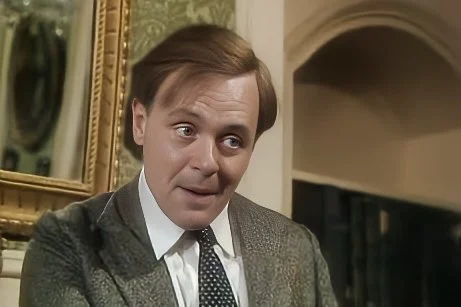
What makes Strangers and Brothers particularly engaging is its faith in dialogue and character. The drama assumes viewers will enjoy listening to intelligent, articulate people arguing about principle, reputation, and responsibility. The ensemble cast handles this beautifully. Alongside Seymour, performers such as Peter Sallis, Edward Hardwicke, Tom Wilkinson, Joan Greenwood and Elizabeth Spriggs bring a sharp sense of personality to roles that could easily have felt purely theoretical.
Kay Gardella of the New York Daily News praised the series for exactly these qualities—its intelligent writing, serious storytelling and willingness to examine privilege and moral responsibility. That assessment still feels accurate. The show is less concerned with recreating everyday realism than with exploring how Britain’s governing class thought about itself during a period when the country’s global influence was steadily changing.
By the final episode, set in 1964, Eliot has stepped away from Whitehall and found success as a writer, yet the lure of public service returns when a new Labour government offers him a ministerial role. It’s a fitting ending: the character who has spent decades observing power from different vantage points is once again drawn back into its orbit.
In the end, Strangers and Brothers is not a fast-paced drama but a thoughtful one. Its real subject is the quiet tension between individual conscience and institutional loyalty. Through Eliot’s long journey—from provincial beginnings to the inner circles of government—the series paints a reflective portrait of Britain during the mid-twentieth century, a time when the country, like Eliot himself, was trying to reconcile old certainties with a rapidly changing world.
Seen this show? How do you rate it?
Seen this show? How do you rate it?
Share on...
Published on March 8th, 2026. Written by Laurence Marcus for Television Heaven.