
The Incredible Robert Baldick: Never Come Night
1972 United KingdomNever Come Night, the sole surviving pilot for The Incredible Robert Baldick, is one of those tantalising BBC dramas that feels less like a failed experiment and more like a missed opportunity. Broadcast in 1972 under the Drama Playhouse banner, it arrived at a moment when the BBC was actively seeding future series—and often succeeding. That this particular seed failed to grow is surprising, given the pedigree involved and the sheer confidence of its conception.
At its heart is the return of Terry Nation to BBC drama after a six-year absence. Having last worked for the corporation on Doctor Who: The Daleks’ Master Plan in 1965, Nation had since honed his craft on glossy ITV adventure series such as The Avengers, The Saint, The Champions and Department S. Never Come Night feels like the point where those commercial thrills collide with a more eccentric, Gothic sensibility. Nation’s script is steeped in atmosphere and portent, openly embracing the idea that not all evils can be explained by science or logic.
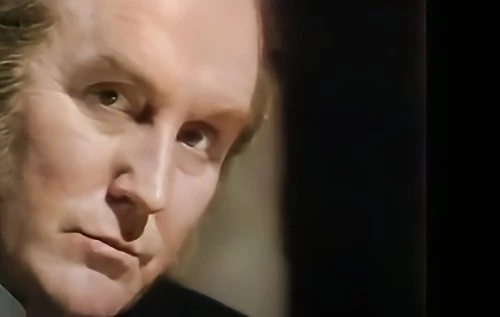
Robert Hardy is superbly cast as Sir Robert James Baldick: wealthy, brilliant, and endlessly curious, with a taste for probing the occult and confronting manifestations of ancient terror. Hardy plays Baldick not as a flamboyant eccentric, but as a man of intelligence and authority whose rational confidence is constantly tested by forces beyond explanation. It’s a measured, compelling performance that suggests a character capable of sustaining a long-running series.
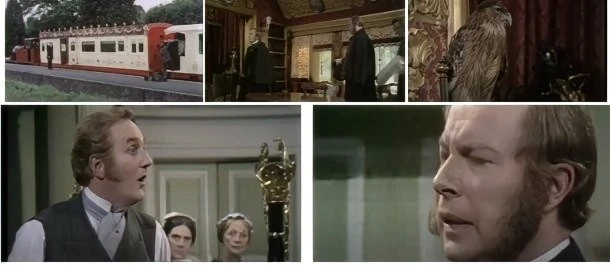
Visually and conceptually, the pilot is wonderfully indulgent. Baldick travels the country in his own private steam locomotive, The Tsar, supposedly built for Tsar Nicholas II and refitted with armour plating, bulletproof glass and a fully equipped laboratory. It’s an audacious piece of Victoriana—part Sherlock Holmes fantasy, part proto-steampunk dream—that instantly sets the programme apart from anything else on British television at the time. Clive James memorably described it as “a kind of take-home Hammer film wrapped in silver foil,” and the comparison is apt. There’s a Hammer-like relish in the shadows, the crumbling ruins, and the sense of ancient malevolence stirring just beyond the edge of the frame.
The story itself revolves around Baldick’s investigation into a supernatural force described as “an accumulation of terror… a fear so old it can kill.” It’s deliberately vague, more interested in mood than mechanics, and the result is an unsettling, slow-burn piece of Victorian Gothic suspense rather than a conventional mystery. Location filming around Shrewsbury and Shropshire—Haughmond Abbey, Longner Hall, Aldenham Park—adds texture and authenticity, while the use of the Severn Valley Railway gives The Tsar a tangible, smoky presence that studio-bound productions often lacked.
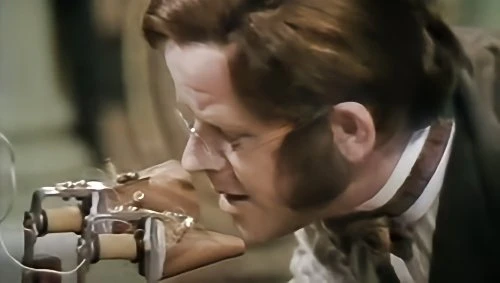
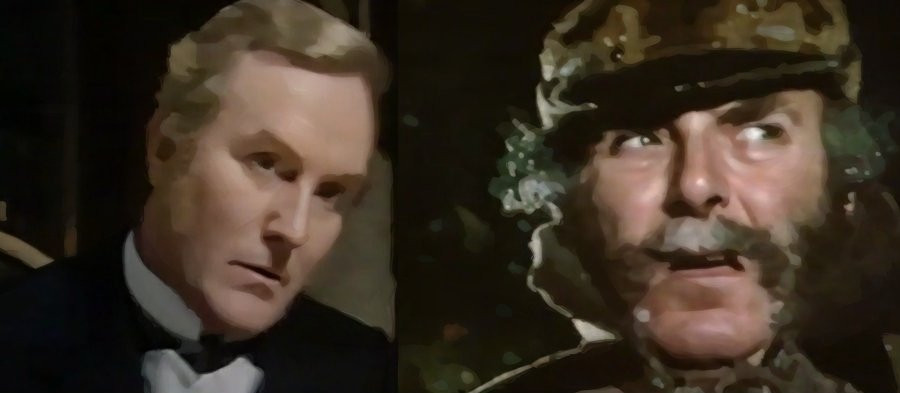
The supporting cast of seasoned professionals included Julian Holloway, John Rhys-Davies, Reginald Marsh and James Cossins. Production-wise, the programme was clearly treated as a serious prospect. Rehearsals and recording were handled with care, and expectations for a full 13-episode series were high. Plans were in place, a production team provisionally assembled, and even merchandise rights discussed. The BBC publicity material confidently pitched Baldick as a hero uniquely positioned to confront “the power of darkness” in a rational age.
Yet timing and circumstance worked against it. Originally scheduled for 6 September 1972, Never Come Night was pulled at the last moment in the aftermath of the Munich massacre, finally airing on 2 October. Despite drawing a respectable 6.6 million viewers and receiving largely positive critical response, the BBC ultimately chose to commission Sutherland’s Law and The Venturers instead. Baldick’s journey ended almost as soon as it began.
Seen today, Never Come Night plays like a prototype for ideas that would flourish decades later—a period precursor to The X-Files, blending investigation with the uncanny, scepticism with belief. Its ambition, style and central performance make it far more than a curiosity. It stands as a reminder of how adventurous BBC drama could be in the early 1970s, and how easily a potentially classic series can slip through the cracks.
The Incredible Robert Baldick never came night again—but for those who discover it now, the darkness it conjures still lingers.
The episode can be viewed on YouTube
Seen this show? How do you rate it?
Seen this show? How do you rate it?
Share on...
Published on January 8th, 2026. Written by Laurence Marcus for Television Heaven.