

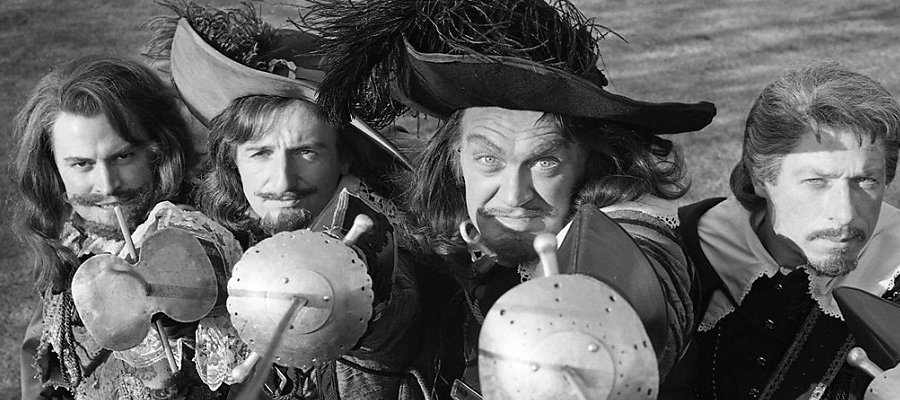
The Further Adventures of the Musketeers
1967 United KingdomBroadcast between May and September 1967, The Further Adventures of the Musketeers reunited viewers with Alexandre Dumas’ heroes for a darker, more morally complex sequel to the previous year’s The Three Musketeers. This 16-episode series was a dramatisation of Dumas’ Twenty Years After, and across the episodes the tone shifts decisively: the romance and youthful swagger of the earlier serial give way to disillusionment, political intrigue and divided loyalties.
The most striking change is the recasting of d’Artagnan. Joss Ackland steps into the role previously played by Jeremy Brett, and the contrast is immediate. Brett’s d’Artagnan burned with eager heroism; Ackland’s arrives already wearied by compromise. Now a leathery professional soldier and lieutenant in the King’s special guard, he has fallen on lean times and yearns for meaningful action. His opening burst of swordplay—impressive though it is—merely subdues a tavern drunk. The glory days seem long past.
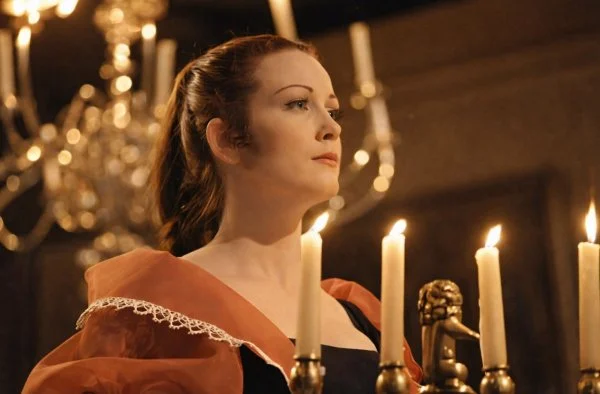
Ackland proves commanding from the outset. His d’Artagnan is controlled, thoughtful and edged with regret. This is a man clinging to honour as much out of habit as belief. When Carole Potter’s Queen Anne summons him, he pledges himself not only to her but to the boy King, Louis XIV (Louis Selwyn)—officially on his throne yet constantly fearful for his life—and to William Dexter’s Cardinal Mazarin, who busily plots and pulls the royal strings. Whether d’Artagnan’s loyalty reflects true belief or a desire to restore his tarnished reputation remains deliberately ambiguous.
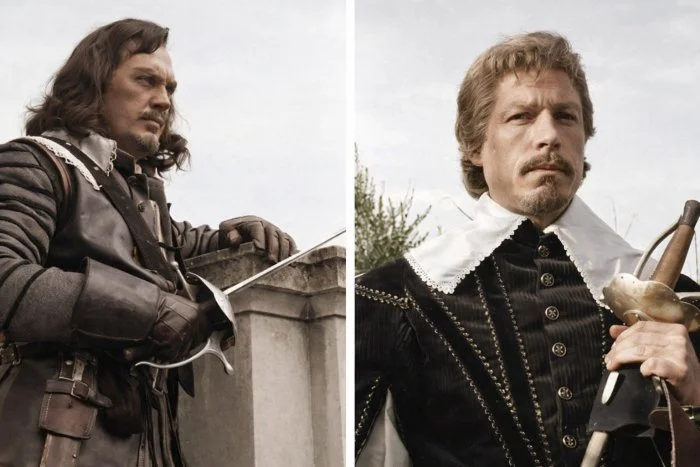
He is the only one of the four still in uniform. The wise, melancholy Athos (Jeremy Young) has retired; Aramis (now played by John Woodvine) has taken holy orders, though his cassock barely conceals a taste for intrigue and romance; and Porthos (Brian Blessed) has married and settled into comfortable country life. Yet peace proves fragile.
d’Artagnan is tasked with escorting the arrested President Broussel (Charles Carson), Mazarin’s arch-enemy. An angry mob intervenes, creating enough chaos for d’Artagnan’s old adversary Rochefort (Edward Brayshaw) to free Broussel, who in turn conspires to release the imprisoned Prince de Beaufort (John Quentin) from his fortress. With France edging towards upheaval, d’Artagnan has little choice but to reunite the Musketeers. Initially, however, he and Porthos find themselves in the opposite camp to Athos and Aramis. Personal loyalties—once expressed so confidently in the cry “All for one, one for all”—are strained almost to breaking point.
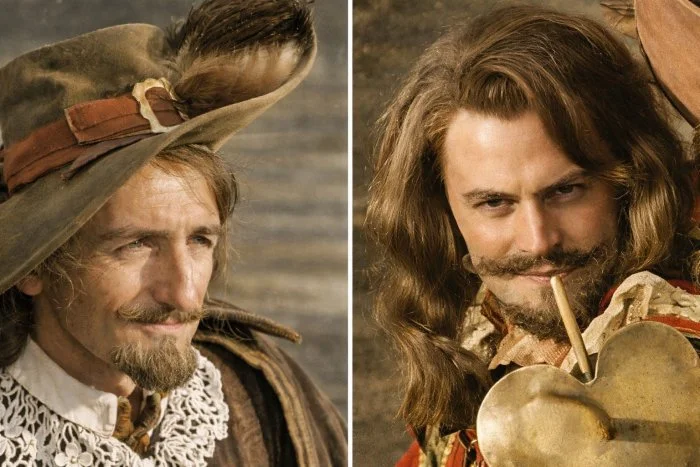
That moral and political fracture lies at the heart of the drama. Athos supports the King but mistrusts Mazarin, believing the Cardinal manipulates both mother and son for his own ends. Aramis throws in his lot with Beaufort’s faction. The divisions give rise to some of the serial’s strongest scenes, particularly between d’Artagnan and Athos, whose bond feels paternal as well as fraternal. Young’s performance is compelling throughout, especially when Athos’ rigid sense of justice collides with d’Artagnan’s hard-earned pragmatism.
Blessed’s Porthos brings vigour and humour, yet there is pathos too in his restless dissatisfaction with rural respectability. The supporting cast is a roll call of quality: Michael Gothard’s Mordaunt is chillingly vindictive, Geoffrey Palmer makes a mark even though he only appears briefly as Oliver Cromwell, and David Garth lends King Charles I a distant, haunted dignity.
The English-set episodes may occasionally soften the tension, but the execution of Charles is staged with stark power. Athos, beneath the scaffold and striving desperately to avert the inevitable, embodies tragic futility as the axe falls. It is one of the production’s most affecting passages.
Visually, the serial is ambitious. There is generous location filming at sites such as Bodiam Castle and the Old Royal Naval College, lending scale and authenticity. The prince’s escape—abseiling from his prison ramparts—is a memorable set-piece, while Stuart Walker’s studio recreation of Notre Dame Cathedral is particularly striking in its architectural detail.
Christopher Barry and Hugh David share the directorial duties, maintaining narrative momentum across interlocking plotlines, while Alexander Barron’s adaptation balances spectacle with introspection. Swords flash, flagons fly, and every episode quivers with suspense and hot-blooded action.
If The Three Musketeers celebrated youthful idealism, The Further Adventures of the Musketeers explores what survives when youth has faded and certainty falters. It trades romance for realism and unity for division, offering a richer, more reflective exploration of Dumas’ enduring heroes.
Seen this show? How do you rate it?
Seen this show? How do you rate it?
Share on...
Published on March 3rd, 2026. Written by Laurence Marcus for Television Heaven.