

The Mallens
1979 United KingdomThere’s something rather bracing about returning to The Mallens, a late-1970s television adaptation that doesn’t so much ease you into its world as drag you through the mud, the scandal and the sheer inevitability of human frailty. Based on Catherine Cookson’s sequence of novels—The Mallen Streak, The Mallen Girls, The Mallen Secret, and The Mallen Curse—this thirteen-part Granada Television production, first broadcast over two series between June 1979 and July 1980, is unapologetically melodramatic, frequently uncomfortable, and, at its best, completely absorbing.
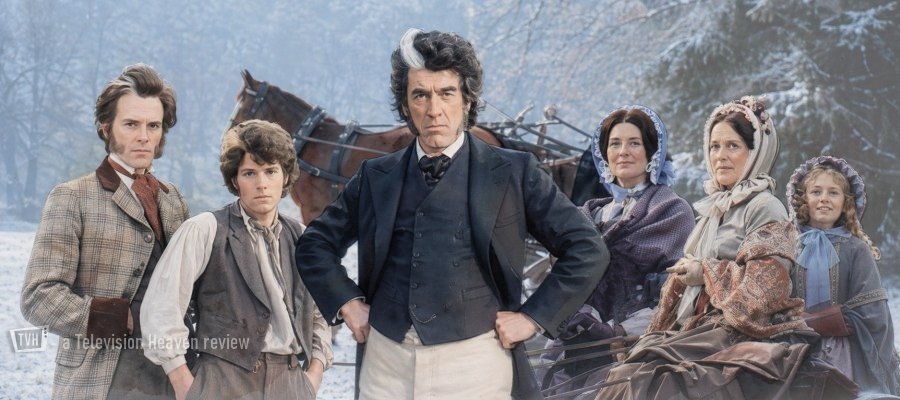
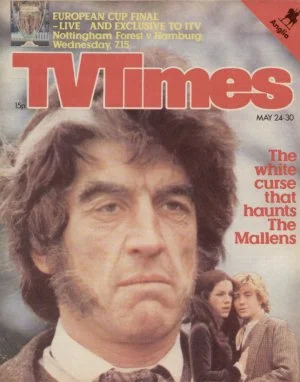
At the heart of it all is Thomas Mallen, a Northumberland squire who manages to be both magnetic and monstrous. From the outset, he dominates the story with a kind of grim inevitability. He is marked—literally—by the white streak in his hair, a hereditary trait passed on to the many illegitimate children he fathers, and figuratively by a moral corruption that poisons everyone around him. John Hallam plays him with a weight and authority that make it easy to forget he was relatively young at the time. There’s a heaviness to his performance, a sense that this is a man shaped by entitlement and appetite, who has never truly been challenged until the world begins, slowly and then all at once, to collapse around him.
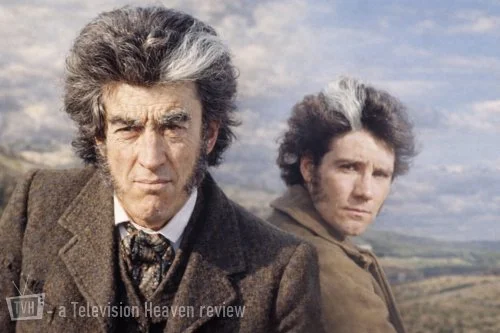
The premise alone is the sort of thing that could tip into absurdity in less capable hands: a landed patriarch whose genetic mark becomes a symbol of inherited doom, whose children—many conceived through exploitation or outright violence—go on to lead tragic lives of their own. Yet Cookson’s storytelling, and the adaptation’s commitment to it, gives the whole affair a kind of relentless momentum. There are betrayals, ruined romances, sudden deaths, and more than a few moments that would seem laughable if they weren’t played with such earnest conviction.
The early episodes are the strongest, largely because they revolve around Thomas Mallen’s fall from power. Watching him attempt to maintain his status as his finances crumble is compelling in itself. His scheme to marry his legitimate son Richard to the wealthy but unloved Fanny Armstrong is as cynical as it is desperate. When that plan implodes—thanks to a servant’s loose tongue and Richard’s own arrogance—the consequences are swift and brutal. The accidental killing of a bailiff pushes everything over the edge, and suddenly the mighty High Banks Hall is no longer secure. The collapse feels both dramatic and oddly inevitable, as though the seeds were always there.
David Rintoul’s Richard is perhaps a touch overplayed in these early scenes. There’s a bit too much strutting, too much visible effort in portraying the arrogant country gentleman. But even that excess fits the tone of the piece. This is not a subtle drama; it’s one that thrives on heightened emotion and big gestures. When it works, it’s gripping. When it doesn’t, it teeters on the edge of parody—but rarely quite falls over.
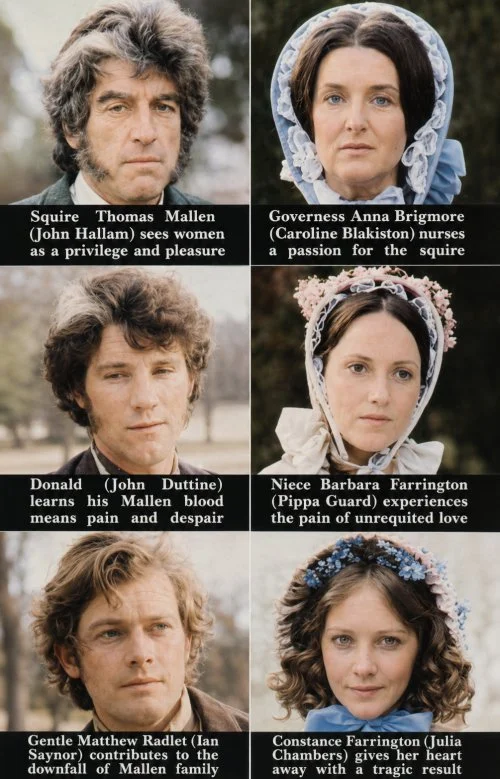
Once Thomas is reduced to living in a cottage with his nieces, Barbara and Constance, and their governess Anna Brigmore, the story shifts into something more intimate, though no less turbulent. The arrival of his illegitimate sons, Donald and Matthew Radlet, complicates matters further. These relationships—half-siblings entangled with cousins, love triangles built on deception and desperation—are the lifeblood of the series.
Donald, in particular, is a fascinating creation. As played by John Duttine, he carries both charm and a faintly unsettling edge. He is capable of affection, but also of manipulation, and his shifting loyalties keep you guessing. His pursuit of Constance, even as he courts Barbara, sets off a chain of emotional wreckage that defines much of the narrative. Matthew, by contrast, is quieter, more fragile, burdened by illness and a sense of resignation. The dynamic between the two brothers—one assertive and opportunistic, the other hesitant and doomed—adds a layer of tragedy that runs through the entire saga.
What Cookson does, and what the series captures rather well, is the sense that these characters are trapped by forces beyond their control—social expectations, inherited traits, and their own flawed desires. The women, in particular, are written in a way that reflects the constraints of their time. Barbara and Constance are very different in temperament—one more spirited, the other more introspective—but both are ultimately swept along by events they can’t fully command. There’s a recurring frustration in watching them make choices that lead to heartbreak, especially when the alternatives seem so tantalisingly within reach. It becomes a kind of grim parlour game: if only she had chosen differently, if only he had spoken sooner.
The series doesn’t shy away from dark material. In fact, it leans into it with a determination that can be quite shocking, even now. Thomas Mallen’s assault on Barbara, and his subsequent suicide, is one of the most disturbing passages in the story. It’s handled with a degree of restraint, but there’s no softening the impact. The aftermath—Barbara’s pregnancy and death in childbirth—feels like the culmination of everything the series has been building towards: the destructive consequences of power abused and lives constrained.
As the narrative moves into the next generation, the focus shifts to characters like Michael and the younger Barbara. By this point, the tone begins to resemble something closer to a windswept Gothic romance—there are clear echoes of Wuthering Heights in the doomed passions and cyclical tragedies. It’s perhaps less tightly constructed than the earlier episodes, and there are moments where the plotting feels a bit stretched, but by then you’re invested enough to see it through.
Juliet Stevenson, in particular, brings a compelling intensity to the later episodes. There’s a sense of emotional continuity, of wounds carried forward and reopened. The relationships become even more tangled, culminating in yet another ill-fated love affair that ends in literal drowning—a conclusion that feels both melodramatic and oddly fitting.
Caroline Blakiston’s Anna Brigmore is another standout. She’s a character who evolves significantly over the course of the series, moving from governess to mistress of High Banks Hall. There’s a steeliness to her, a pragmatic understanding of how the world works, and yet she’s not immune to the same emotional entanglements that trap everyone else. Anne Reid and June Ritchie also contribute strong performances, grounding some of the more extravagant plot developments with a sense of authenticity.
Visually, the series makes excellent use of its locations. Although set in Northumberland, it was largely filmed in Derbyshire, with Dovedale standing in for the rugged northern landscape. The choice works beautifully. There’s a starkness to the scenery that complements the story’s tone, and the use of places like Ilam Hall for High Banks Hall gives the production a sense of scale. It’s easy to imagine viewers at the time recognising these locations, even as they were transformed by costumes and period detail.
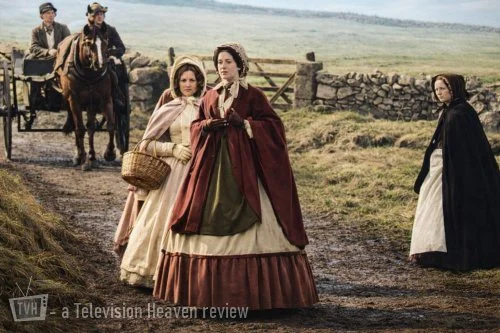
Speaking of which, the production design is quietly impressive. The sight of characters in poke bonnets and stovepipe hats moving through churchyards and country lanes adds to the immersive quality. One can almost feel the chill that required the actors to wear thermal underwear beneath their costumes—a small detail, perhaps, but one that speaks to the practical realities behind the scenes.
Of course, not everything works perfectly. The pacing can be uneven, and there are stretches where the narrative seems to circle rather than advance. Some of the more emotionally charged scenes verge on the overwrought, and there are moments where the dialogue feels a touch too on-the-nose. But these flaws are part of the package. This is a story that wears its heart—and its excesses—on its sleeve.
What’s most striking, in the end, is the sheer emotional force of it all. The Mallens doesn’t aim for subtlety; it aims for impact. It’s a saga of desire, regret, and the inescapable pull of the past. The idea of a “curse” is never just about the white streak in the hair; it’s about the patterns of behaviour that repeat across generations, the mistakes that echo long after the original sin.
It won’t be to everyone’s taste. The tone is too heightened, the subject matter too bleak, for it to be universally appealing. But there’s no denying its power. It draws you in, frustrates you, occasionally shocks you, and ultimately leaves you with a sense of having witnessed something both grand and deeply unsettling.
Catherine Cookson’s work has often been described as potboiler fiction, and there’s some truth in that. The plots are intricate, the emotions intense, and the coincidences sometimes stretch credibility. But there’s also a keen understanding of human nature at work, and a willingness to confront the darker aspects of it. This adaptation captures that spirit remarkably well.
By the time the final tragedies unfold—lovers drowned, families broken, regrets laid bare—you may feel slightly wrung out. But you’ll also likely feel that the journey, however turbulent, was worth taking.
Seen this show? How do you rate it?
Seen this show? How do you rate it?
Share on...
Published on April 28th, 2026. Written by Laurence Marcus for Television Heaven.