

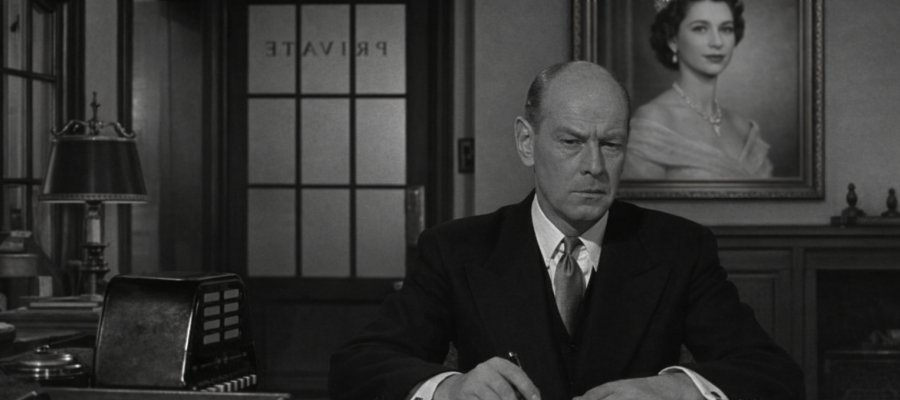
The Men from Room 13
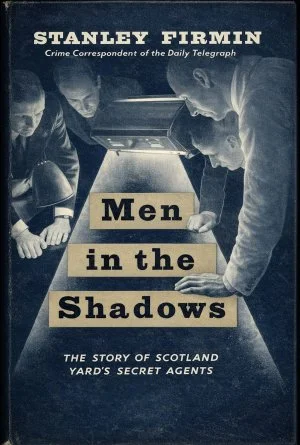
1959 United KingdomWhen The Men from Room 13 arrived on BBC Television in November 1959, it brought with it the tantalising suggestion that somewhere inside Scotland Yard there had once existed a department so secret it was never officially acknowledged. The idea wasn’t entirely invented. The series drew on Men in the Shadows, written by Stanley Firmin in 1953, which described the Yard’s so-called “Ghost Squad” — an undercover unit supposedly created in the uneasy years after the Second World War.
According to Firmin’s account, Britain was facing a formidable crime wave. Informers had dried up or disappeared, and returning criminals were tougher and more organised. The solution, he suggested, was deceptively simple: use fresh faces. Newly recruited officers and veterans returning from the war could move about unrecognised. A carefully chosen group — men and women alike — were assigned to blend into particular areas of London, told what to listen for, what to watch, and how to report back. They were given code-words; once spoken, their calls would be routed to a special Scotland Yard line fitted with a tape recorder running day and night. The entire operation was said to be organised along wartime lines, with knowledge of its workings restricted to just three senior figures, including a superintendent, a chief superintendent (from the Flying Squad), and an assistant commissioner. Whether it truly existed has never been formally admitted, but it makes irresistible drama.
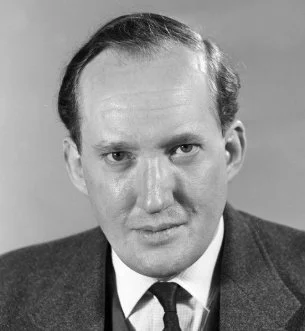
The man who transformed this shadowy material into television was Michael Gilbert — tall, bespectacled, and by profession a London solicitor. Writing was initially a sideline for him; he famously drafted scripts during his morning train journeys from Kent. By the time he created The Men from Room 13, he was already an established crime writer whose career would stretch from the late 1940s to the end of the century, encompassing police procedurals, spy stories, courtroom dramas, classical mysteries and adventure thrillers.
Gilbert admitted he never met Firmin, but he read his book several times and even had access to a film script based on it. Then, characteristically, he put much of it aside. Of the six stories in the first series, only about half retained recognisable traces of Firmin’s material; the rest sprang from his own imagination. Each storyline unfolded over two half-hour episodes, the first typically ending on a crisp cliff-hanger. Viewers would see a criminal scheme taking shape — a robbery, a fraud, some organised wrongdoing — and gradually come to know the gang involved. The twist was always the same delicious question: which one of them was the undercover policeman or policewoman?
Sometimes the disguised officer was revealed early, shifting the suspense onto whether the crooks would grow suspicious. At other times the identity was concealed almost to the end. On occasion, the audience would be encouraged to think they had solved it — only to discover they were wrong. It was a simple device, but remarkably effective, turning passive viewers into armchair detectives.
The steady presence behind these operations came from the men running “Room 13.” In the first series, Superintendent Halcro was played by John Welsh, with Chief Superintendent Maw portrayed by William Fox. They were the only regulars, appearing in every story as the calm, strategic minds directing their unseen operatives across London. Other roles changed from case to case, reinforcing the anthology feel. Guest actors included Jacqueline Hill, Jack May, Geoffrey Keen, Barry Foster, Nanette Newman, Frank Thornton, Frazer Hines and Sam Kydd.
By the second series there were changes in the line-up. Welsh had moved on — notably to appear in The Trials of Oscar Wilde — and Halcro was now played by Brian Wilde, while Kenneth Mackintosh took over as Maw. Publicity for the new run leaned into the mystique. Halcro describes having men and women “all over London, busy keeping their ears open,” regular officers who had never worn uniform and who would quietly return to the Force once they had to give evidence in court. Notably, Gilbert remarked that while the first run drew partly from Firmin’s book, the second series stories were entirely his own creations. Most adventures again ran to two episodes, with the final story extended to three.
Stylistically, the programme occasionally adopted a semi-documentary approach, heightening the sense of authenticity. That choice, combined with the matter-of-fact performances, made the premise feel plausible rather than fantastical. It’s interesting to remember that this was the BBC venturing into territory that would later become strongly associated with ITV crime escapism — several years before Ghost Squad achieved notable popularity or the more lightweight The Man in Room 17 appeared on ITV.
Although successful and highly entertaining, The Men from Room 13 did not enjoy a long lifespan. The rapid expansion of BBC Television’s drama output left little room for its continuation. Yet its impact lingers. The series feels like an early experiment in blending procedural realism with audience participation, inviting viewers not just to watch a case unfold but to test their own instincts against it.
Seen today, it stands as an intriguing slice of late-1950s television: intelligent, tightly structured, and built around a wonderfully unsettling premise — that the most ordinary face in the room might belong to the law.
Seen this show? How do you rate it?
Seen this show? How do you rate it?
Share on...
Published on February 27th, 2026. Written by Laurence Marcus for Television Heaven.