
Terror of the Autons
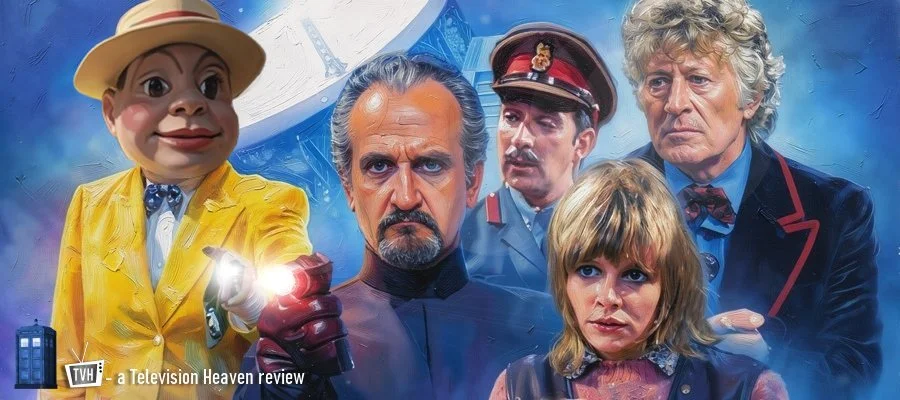
There’s a particular confidence to Terror of the Autons that becomes obvious almost immediately. After the moody experimentation of Jon Pertwee’s first season, this serial arrives knowing exactly what sort of programme Doctor Who now wants to be. It isn’t a hard reset by any means, but it absolutely feels like a fresh beginning — brighter, faster, and far more comfortable with the format that would come to define the early seventies era of the show.
Season seven had often resembled a Quatermass serial with a slightly flamboyant alien at the centre of it. The Earthbound format worked wonderfully, but there was a seriousness to stories like Inferno and The Ambassadors of Death that occasionally bordered on oppressive. Terror of the Autons keeps the same UNIT setup yet softens the edges considerably. The result is a story that feels more accessible without becoming simplistic.
A huge part of that comes down to the arrival of Jo Grant. Replacing Liz Shaw was clearly a deliberate creative decision rather than simply cast turnover. Liz had been unusual for a Doctor Who companion because she was genuinely operating on the Doctor’s intellectual wavelength. Caroline John played her with intelligence and maturity, and the Doctor treated her almost as a colleague rather than an assistant. It made for an interesting dynamic, but one that perhaps limited the show’s ability to explain itself naturally.
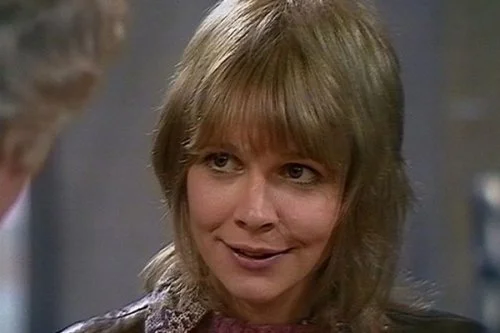
Jo changes the chemistry instantly. Katy Manning bursts into the serial with enormous charm and nervous energy, and while the character is often underestimated — by the Doctor and sometimes by the script itself — Manning makes Jo deeply likeable from the outset. She asks questions, gets things wrong, panics occasionally, and walks into danger with astonishing regularity, yet there’s also bravery and warmth beneath the ditsiness. Importantly, she humanises Pertwee’s Doctor.
Pertwee himself seems more relaxed this season. In his debut year he could occasionally come across as severe, even aloof, particularly towards those around him. Here, although he still has the velvet-jacketed authority and sharp impatience, there’s more humour and affection in the performance. His irritation with Jo never feels cruel; if anything, it resembles a teacher exasperated by an enthusiastic student who keeps knocking over the laboratory equipment.
The serial also introduces one of the programme’s greatest masterstrokes: Roger Delgado’s Master. It is difficult now to appreciate quite how transformative this was for the series. Before this point, recurring villains in Doctor Who were generally monsters rather than personalities. The Daleks returned because they were popular; the Cybermen returned because they were frightening. The Master is something entirely different — a character designed specifically to challenge the Doctor intellectually and emotionally.
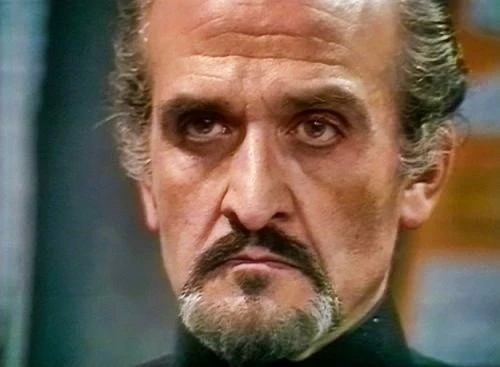
The Sherlock Holmes and Moriarty inspiration is obvious, but Delgado avoids making the Master merely a cackling criminal mastermind. His performance is elegant, witty and oddly courteous. Even when arranging murders or hypnotising innocent people, he behaves with impeccable manners. That contrast with Pertwee’s more forceful Doctor works beautifully. One dominates through authority; the other through charm.
What makes their rivalry especially compelling is the sense of history between them. Even though the audience is meeting the Master for the first time, Pertwee and Delgado play their scenes as though these men know each other intimately. Given that the actors themselves were long-time friends, there’s an ease and spark to their exchanges that elevates every confrontation. You completely believe that these are two Time Lords who have crossed swords for centuries.
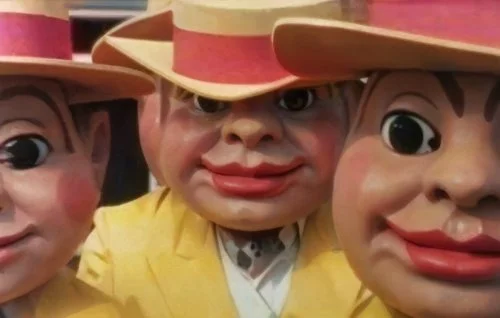
The plot itself is essentially a sequel to Spearhead from Space, bringing back the Nestenes and the Autons, but Robert Holmes cleverly avoids simply repeating the earlier story. Instead of shop-window dummies, everyday plastic objects become lethal. There’s something genuinely inspired about the way ordinary household items are weaponised. Murderous daffodils, killer telephone cords and suffocating plastic chairs all sound faintly ridiculous on paper, yet the serial commits to them completely.
And somehow it works.
Holmes understood that horror often comes from corrupting familiar things. Children watching in 1971 would absolutely have had troll dolls, cheap plastic flowers and novelty toys around the house. The idea that these harmless objects could suddenly turn murderous is deeply unsettling. Even now, some sequences retain an eerie effectiveness.
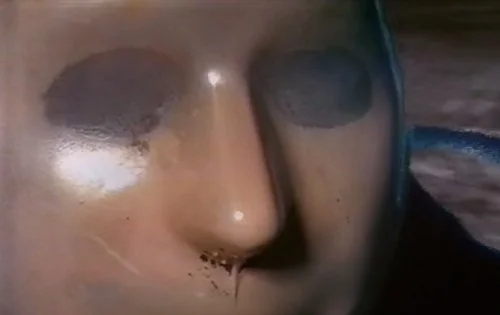
The infamous killer doll scene remains particularly nasty. There’s something primal about tiny humanoid figures coming to life, and the serial milks the concept brilliantly. Likewise, the Auton policemen are extraordinarily effective. Policemen traditionally represented safety and authority, so revealing them as blank-faced plastic monsters was a clever subversion. The quarry sequence where the Doctor realises the officers are imposters remains one of the story’s strongest moments, combining paranoia, action and horror in classic Pertwee-era style.
That action-oriented approach is another aspect that defines this period of the programme. Car chases, fistfights, shootings and military operations occur regularly throughout the story. Pertwee’s Doctor is physically proactive in a way earlier incarnations rarely were. He grapples with Autons, races around in vehicles and charges into danger headfirst. The serial moves quickly, rarely lingering too long in one location before throwing in another attack or cliffhanger.
The introduction of Mike Yates also helps solidify UNIT as a proper ensemble rather than simply the Brigadier plus assorted soldiers. Richard Franklin immediately slots comfortably into the format. Yates is dependable, capable and less sceptical than many military characters in earlier stories. Combined with Benton’s expanded presence (John Levene), UNIT begins to feel like a believable extended organisation with recurring personalities rather than interchangeable officers.
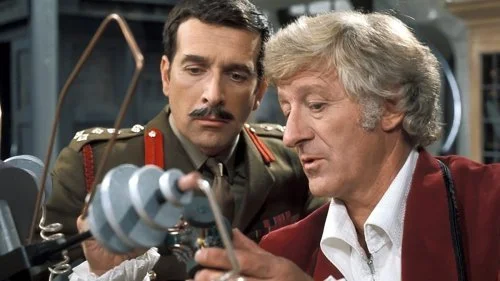
That “family” atmosphere becomes one of the defining strengths of the era. The scenes at UNIT HQ have a warm familiarity to them, even amidst all the death and alien invasion. You enjoy spending time with these characters. The Brigadier in particular is excellent throughout, balancing military decisiveness with weary tolerance of Time Lord chaos. Nicholas Courtney had already mastered the role by this point, and his chemistry with Pertwee is another of the series’ great partnerships.
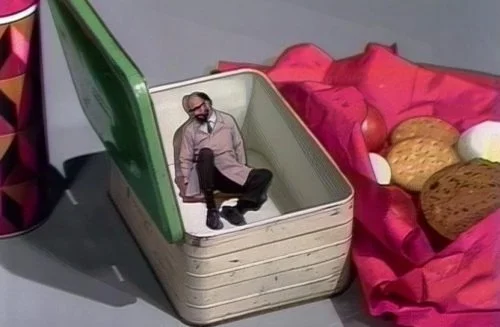
The pacing is impressive too. Every episode contains memorable set-pieces or revelations, and Holmes structures the story intelligently, gradually escalating the threat while deepening the mystery surrounding the Master. The cliffhangers are especially strong. Goodge’s corpse hidden inside the lunchbox is macabre enough, but the sequence with the plastic telephone cord attacking the Doctor is an all-timer.
The production limitations are obvious, naturally. Some of the Auton costumes look cumbersome, the CSO work is ropey in places, and the quarry climax cannot entirely disguise its budgetary constraints. Yet the direction keeps things energetic enough that these shortcomings become part of the charm rather than fatal flaws.
What really carries the story, though, is the dynamic between the Doctor and the Master. Their final confrontation in the radio telescope control room perfectly establishes the pattern the series would follow for years. The Doctor appealing to the Master’s self-interest rather than simply overpowering him is entirely fitting. He understands his enemy too well to think brute force alone will work.
And the ending is superbly cynical. The Master sacrificing Rex Farrel as a decoy demonstrates just how ruthless he truly is. Even cornered, he manipulates everybody around him.
One of the most interesting things about Terror of the Autons is how effortlessly it defines the shape of the Pertwee era moving forward. The recurring UNIT team is now fully established. The Master becomes the Doctor’s ongoing nemesis. Jo’s more emotional, audience-friendly companion role is in place. The balance between science fiction, action, horror and humour finally clicks together.
It is easy to understand why Jon Pertwee regarded it so highly. The serial feels energised by new ideas and confident performances, while still retaining enough menace to stop the lighter tone becoming frivolous. It manages the difficult task of broadening the appeal of the programme without diluting its identity.
More than fifty years later, Terror of the Autons remains one of the defining stories of early seventies Doctor Who. It is creepy, funny, inventive and tremendously entertaining, introducing elements that would shape the series for years afterwards. Most importantly, it captures that uniquely British sort of nightmare where the ordinary world suddenly turns hostile — where telephones strangle people, dolls bare their teeth, and even a daffodil might kill you.
Share on...
Published on May 17th, 2026. Written by Laurence Marcus for Television Heaven.