

The Ambassadors of Death
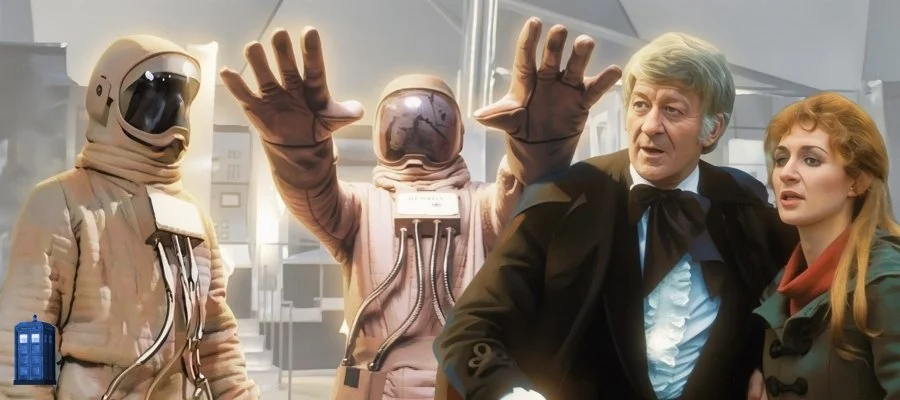
The Ambassadors of Death is one of those Doctor Who stories that feels like it’s constantly at war with itself. On one hand, it’s a grounded, tense sci-fi thriller packed with espionage, moral ambiguity, and a genuinely intriguing premise about first contact gone horribly wrong. On the other, it’s a seven-episode marathon that occasionally forgets how slowly it’s moving. The result is a serial that’s often compelling, sometimes frustrating, and always interesting—even when it’s not entirely successful.
Right from the Doctor’s ominous line—“Somebody’s using these creatures, Brigadier. They’re not free agents”—you can tell this isn’t going to be a straightforward alien invasion story. And that’s one of its greatest strengths. Rather than presenting the extraterrestrials as outright villains, the narrative leans into suspicion, manipulation, and human paranoia. The real danger, as it turns out, isn’t the aliens at all—it’s us.
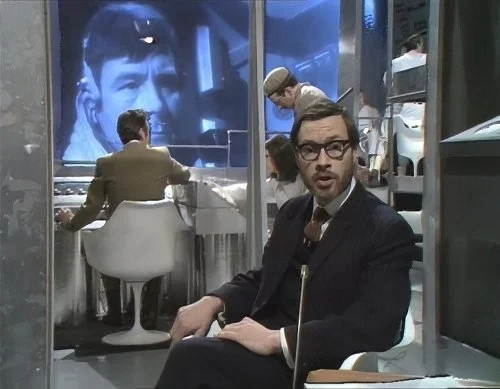
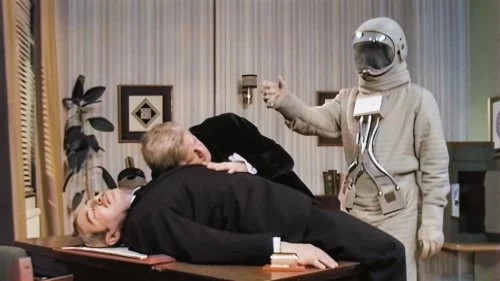
The plot kicks off with a classic space mystery: Mars Probe Seven has gone silent for eight months, and when recovery efforts finally bring something back to Earth, things immediately go sideways. The astronauts are missing, replaced—so the Doctor suspects—by alien beings sealed inside their suits. Meanwhile, UNIT, alongside Ralph Cornish (Ronald Allen)— Professor and Controller, and the government are trying to maintain order, even as the situation becomes increasingly murky.
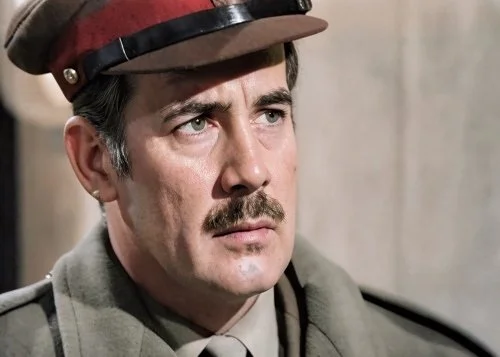
Enter General Carrington (John Abineri), a character who elevates the story far beyond a simple sci-fi romp. Introduced as a figure of authority and reason, he gradually reveals himself to be something far more dangerous: a man driven by trauma, guilt, and a deeply misguided sense of duty. His backstory—having previously encountered the aliens and lost a colleague to their lethal radiation—gives his motivations a tragic weight. He’s not a cackling villain; he genuinely believes he’s protecting humanity. That angle makes his eventual unmasking as the orchestrator of the entire conspiracy all the more compelling.
What’s particularly striking is how the story plays with perception. Carrington manipulates events to make the aliens appear hostile, using them as unwitting weapons to stoke fear and justify aggression. It’s a chillingly relevant idea, even decades later: manufacture a threat, control the narrative, and people will rally behind you. In that sense, The Ambassadors of Death feels less like a space adventure and more like a political thriller with a sci-fi skin.
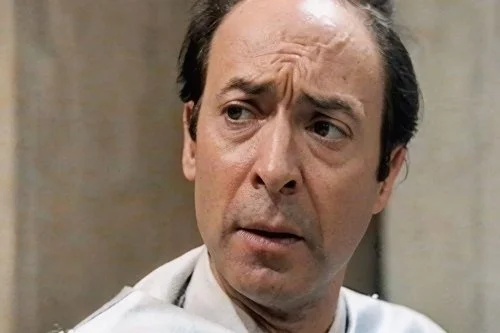
Of course, Carrington doesn’t act alone. Reegan (William Dysart), the story’s resident enforcer, is a standout presence. Played with cold intensity, he’s the kind of villain who doesn’t need grand speeches—his actions speak loudly enough. Whether he’s orchestrating kidnappings or casually committing murder with a radioactive isotope, there’s a ruthless efficiency to him that keeps the tension high. Cyril Shaps’ Lennox, meanwhile, adds a layer of pathos. A disgraced scientist forced into complicity, he’s one of the few characters who seems genuinely conflicted about what’s happening, and his attempt to do the right thing ultimately costs him his life.
Then there’s Liz Shaw, who continues to be one of the most capable companions. As a Cambridge scientist, she’s not just along for the ride—she actively contributes to the story’s resolution. Her kidnapping isn’t just a plot device; it places her in a position where her intelligence and resourcefulness become crucial. She’s able to assist Lennox, think on her feet, and hold her own in a situation that would overwhelm many others. It’s refreshing to see a companion treated as an equal, even if the script occasionally sidelines her during the more action-heavy sequences (although in fairness Caroline John had just discovered she was pregnant).
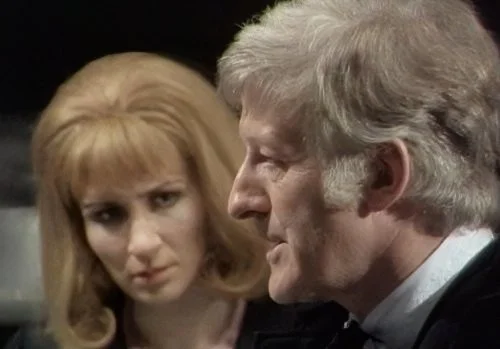
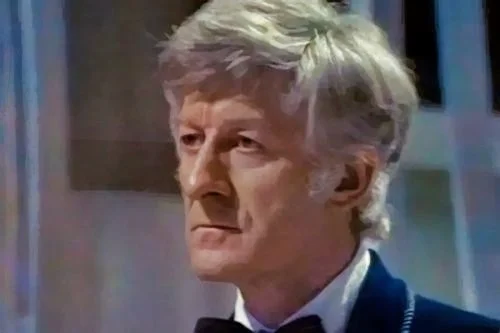
Jon Pertwee as The Doctor is in fine form here. This is the Third Doctor in his early days—still somewhat aloof but already displaying the moral conviction and sharp intellect that defines his era. His decision to pilot the recovery rocket is a great moment, showcasing both his bravery and his willingness to take risks when the situation demands it. The sequence in orbit, where he discovers the truth about the alien ambassadors, is one of the story’s highlights. The reveal that the aliens are peaceful envoys, and that their people are holding the human astronauts as leverage, reframes everything we’ve seen up to that point.
It’s a classic Doctor Who twist: the monsters aren’t monsters at all. They’re victims—of circumstance, of misunderstanding, and of human interference. The Doctor’s promise to return them safely adds a sense of urgency to the final act, as the stakes shift from survival to diplomacy.
But for all its strengths, the story does struggle with pacing. Seven episodes is a long time, and The Ambassadors of Death doesn’t always have enough material to justify that length. There are stretches where the plot seems to tread water, with repeated captures, escapes, and chases that don’t significantly advance the narrative. It’s not that these scenes are poorly done—they’re often quite engaging—but they do contribute to a sense that the story could have been tighter.
This is perhaps a byproduct of its troubled production. Originally credited to David Whitaker, the script underwent multiple drafts before being completed by Malcolm Hulke and Trevor Ray under pressure. You can feel that patchwork quality at times, as if different pieces of the story aren’t always perfectly aligned. Even Whitaker himself reportedly considered it his least favourite work, which says a lot given his contributions to the series.
And yet, despite these issues, there’s a lot to admire. The dialogue often sparkles with a dry, sardonic wit that cuts through the tension. The supporting cast brings a toughness and realism that grounds the more fantastical elements. The UNIT framework continues to provide a solid backbone for the series, blending military procedure with science fiction in a way that feels surprisingly believable.
There are also some fascinating production quirks worth noting. The unusual title sequence—cutting from the logo back to the previous cliffhanger before returning to the credits—adds a slightly disorienting but memorable touch. And the introduction of the now-iconic cliffhanger “sting,” even in its early, slightly awkward form, marks a small but significant moment in the show’s evolution.
Visually, the story has had an interesting journey. While originally recorded in colour, much of it survived only in black-and-white for years, with later restoration efforts piecing together a full-colour version. That history adds an extra layer of appreciation for modern viewers, who can now experience the story closer to its original intent.
It’s also worth mentioning the return of John Levene as Sergeant Benton (previously seen in the The Invasion) as a more regular presence. His promotion and increased involvement help flesh out the UNIT team, giving the Doctor a broader support network and adding to the sense that this is a coordinated effort rather than a one-man show.
In the end, The Ambassadors of Death is a bit of a mixed bag. It’s often cited as the weakest story of Season 7, and it’s not hard to see why. The pacing issues are real, and the narrative occasionally feels stretched thin. But calling it weak doesn’t quite do it justice. It’s ambitious, thought-provoking, and packed with memorable moments and characters.
If you’re willing to settle in for the long haul, there’s a rewarding story here—one that explores fear, manipulation, and the consequences of misunderstanding in a way that still resonates. It may not be perfect, but it’s far from disposable. In fact, its flaws are part of what make it so interesting to revisit.
Because at its core, The Ambassadors of Death isn’t just about aliens or space missions. It’s about how easily we can turn something unknown into something to be feared—and how dangerous that instinct can be when it’s exploited by those in power. And that’s a theme that feels just as relevant now as it did when the story first aired.
Share on...
Published on April 30th, 2026. Written by Laurence Marcus for Television Heaven.