
The Ark in Space
Few stories in the history of Doctor Who announce a new era with the confidence and imagination of 1975’s The Ark in Space. Coming only as Tom Baker’s second story as the Doctor, it feels astonishingly assured, not just in performance but in tone. This is where the gothic horror sensibility associated with producer Philip Hinchcliffe truly begins to take shape, transforming the series from family adventure into something far darker, stranger, and more ambitious.
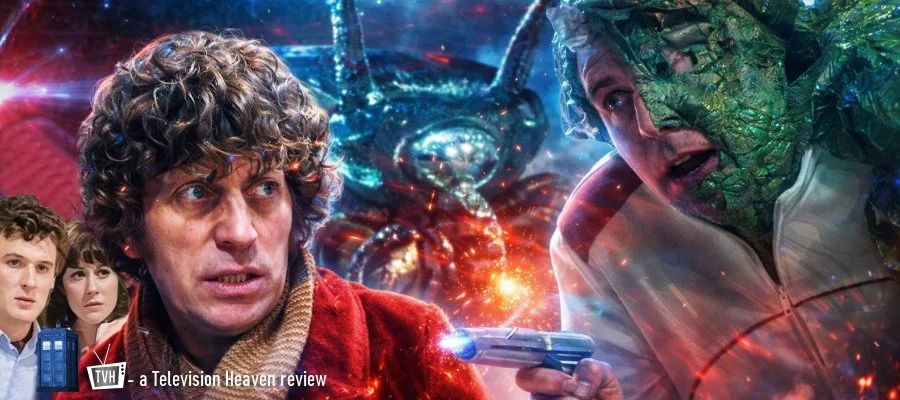
The setup is beautifully economical. The TARDIS arrives aboard Space Station Nerva, a vast ark drifting silently through space, carrying humanity’s survivors in suspended animation while Earth recovers from catastrophe. At first the station appears abandoned, but the serial wastes no time establishing unease. Sarah Jane is accidentally frozen in cryogenic suspension, Harry discovers a grotesque insect corpse, and before long the Doctor realises the station’s inhabitants have overslept by thousands of years because something alien infiltrated the ark long ago.
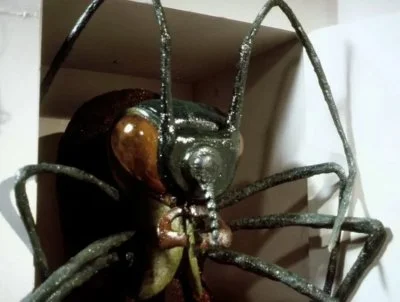
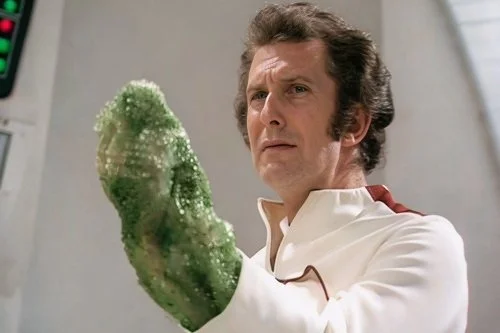
What makes the story so effective is how quickly it pivots from mystery into body horror. The Wirrn themselves may suffer from famously ropey effects — even script editor Robert Holmes reportedly joked that they looked like “a knackered Muppet” — but the serial understands that horror is about implication more than visuals. Noah’s gradual transformation into a Wirrn host remains deeply unsettling because the focus is on the loss of identity rather than monster spectacle. The image of him examining his mutated hand at the end of episode two is still one of classic Doctor Who’s great cliffhangers, openly echoing The Quatermass Experiment and anticipating ideas that would later appear in Alien.
The serial’s influence on Alien has been debated for decades, but the similarities are impossible to ignore: humans trapped in an isolated industrial environment, an insectoid lifeform using bodies as hosts, claustrophobic corridors, and mounting paranoia as the creature spreads unseen through the station. Critics Paul Cornell, Martin Day, and Keith Topping even suggested the story may have directly influenced Ridley Scott’s film, a point later playfully echoed by Steven Moffat when he joked that nobody ever asked Doctor Who for permission to borrow The Ark in Space’s plot.
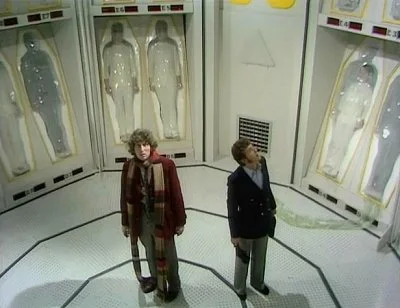
But what elevates the story beyond a well-made horror serial is its humanity. Beneath all the creeping terror and insect transformations is a genuinely optimistic belief in mankind’s resilience. The ark’s sleepers are fragile, frightened, and hopelessly outmatched, yet the Doctor sees greatness in them. Tom Baker delivers that idea magnificently in his famous “indomitable” speech over the sleeping colonists. It’s one of those moments where Doctor Who suddenly becomes more than television. Baker speaks about humanity not as a detached alien observer but almost with reverence, admiring the stubbornness of a species that simply refuses to die. The speech functions as both a mission statement for the Fourth Doctor and a showcase for Baker’s extraordinary voice and presence. You can feel the production team realising they had found something special.
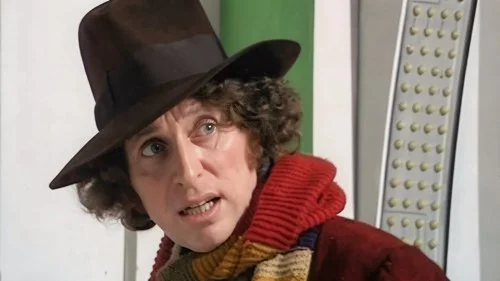
And Baker really is remarkable throughout. It’s easy to forget how early this story arrives in his tenure because he already seems completely formed: wild-eyed, unpredictable, bohemian, but also ancient and deeply compassionate. His chemistry with Elisabeth Sladen and Ian Marter is immediately convincing, creating an excellent (albeit short-lived) TARDIS team. Sarah gets several standout moments, particularly her nerve-racking crawl through the ventilation shaft carrying a power cable, while Harry remains immensely likeable as the slightly overwhelmed but courageous everyman.
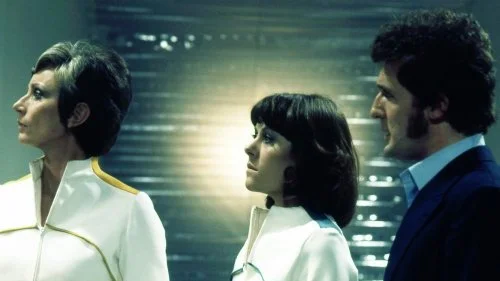
The supporting cast is strong too, especially Noah (Kenton Moore) and Vira (Wendy Williams). Noah’s transformation could easily have become ridiculous, but the performance sells the tragedy of a man slowly losing himself while trying to protect his people. There’s genuine pathos in the suggestion that some fragment of Noah’s humanity survives to the very end, possibly sacrificing himself by leading the swarm onto the doomed shuttle. His final goodbye to Vira gives the climax an emotional weight that many stories of the era would have ignored.
The story originated during Barry Letts’ era under the working title Space Station and was intended to connect directly with The Sontaran Experiment as part of a cost-saving six-part narrative. The Nerva sets would later be reused yet again in Revenge of the Cybermen. Much of the story’s foundation came from veteran writer John Lucarotti, though communication problems caused by his life aboard a Mediterranean boat and a postal strike left Holmes effectively rewriting the script from scratch. Lucarotti’s original concept contained many familiar elements — an ark, sleeping humans, alien infiltrators — though his creatures, the Delc, were very different from the Wirrn.
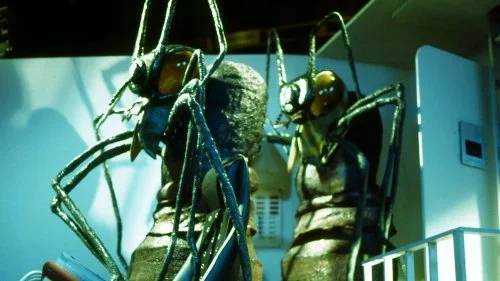
What remains most impressive is how sophisticated the final result feels despite the obvious budget limitations. The bubble wrap used for the Wirrn larvae has become legendary for all the wrong reasons, yet somehow the serial survives every technical shortcoming because the writing, performances, and atmosphere are so strong. In some ways the cheapness even adds to the uncanny quality of the production. The station feels cold, decaying, and eerily empty in a way glossy effects might have undermined.
It’s no surprise the serial was such a ratings success, with episode two reaching an extraordinary chart position for the programme at the time. Nor is it surprising that the BBC became nervous about how frightening the material was for children, ordering a cut to a scene where the half-transformed Noah begs Vira to kill him. And still, even in its edited form, The Ark in Space contains imagery and concepts far more disturbing than most television family entertainment of the mid-1970s dared attempt.
More than fifty years later, the story still stands as one of Doctor Who’s defining achievements: tense science fiction, effective horror, thoughtful social commentary, and a celebration of human endurance wrapped together in four episodes. The effects may wobble, but the imagination never does.
Share on...
Published on May 22nd, 2026. Written by Laurence Marcus for Television Heaven.