
The Seeds of Death
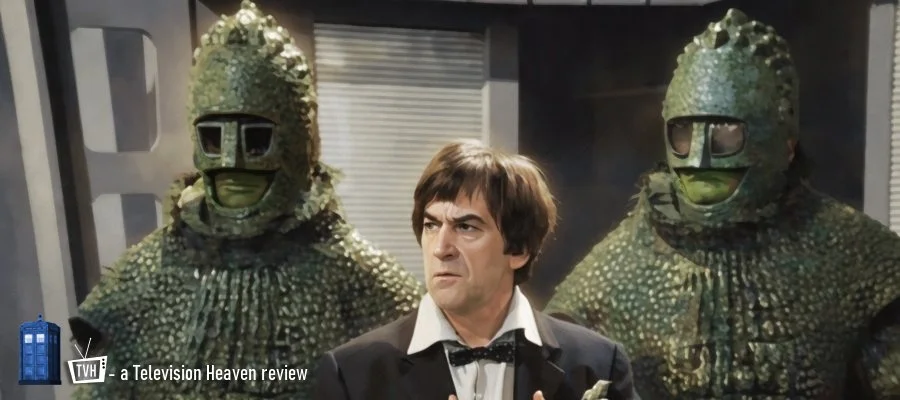
The Seeds of Death is one of those Doctor Who stories that takes a simple idea and pushes it to an impressively large scale. At its core, it’s about what happens when humanity becomes too dependent on a single piece of technology. The concept of T-Mat—instant travel replacing all other forms of transport—is introduced so matter-of-factly that it feels believable, which makes the collapse of the system all the more unsettling. It’s not hard to draw a modern parallel here: the sudden loss of T-Mat feels very much like being cut off from the internet today, where communication, travel planning, commerce, and daily life would grind to a halt almost instantly. There’s a quiet sense of irony in The Seeds of Death that the only way to fix this ultra-modern crisis is with an old-fashioned rocket.
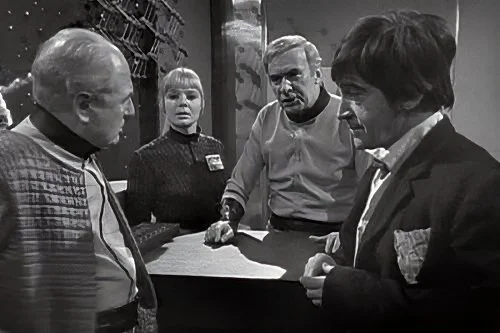
By the late twenty-first century, Trans-Mat, or T-Mat—means that traditional space exploration has been abandoned. The Doctor (Patrick Troughton), along with Jamie (Frazer Hines) and Zoe (Wendy Padbury), arrives at a museum devoted to the now-forgotten age of rocketry, run by Professor Daniel Eldred (Philip Ray). Their visit is interrupted when a critical T-Mat relay station on the Moon suddenly goes offline, bringing the entire network to a halt. With communications severed and no way to reach the Moon via T-Mat, Commander Radnor (Ronald Leigh-Hunt) and his assistant Gia Kelly (Louise Pajo) turn to Eldred for help. Unbeknownst to them, he has been secretly constructing a rocket in the hope of reviving interest in space travel. The Doctor and his companions volunteer to pilot it, noting that the TARDIS is unsuitable for such a short journey—Zoe even jokes it might overshoot by a few million years!
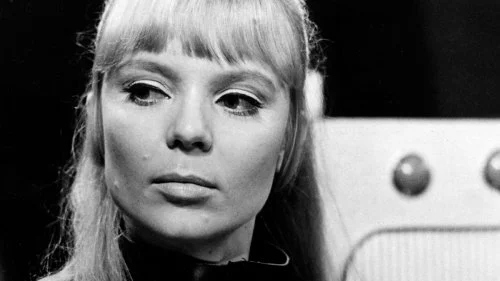
What awaits on the Moon is far more dangerous than a simple technical fault. The relay station has been seized by the Ice Warriors, who intend to use it as the launching point for an invasion of Earth. The base’s crew attempts to resist, Osgood (Harry Towb) is led over to the T-Mat machine and begins to operate it. When the machine begins to smoke Osgood announces, with a smirk, that the circuits have overloaded, but the Ice Warriors kill him. One T-Mat operator, Phipps (Christopher Coll), manages to hide, while another, Fewsham (Terry Scully), having witnessed Osgood’s death, is coerced into helping the invaders. Under their orders, Fewsham restores the T-Mat system in receive mode, allowing Gia Kelly to beam up and begin repairs.
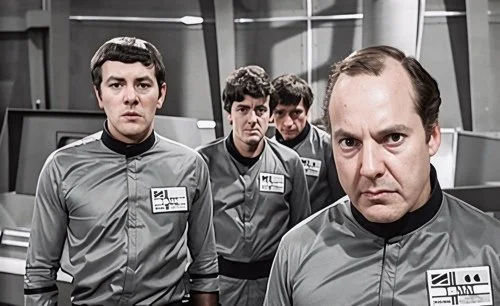
After arriving on the Moon, the Doctor and his friends link up with the hidden Phipps, but the Doctor inadvertently exposes himself to the Ice Warriors and their commander, Slaar (Alan Bennion who would return to the series twice more in The Curse of Peladon and The Monster of Peladon). The Martians’ plan soon becomes clear: The pods they are distributing across Earth via T-Mat, each contain a rapidly spreading fungus that transforms the atmosphere into something suitable for Martian life but deadly to humans. Once the system is fully operational again, one such seed is sent to Earth Control, where it detonates, killing a technician and alerting Radnor and Eldred. The resulting foam multiplies quickly, spreading the deadly effect, while more seeds are dispatched worldwide. At the same time, the Ice Warriors send a small force to seize the weather control system in London, ensuring dry conditions that will help the fungus thrive.
Back on the Moon, Zoe, Jamie, Gia, and Phipps work together to disrupt the Ice Warriors’ operations and free the Doctor. During a major attempt to rescue him, Phipps is killed. The Ice Warriors temporarily withdraw to their spacecraft to plan their next move.
On Earth, the Doctor deduces a crucial weakness: the seed pods can be destroyed by water. Realising that the Ice Warrior sent to Earth must be controlling the weather system to prevent rainfall, he tracks the alien down. Once the system is reclaimed, the Doctor and his allies trigger rain, which destroys the fungus—unsuited as it is to anything but Mars’ dry environment.
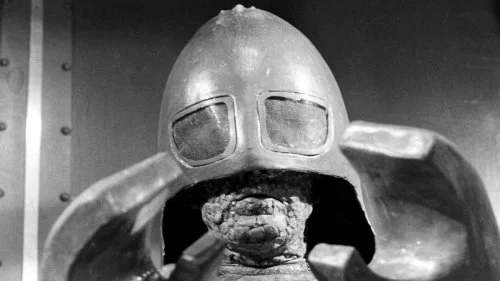
Meanwhile, Fewsham redeems himself by tricking Slaar into revealing, during a live transmission to Earth, that the main Martian fleet is homing in on a signal from the Moon. Though he is killed for his deception, his actions give the Doctor the information he needs. Returning to the Moon via T-Mat, the Doctor alters the signal, redirecting the incoming fleet into the Sun. Confronting Slaar, he narrowly avoids death when Jamie arrives via T-Mat, causing confusion. In the chaos, Slaar is killed by his own warrior. With the invasion thwarted, the Doctor and Jamie return to Earth, reunite with Zoe, and depart once more in the TARDIS.
Patrick Troughton is on top form throughout, effortlessly blending his trademark eccentricity with a sharp, calculating intelligence. His Doctor constantly feels one step ahead yet retains that impish streak that makes him so engaging to watch. When confronted by an Ice Warrior, his defiant quip—“Your leader will be angry if you kill me - I’m a genius!”—stands out as one of those delightfully memorable lines fans often return to. Meanwhile, the companions are given plenty of meaningful involvement; Jamie’s courage and Zoe’s intellect both play crucial roles in the unfolding events, and by this stage, the trio operates with the easy chemistry of a well-established team.
There’s also an interesting layer behind the scenes. Although Brian Hayles is solely credited as the story's author (under the working title The Lords of the Red Planet), series script editor Terrance Dicks wrote most of the story. When the story was originally written, Frazer Hines was considering leaving the show. He was to have been replaced by a new companion. However, he finally signed on for the season at Patrick Troughton's request. This meant Hayles had the extra task of rewriting the script, a problem made worse when, at the eleventh hour, he was asked to leave the Doctor out of part four (so Troughton could have a week off). He found that was unable to complete the script to the satisfaction of the production team and as a result, Dicks rewrote episodes 3 to 6, though Hayles still received full credit on-screen. Dicks brought in the Martian fleet and removed a sub-plot in which Gia Kelly was hypnotised.
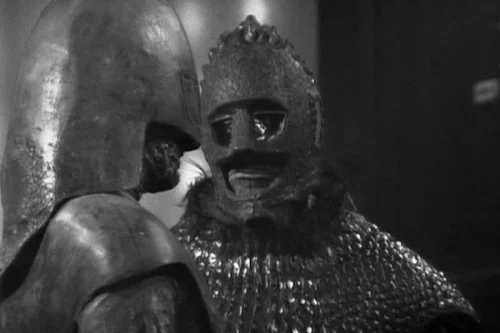
The return of the Ice Warriors feels like a natural progression rather than a retread. They were clearly popular enough to warrant another appearance, and this story gives them a much grander plan than before. Instead of simply being a localised threat, they’re orchestrating a full-scale invasion of Earth using a clever and genuinely chilling method: seeds that grow into a fungus capable of draining the planet’s oxygen. It’s a striking idea, and the spreading foam, by now feeling perhaps a little over used in the series, does still add a visual eeriness that lingers in the mind.
Visually and conceptually, the story makes good use of its budget, particularly with the Ice Warrior costumes, which still carry a certain weight and presence. It’s easy to see why the production team wanted to get as much value out of them as possible. The decision to keep their return a surprise—even crediting Ice Warrior performer Steve Peters simply as “Alien” in the Radio Times the week of the first episode, meant regular viewers were unaware of the Ice Warriors return until transmission of the episode.
Overall, The Seeds of Death is a solid and engaging adventure that combines science fiction spectacle with a thoughtful warning about over-reliance on technology. It might not be the tightest story structurally, but its strong central ideas, memorable villainy, and confident performances make it an enjoyable and worthwhile entry in Troughton’s era, which was soon to reach its conclusion.
Share on...
Published on April 14th, 2026. Written by Laurence Marcus for Television Heaven.