

The Many Wives of Patrick
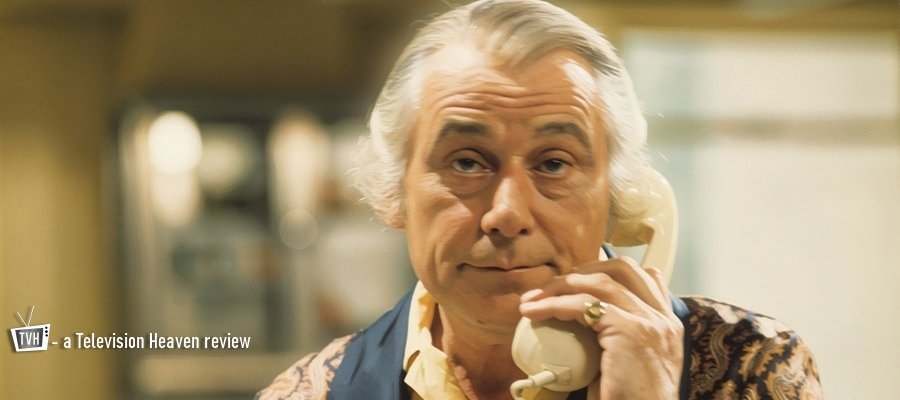
1976 United KingdomThe Many Wives of Patrick is a sitcom built on an irresistibly farcical premise, yet one that manages to sustain both humour and a surprising degree of character-driven charm across its run. At its centre is Patrick Woodford, a successful Bond Street antiques dealer, living in plush Chester Square and moving in society circles. Unfortunately, he has been clumsy enough to marry six times. As the first series begins, he is planning to divorce his sixth wife, Helen. However, Patrick's solicitor advises him that he no longer has sufficient funds to foot the bill and suggests that, instead, he persuades this one to divorce him. She is reluctant to do so and succeeding episodes find Patrick seeking the advice of other previous wives—in particular Elizabeth, his first wife.
This setup provides the series with its central comic engine: a man trapped not just by one failing marriage, but by the accumulated consequences of five previous ones. Having realised that he made a mistake by divorcing Elizabeth in the first place—and perhaps because she is the only ex-wife who has not since remarried—Patrick would also like to remarry her. That thread adds a faintly wistful undercurrent to the otherwise brisk comedy.
Considering that the relationships have failed, it is remarkable to note how much Patrick sees of his former wives, and they pop up with great regularity throughout the three series. The contrivance is obvious, but it pays dividends, allowing for a revolving door of personalities and comic situations that keep the narrative lively.
The performances are a major strength, and the casting comes with its own intriguing backstories. Among the actresses who play Patrick Cargill’s wives, Elizabeth Counsell was the odd girl out. In real life, she was single, and unlike the rest of the characters who are “divorced” from Cargill, at the start of the series she is still living with him—though by the time the series ends they are separated. “I drive him up the wall,” she said of her role as wife No. 6, “and he can’t wait to get rid of me.” That friction fuels much of the early comedy.
Ursula Howells as Elizabeth plays Cargill’s ex-wife—for the second time, having previously been his ex-wife in Father, Dear Father. “To be divorced from Patrick twice is quite a record,” she remarked in 1976, bringing a sense of continuity and chemistry rooted in decades-old collaboration dating back to Dundee theatre in the 1940s.
Elspet Gray, as screen wife No. 2, Nancy, embodies a fairly bossy character—one clear reason the on-screen marriage failed. In real life, she was Mrs. Brian Rix. Meanwhile, Liverpool-born Wendy Williams takes on the role of the French third wife, Josephine, showcasing her flair for accents; off-screen she had been married since 1960 to the actor Hugh David.
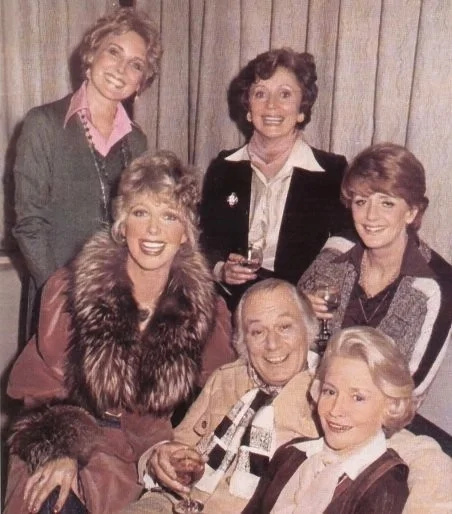
New Zealand-born Bridget Armstrong plays the fourth wife, Laura, as a dizzy glamour-puss—flighty, irresponsible, but not without charm. “But in the first episode he talks very lovingly about me, so he obviously thought I was rather smashing once,” she noted. Because Bridget looked much younger than her years, she was often cast in “dolly-bird” parts in series such as Marriage Lines and My Wife Next Door. "It was getting ridiculous," she said. "I was playing youngsters the same age as my children. I'm pleased I look younger than I really am, but it’s lovely to be sophisticated and, in this series with Patrick, my costumes are the sexiest, most beautiful clothes I have ever worn."
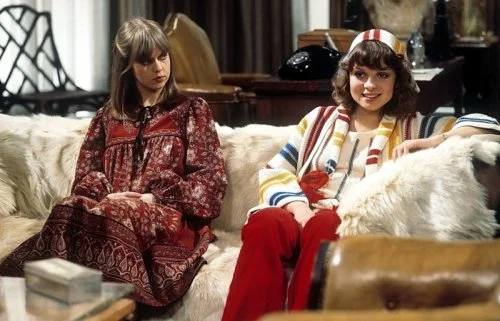
The elusive fifth wife, Betsy (Lorna Dallas), is initially only referred to, before appearing at the end of the first series in a memorable twist: her Las Vegas-style divorce from Patrick turns out not to have been legal, meaning both have unknowingly been committing bigamy ever since. It’s a classic sitcom escalation—ridiculous, yet perfectly in keeping with the show’s tone. Supporting characters, including Robin Parkinson as Harold, Patrick’s all-purpose assistant, and Patrick’s nine intermittently appearing children (among them former Doctor Who actress Wendy Padbury), adding further layers of chaos.
Behind the scenes, the creative force was Richard Waring, whose own life had often been compared—perhaps too neatly—to his work. He once joked to his wife, “Could we have another row? I’ve already used this one.” Apparently, it didn't go down too well with her, but it did with the TV audience when he used it in his sitcom Marriage Lines, starring Richard Briers and Prunella Scales. That series ran for 43 episodes, cementing Waring’s reputation in domestic comedy while, ironically, contributing to the breakdown of his marriage to actress Hermione Harvey, whom he divorced in 1966.
Observers had long drawn parallels between Waring’s personal life and his shows: his first marriage obviously influenced Marriage Lines, the theory suggests. He had two sons and that led to Not in Front of the Children followed by the other Wendy Craig series And Mother Makes Three, followed by And Mother Makes Five. Divorce clearly inspired My Wife Next Door with John Alderton and Hannah Gordon. Looking after his sons could have given him the idea for Bachelor Father with Ian Carmichael and his second marriage to a girl 20 years his junior must surely, they said, had sparked off Second Time Around in which Michael Craig is the man who takes up with a much younger woman (played by Patricia Brake).
Yet reality is less tidy than these parallels suggest. Many ideas came externally: Brian Clemens suggested the premise for My Wife Next Door, while Frank Muir inspired Second Time Around. Even The Many Wives of Patrick itself originated from a concept developed with Cargill and producer William G. Stewart, rather than directly from Waring’s own experiences.
Still, the coincidences are striking. Like his brother Derek Waring—who starred in Moody and Pegg—Waring’s life and career seem almost inseparable from the kind of situations he wrote about.
Ultimately, The Many Wives of Patrick succeeds because it embraced its own absurdity. The idea that a man would remain so entangled with six former spouses stretches credibility, but the writing, performances, and sheer inventiveness of the situations made it consistently entertaining. Beneath the farce lies a thread of regret, nostalgia, and human fallibility—qualities that elevate it beyond mere sitcom mechanics and give it enduring appeal.
Seen this show? How do you rate it?
Seen this show? How do you rate it?
Share on...
Published on April 21st, 2026. Written by Laurence Marcus for Television Heaven.