
The Space Pirates
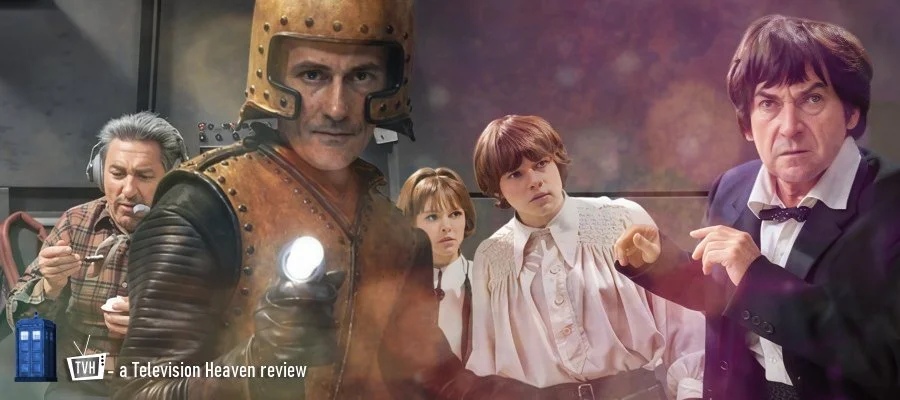
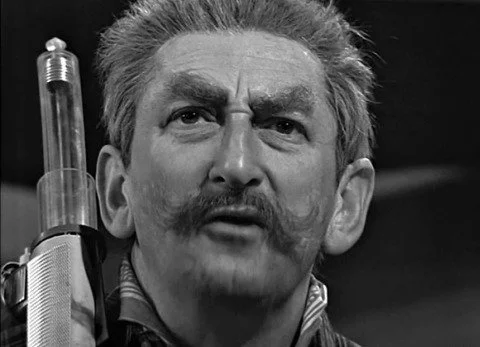
The Space Pirates stands as one of the more curious relics of Doctor Who’s sixth season—a production shaped as much by ambition and circumstance as by its now-infamous reputation. Conceived by Robert Holmes as a “science fiction western,” Patrick Troughton’s penultimate adventure wears its influences openly, populating its interstellar setting with familiar frontier archetypes: the lawman, the deputy, the prospector, and the powerful business figure. Nowhere is this more overt than in Milo Clancey (Gordon Gostelow), a wildcat miner who seems less inspired by westerns than directly transplanted from one, complete with a Gunsmoke-style aesthetic that borders on pastiche.
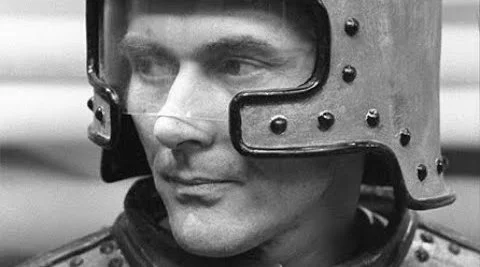
The plot itself is serviceable space opera. A gang of pirates led by Caven (Dudley Foster), with the slippery Dervish (Brian Peck) at his side, systematically destroys space beacons to harvest Argonite, drawing in the Earth Space Corps under General Hermack (Jack May). The Doctor and his companions are quickly entangled when they arrive on Beacon Alpha Four, only to be trapped in its destruction and separated from the TARDIS. From there, the narrative splinters—appropriately—into multiple threads involving the mining planet Ta, the Issigri family intrigue, and the Corps’ misdirected pursuit of Clancey.
There are flashes of intrigue in this setup. Madeleine Issigri’s (Lisa Daniely) shifting loyalties and the revelation of her supposedly dead father offers a more character-driven dimension than the serial is often credited with. Likewise, the Doctor’s eventual dismantling of Caven’s doomsday plan provides a solid, if conventional, resolution. Yet these strengths struggle to overcome the pacing issues that plague the story. Even in reconstruction, the narrative feels stretched thin across six episodes, with long stretches of procedural movement and limited dramatic escalation as Holmes struggles to fill the allotted six episodes hastily written after The Dream Spinner by Paul Wheeler was abandoned late in the day.
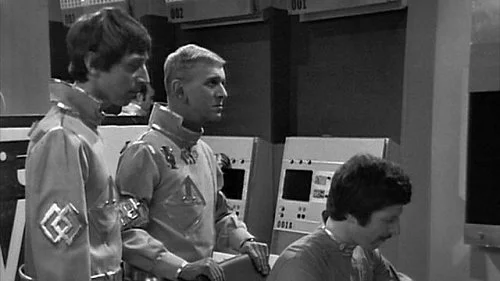
Production circumstances also loom large over the final product. Much of the serial is missing from the archives—making it the most recent Doctor Who story with episodes lost entirely—and only episode two survives in full. This inevitably affects modern appraisal, as reconstructions rely on stills and audio, diminishing the impact of performances and action. Compounding this, Patrick Troughton, Frazer Hines, and Wendy Padbury were largely absent from the final episode due to overlapping production on The War Games, leaving the climax without its central trio in the studio.
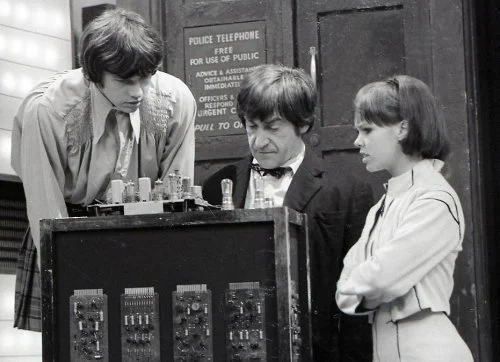
Behind the scenes, The Space Pirates also marks a transitional moment. It became the final story produced by Peter Bryant and quietly introduced John Nathan-Turner to the series in a junior role—a figure who would shape the programme’s future in significant ways. It also straddled a shift in production facilities, with its first episode being the last filmed at Lime Grove Studios before the show’s move to Television Centre.
Despite these historical points of interest, the serial’s reputation remains poor, even though it averaged a viewing audience of 5.8 million (episode two was viewed by 6.8 million) it remains the least liked of the Troughton era. Contemporary and retrospective critics alike have found it dull, slow-moving, and populated by thinly drawn characters. The western homage, while conceptually interesting, rarely evolves beyond surface-level imitation, leaving the story feeling more derivative than inventive.
In the end, The Space Pirates is less a hidden gem than a fascinating misfire—an experiment in genre blending that never quite achieves liftoff. Its legacy lies not in its storytelling, but in its place within Doctor Who’s production history and the tantalising gaps left by its missing episodes.
Share on...
Published on April 19th, 2026. Written by Laurence Marcus for Television Heaven.