

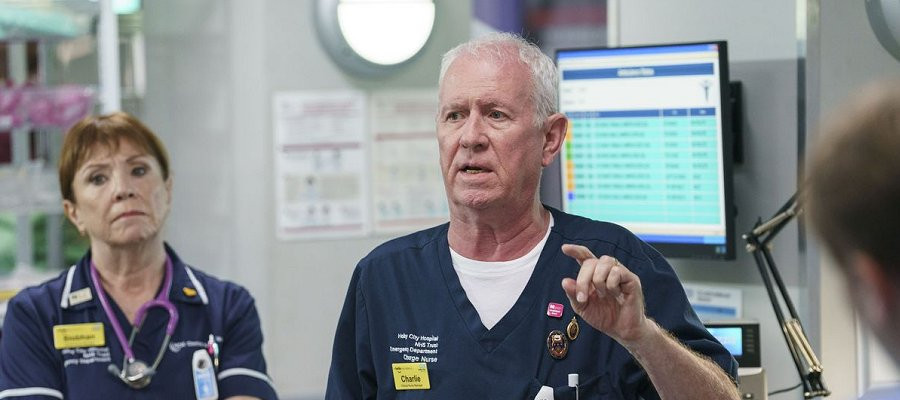
Casualty
1986 United KingdomWhen Casualty first arrived on BBC One in 1986, few could have predicted that a Saturday-night drama about an overstretched accident and emergency department would become the longest-running medical drama in the world. Devised by Jeremy Brock and Paul Unwin as a distinctly British response to the American series St. Elsewhere, Casualty set out to do something bolder than simply entertain. From the outset, it rooted its drama in the everyday realities of NHS life, focusing on the night shift at the fictional Holby City Hospital and refusing to flinch from the social, political and medical issues shaping Britain at the time.
During its early years, Casualty courted controversy by tackling subjects that many primetime dramas avoided. Storylines addressing child abuse, AIDS, homelessness and domestic violence were handled with a blunt realism that drew the ire of politicians, particularly during the Conservative governments of the mid-1980s. The series openly criticised hospital closures and NHS funding cuts, positioning itself as an unapologetically political drama at a time when such commentary on mainstream television was far from common. This willingness to confront uncomfortable truths became one of the show’s defining traits.
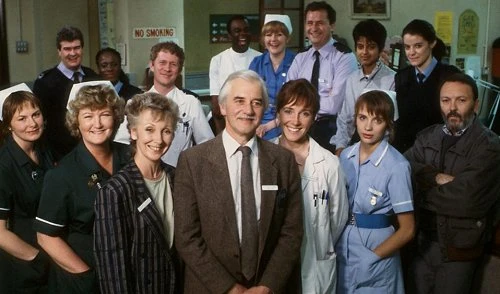
Over its long run, Casualty has served as both a proving ground and a showcase for acting talent. Oscar winner Brenda Fricker made an indelible impression in the early years as senior nurse Megan Roach, while future stars such as Kate Winslet and Helen Baxendale passed through the department as patients. Familiar faces including T. P. McKenna and Norman Wisdom appeared in guest roles, and Robson Green worked as a hospital porter before rising to national prominence. Even Marina Sirtis, later famed for Star Trek: The Next Generation, made a guest appearance. Yet amid this revolving cast, one figure remained constant: Charge Nurse Charlie Fairhead.
Played since the very first episode by Derek Thompson, Charlie Fairhead became the emotional backbone of Casualty. Thompson, previously known for his role as an East End villain opposite Bob Hoskins in The Long Good Friday, brought warmth, grit and vulnerability to a character who embodied the toll of a life spent caring for others. Over the years Charlie endured failed relationships, alcoholism, a nervous breakdown, a heart attack and even being shot by a patient. Like many of his colleagues, he was repeatedly placed at the centre of the series’ trademark end-of-season cliffhangers, which frequently saw regular characters raped, stabbed, pushed from balconies or otherwise left in mortal peril.
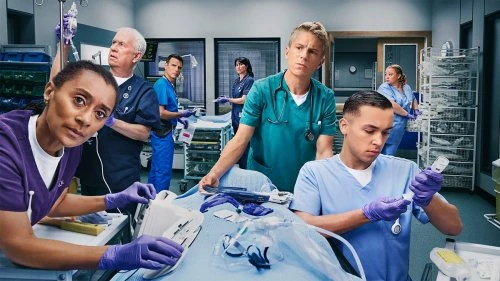
Beyond its physical danger and high drama, Casualty earned its reputation through its thoughtful engagement with social issues. The series consistently drew parallels between medical emergencies and wider societal “diseases”, often using its regular characters to explore long-term emotional consequences rather than short-term shocks. A notable example was the season nine storyline involving Charge Nurse Martin Ashford, played by Patrick Robinson, who faced charges of actual bodily harm after injuring a racist attacker. The storyline tackled issues of race, self-defence and institutional bias with nuance and sympathy.
Few areas demonstrated the show’s sensitivity more clearly than its handling of sexual violence. The character of Duffy was central to one of the series’ earliest explorations of rape, with the narrative focusing not on the act itself but on its lasting psychological impact. Years later, Casualty revisited the subject through the brutal assault of Tina, portrayed by Claire Goose. Goose worked closely with a rape counsellor and studied police case notes to prepare for the role, earning widespread praise for a performance that conveyed trauma without sensationalism. Duffy again became a focal point when the series addressed fears surrounding cervical cancer, reflecting Casualty’s ongoing commitment to demystifying health anxieties through character-led storytelling.
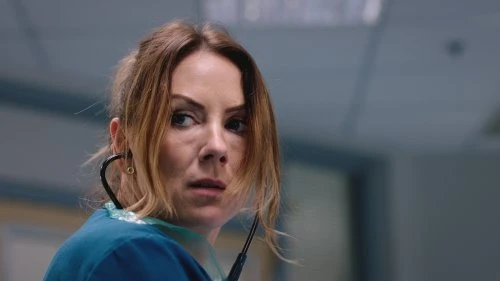
Threaded throughout the drama was a persistent concern for the welfare of NHS staff themselves. Overworked, underpaid and emotionally exhausted, the doctors and nurses of Holby City often found their professional pressures spilling into turbulent personal lives. This was reflected in fractured relationships, emotional breakdowns and storylines such as Max Gallagher’s tragic battle to save his drug-addicted son, who was eventually murdered after a period of successful rehabilitation. Such arcs reinforced the series’ central argument: that the NHS survives not through policy, but through the resilience and dedication of its workforce.
The success of Casualty inevitably led to expansion. In 1999, the BBC launched Holby City, a more conventional spin-off that moved beyond the chaos of A&E to explore the professional and personal lives of staff working on a surgical ward. While Holby City adopted a glossier, more serialised approach, it remained firmly rooted in the world Casualty had created, further cementing Holby as one of British television’s most recognisable fictional locations.
As Casualty moved beyond the period covered by this review and into the 21st century, it continued to evolve. The format shifted, episode lengths expanded, and storytelling became more ambitious, with multi-episode arcs and live broadcasts pushing the boundaries of the genre. The series responded to contemporary crises, including hospital overcrowding, knife crime, mental health provision and, most significantly, the COVID-19 pandemic, which it depicted with a stark immediacy that echoed its early political fearlessness.
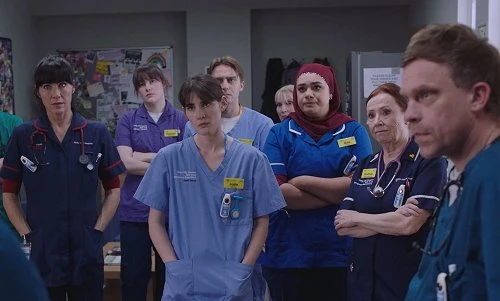
Even as cast members come and go, the core ethos remains intact. The programme has resisted the glossy escapism of many American medical dramas, instead favouring a raw, grounded aesthetic that emphasises sweat, strain and moral ambiguity. When Casualty’s 2023 season came to an end, it did so having broadcast well over 1,200 episodes. And still it continues.
Consistently well produced, written and acted, Casualty stands as a rare achievement in British television: a long-running drama that has never lost sight of its purpose. By portraying the human cost of a beleaguered NHS with compassion, anger and authenticity, it gives voice to those who work within it and those who depend upon it. In doing so, Casualty has earned its place not just as a television institution, but as a quietly radical piece of social drama—one that proves you cand entertain millions while still telling uncomfortable truths.
Seen this show? How do you rate it?
Seen this show? How do you rate it?
Share on...
Published on December 3rd, 2018. Written by Lauremce Marcus (Updated 2026) for Television Heaven.