

Hard Times
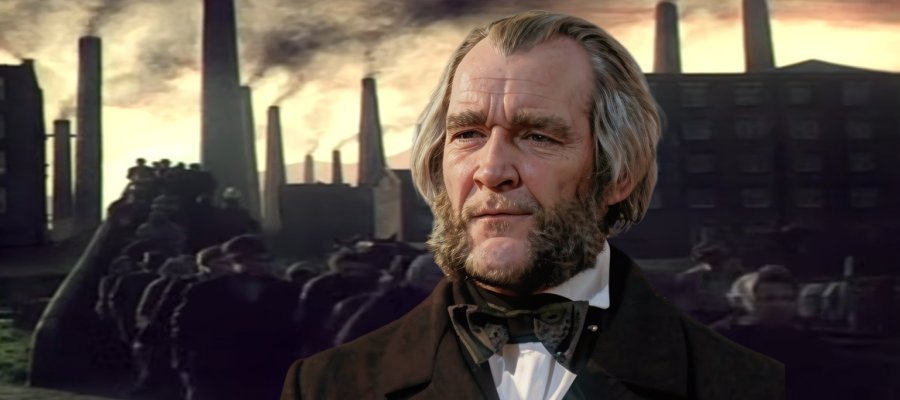
1977 United KingdomGranada Television’s 1977 adaptation of Hard Times stands as one of the defining literary dramas of British television, laying the groundwork for later prestige productions such as Brideshead Revisited and The Jewel in the Crown. Adapted by Arthur Hopcraft and directed with remarkable restraint and intelligence by John Irvin, the four-part serial transforms Dickens’ industrial novel into a visually atmospheric and emotionally resonant drama.
Set in the grim fictional world of Coketown, itself inspired by the industrial north of England, the adaptation captures the oppressive spirit of mechanised Victorian society with extraordinary precision. The smoky railway yards and stark urban landscapes create a fitting backdrop for the conflict at the heart of the story: the battle between rigid rationalism and the human need for imagination, compassion, and emotional freedom.
Hopcraft’s screenplay remains impressively faithful to Dickens while necessarily condensing parts of the sprawling novel. Some secondary characters and subplots are omitted, including Bounderby’s mother and several members of the Gradgrind family, but these cuts rarely diminish the central themes. Instead, the adaptation sharpens its focus on Thomas Gradgrind, Louisa, Tom, and Sissy Jupe, allowing Dickens’ critique of Utilitarian philosophy to emerge with clarity and force.
The production values are exceptional throughout. Malcolm Arnold’s ominous brass-heavy score lends the serial an air of gathering tragedy, while Ray Goode’s cinematography bathes Coketown in smoke, shadow, and industrial gloom. Irvin’s direction never becomes overly theatrical; instead, it allows the performances and atmosphere to carry the emotional weight.
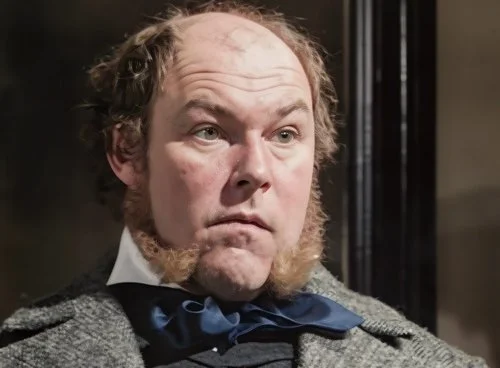
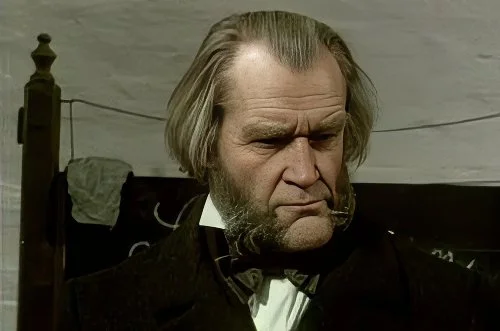
The cast is uniformly excellent. Alan Dobie (Cribb) brings quiet dignity and melancholy to Stephen Blackpool, while Timothy West (Edward the Seventh) is wonderfully absurd as the bombastic Bounderby. The standout performance, however, comes from Patrick Allen (Crane) as Gradgrind. Allen gives the character far greater depth than a simple ideological caricature, portraying him as a man whose devotion to reason slowly collapses under the emotional consequences of his beliefs.
Though less widely remembered today than later Dickens adaptations, Granada’s Hard Times remains a landmark achievement in television drama. Intelligent, visually striking, and deeply humane, it captures both the social criticism and emotional complexity of Dickens’ novel with rare confidence and sophistication.
Seen this show? How do you rate it?
Seen this show? How do you rate it?
Share on...
Published on May 22nd, 2026. Written by Laurence Marcus for Television Heaven.