

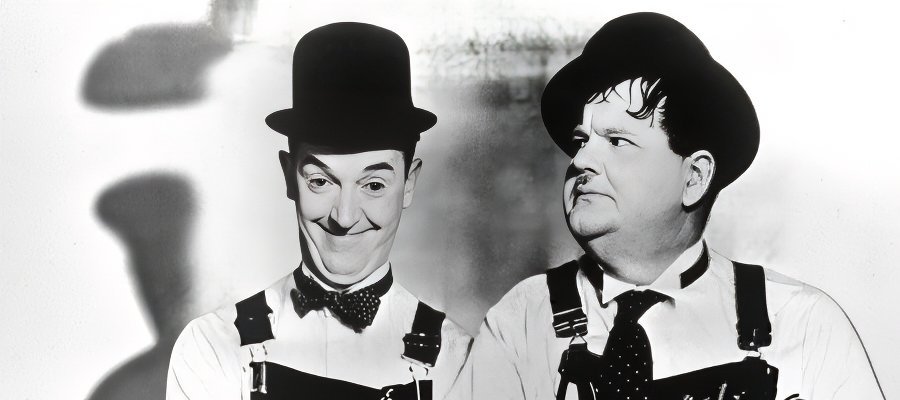
Laurel and Hardy
1949 United StatesFew partnerships in entertainment history have inspired as much affection, admiration, and laughter as Laurel and Hardy. Decades after their final performances, Stan Laurel and Oliver Hardy remain beloved around the world, their gentle brand of comedy continuing to delight audiences of all ages. They were more than simply a comedy team—they became cultural icons whose influence stretched across cinema, television, animation, and generations of comedians who followed in their footsteps.
What makes their story so remarkable is that the Laurel and Hardy we know and love did not appear fully formed. Their legendary characters evolved gradually, shaped by years of experimentation, hard work, and an almost magical understanding of comic timing.
Before they became a team, both men were already established performers working for comedy producer Hal Roach. Stan Laurel, born Arthur Stanley Jefferson on 16 June 1890, in Ulverston, Lancashire, England, came from a theatrical family and had spent years honing his craft on stage and in films. Oliver Hardy, born Norvell Hardy on 18 January 1892, in Harlem, Georgia, had become a familiar face in silent comedies, often portraying villains, bullies, or imposing authority figures.
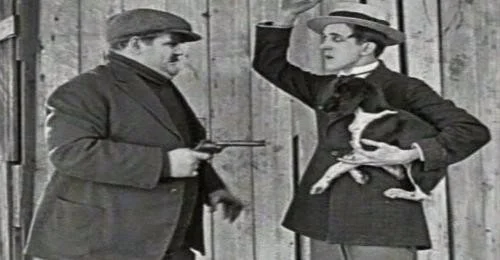
The future comedy legends first appeared together in 1921's Lucky Dog. In that film, Hardy played a robber who held a frightened Laurel at gunpoint. Although audiences could not yet see the characters that would later make them famous, there was already an undeniable chemistry between the two performers.
For several years they continued appearing separately in Roach productions. It was Roach director Leo McCarey who recognized the unique comic potential of pairing them permanently. He encouraged the two comedians to join forces as a team, a decision that would prove extraordinarily successful. In time, Laurel and Hardy would become known throughout the world as perhaps the most successful and beloved comedy partnership ever created.
The Laurel and Hardy characters familiar to modern audiences emerged gradually throughout the silent era. In his early appearances, Stan Laurel was very different from the gentle innocent later audiences adored. His comedy was broader and more aggressive, closer to the energetic style associated with Charlie Chaplin's early work. He moved quickly, engaged in vigorous slapstick, and often appeared as a mischievous troublemaker.
Oliver Hardy's development followed a different path. He had already built a substantial career portraying villains and pompous authority figures. During these years, many of the traits that would later define "Ollie" began to appear. His famous slow-burning reactions, his expressive facial gestures, his tie-twiddling, and his habit of silently communicating with the audience were all beginning to take shape.
As the years passed, both performers refined their screen personas. Stan gradually transformed into the childlike dreamer audiences came to love. He became gentle, innocent, and perpetually confused by the world around him. His trademark head-scratch, hesitant blink, and plaintive cry became central elements of his character. Instead of causing chaos intentionally, Stan increasingly became a bewildered victim of circumstances, responding to disasters with wide-eyed innocence.
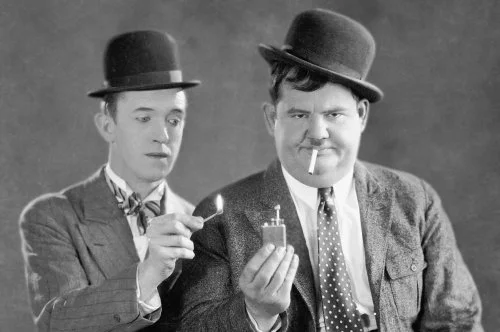
Oliver evolved into the self-important "brains" of the partnership. He saw himself as the sensible leader, convinced of his own intelligence and superiority. Yet his confidence invariably led both men into catastrophe. His most famous trademark became the fourth-wall stare: a silent glance directly at the audience, as though pleading for sympathy while enduring yet another disaster caused by Stan—or often by his own foolishness.
What made Laurel and Hardy unique was that they were not built around the traditional comedy formula of a straight man paired with a funny man. Instead, they were two incompetents. Ollie merely believed he was clever. Stan simply never realised he wasn't. That distinction created an entirely different comic dynamic. Their conflicts felt human rather than theatrical. Neither man was truly in control, and both were equally capable of making disastrous mistakes.
By the late 1920s, the Laurel and Hardy characters had reached maturity.
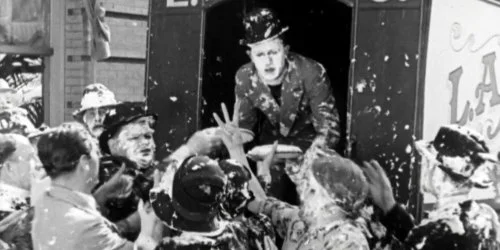
A series of silent masterpieces demonstrated just how perfectly their comic relationship had developed. Films such as The Battle of the Century, Two Tars, and Big Business showcased the duo at the height of their silent-era powers. These films established many of the elements audiences would forever associate with Laurel and Hardy: escalating misunderstandings, carefully choreographed destruction, endless chains of retaliation, and the extraordinary patience with which both men endured increasingly ridiculous situations.
Their comedy was never merely about slapstick. Beneath the collapsing buildings, flying pies, and smashed automobiles was a deep understanding of human nature. Audiences recognized themselves in the pair's frustrations, ambitions, mistakes, and friendship. By this stage, the essential Laurel and Hardy characters were complete.
Yet their greatest years were still ahead.
In 1928, the film industry underwent one of the most dramatic transformations in its history as silent pictures gave way to talking films. Many silent stars struggled during this transition. Some felt spoken dialogue diminished the expressive visual language they had spent years mastering. Others discovered that their voices did not suit the new medium.
Laurel and Hardy faced none of these problems.
Both men possessed extensive theatrical experience and understood how to use speech as another comic tool. Rather than diminishing their appeal, sound enhanced everything that made them great. Between 1929 and 1931, their characters blossomed fully. Stan's soft, high-pitched, hesitant voice proved a perfect match for his innocent personality. Every line sounded as though he were carefully trying to understand a confusing world. Oliver's rich Southern drawl added an entirely new layer to his character. His wounded dignity, pompous speeches, and elaborate complaints became even funnier when audiences could hear them delivered in his distinctive voice.
Dialogue introduced fresh comic possibilities. Misunderstandings became more intricate. Conversations created new opportunities for confusion. Verbal timing complemented their already flawless physical comedy. Catchphrases entered the act as well, most famously Ollie's weary observation: "Well, here's another nice mess you've gotten me into." Stan became even more dreamy, literal-minded, and emotionally vulnerable. Ollie became increasingly verbose, theatrical, and exasperated. Together they created one of cinema's most perfectly balanced comic relationships.
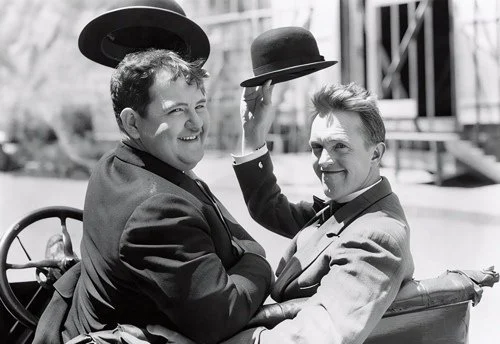
Far from being casualties of Hollywood's technological revolution, Laurel and Hardy emerged as some of its greatest beneficiaries.
The sheer volume of work produced by Laurel and Hardy is remarkable. As a team, they appeared in 107 films. Their output included: 32 silent short films, 40 sound short films, 23 feature-length films. Across these productions they created a body of work that remains among the most celebrated achievements in screen comedy.
At the heart of many of these films was Stan Laurel's creative genius. While audiences saw him as the absent-minded half of the duo, behind the scenes he was deeply involved in story construction, gag development, editing, and overall production. His meticulous attention to detail helped shape many of the team's greatest successes.
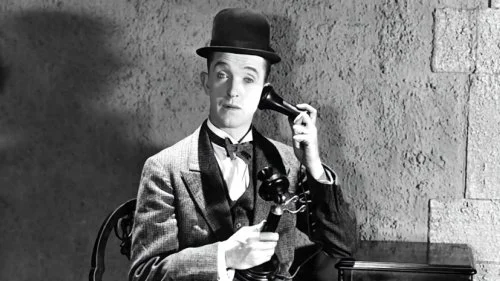
One of the most fascinating chapters in the Laurel and Hardy story occurred long after their greatest films had been made.
Hal Roach became one of the first movie producers to recognise television's potential. As the new medium expanded in the USA during the late 1940s and early 1950s, he began reviving many of the classic films produced by his studio during the 1930s.
In 1949, Laurel and Hardy made their first network television appearance when their 1931 feature Pardon Us was broadcast. Soon afterward, their short films and features were syndicated to local television stations throughout the United States. The response was immediate and overwhelming. A new generation discovered the comedy team. Children who had never visited a cinema laughed at the same films their parents had enjoyed decades earlier. Television transformed Laurel and Hardy from beloved movie stars into enduring cultural figures.
Beginning in those early days of television and continuing for decades, small screen exposure kept their work constantly in circulation. This widespread visibility introduced countless future comedians and comedy writers to their films and ensured that their reputation would only continue to grow.
Today, many fans first encountered Laurel and Hardy through television broadcasts rather than theatrical screenings, a testament to the extraordinary longevity of their appeal.
Despite the enormous popularity of their films on television, there was a painful irony behind the success. The broadcasts generated tremendous audience enthusiasm, yet neither Laurel nor Hardy received residual payments from these television showings. This particularly troubled Stan Laurel, who had devoted so much creative energy to the team's work. He became increasingly bitter over the fact that the films were enjoying a lucrative second life while the men who had created them received no financial benefit. It was a frustrating reality shared by many performers of Hollywood's early years, whose contracts had never anticipated the arrival of television.
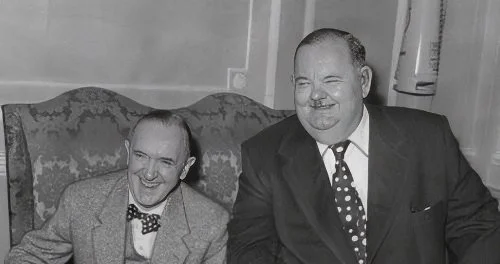
During the 1950s, there was hope that Laurel and Hardy might enjoy a major comeback. The team entered discussions with Hal Roach Jr. regarding a proposed series of NBC television specials titled Laurel and Hardy's Fabulous Fables. The programmes would have been filmed in colour and introduced the duo to yet another generation. Unfortunately, age and declining health intervened.
The project was ultimately abandoned as both comedians struggled with serious health problems. For fans, it remains one of entertainment history's great "what if" stories—a final Laurel and Hardy collaboration that never came to pass.
After Oliver Hardy's death in 1957, efforts continued to keep the characters alive. During the 1960s, producer Larry Harmon approached Stan Laurel about reviving Laurel and Hardy as animated characters for children. Laurel agreed. Sadly, production delays meant that the series did not begin until 1966, one year after Laurel himself had died on 23 February 1965.
The animated series was produced at Hanna-Barbera Studios and eventually consisted of 156 short episodes. Each episode included opening and closing segments designed to make the cartoons easy to distribute through television syndication. Jim MacGeorge provided the voice of Oliver Hardy's character, while Larry Harmon voiced Stan.
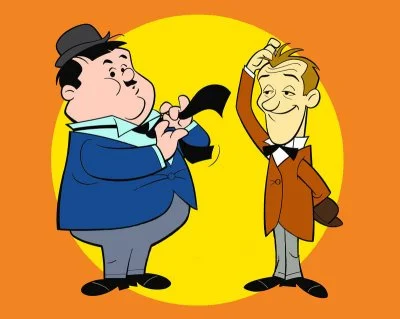
Although the series enjoyed wide distribution, it failed to capture the unique chemistry and magic of the original performers. Critics and audiences generally regarded it as a disappointment, and the show lasted only a single season. Yet even this lesser-known chapter demonstrated the enduring affection people felt for Laurel and Hardy. Their characters remained so beloved that producers continued searching for ways to introduce them to new audiences.
More than half a century after Stan Laurel's death and nearly seventy years after Oliver Hardy's passing, their films continue to entertain. Part of their appeal lies in their universality. Their comedy transcends language, culture, and time. Audiences do not need historical context to understand a misunderstanding, a friendship tested by frustration, or the absurdity of everyday life spiralling out of control.
But perhaps the deepest reason for their enduring popularity is the warmth at the centre of their partnership. No matter how many disasters occurred, no matter how often they blamed one another, argued, or accidentally destroyed entire neighbourhoods, Stan and Ollie always remained together. Their friendship survived everything.
That emotional bond gave their comedy a humanity that still resonates today.
Many comedians have been funnier in isolated moments. Many have been more daring or more innovative. But few have inspired the same level of affection. Laurel and Hardy were not simply comic performers. They were two wonderfully flawed dreamers stumbling through life together, creating laughter wherever they went.
And that is why, generation after generation, they remain what they have always been: the timeless heroes of comedy.
Seen this show? How do you rate it?
Seen this show? How do you rate it?
Share on...
Published on June 16th, 2026. Written by Laurence Marcus for Television Heaven.