

McCallum
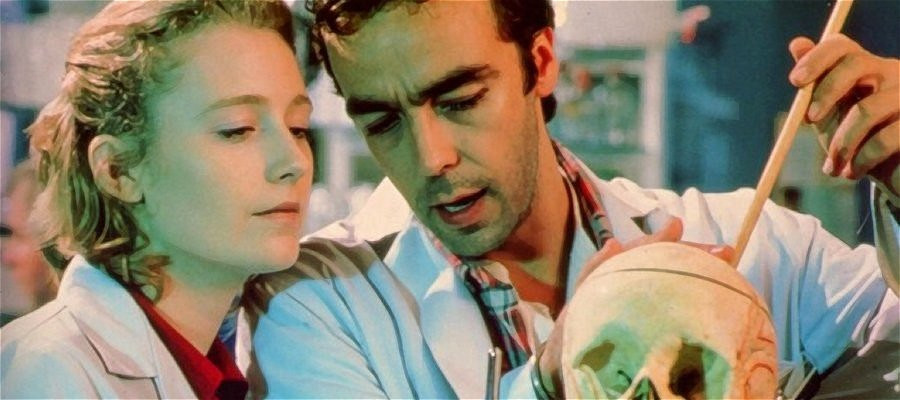
1995 United KingdomMcCallum is a distinctive and often underrated entry in the canon of British crime drama. Produced by Scottish Television and broadcast between December 1995 and December 1998, the series offers a markedly different forensic experience from its glossy American counterparts, favouring atmosphere, moral unease and psychological depth over procedural speed and spectacle.
At its centre is Dr Iain McCallum, played with effortless charm by John Hannah. A forensic pathologist based in the morgue of St Patrick’s Hospital in London’s East End, McCallum cuts a memorable figure: commuting by Triumph motorcycle, dispensing wry observations, and applying an unorthodox but incisive intellect to the dead bodies before him. Hannah’s performance anchors the series, balancing charisma with vulnerability, and making McCallum feel both brilliant and profoundly human.
Unlike later forensic juggernauts such as CSI or Law & Order, McCallum is deliberately slow-burning. Its episodes—often running close to feature length—unfold like miniature films, steeped in brooding suspense and existential reflection. The murders themselves are frequently labyrinthine, filled with unlikely twists, untraceable poisons and elaborate frame-ups, yet the real focus lies less in “who did it” than in what death does to the living. Each investigation becomes an opportunity to explore guilt, desire, exhaustion and moral compromise.
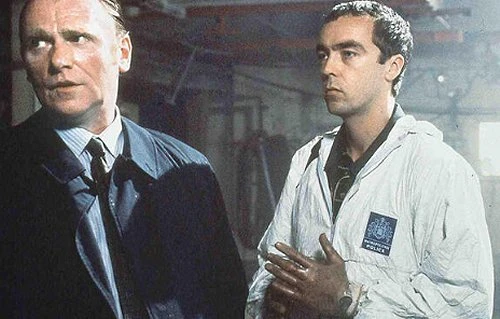
This human focus is reinforced by the supporting cast. McCallum’s colleagues—among them the ageing metalhead Bobby Sykes (Richard O’Callaghan), the dependable Fuzzy Brightons (James Saxon), and the patrician Sir Paddy Penfold (Richard Moore)—form a believable workplace ecosystem where camaraderie, friction and dark humour coexist. Romantic entanglements, particularly with Joanna Sparks (Suzanna Hamilton) and later Dr Angela Moloney (Zara Turner), are not mere subplots but integral to the show’s emotional texture, bringing jealousy, intimacy and regret into the starkly lit post-mortem room.
One of the series’ strengths is its willingness to confront uncomfortable realities. The autopsy scenes are unflinching, filled with unsettlingly tactile imagery—rubbery flesh, dirt under fingernails, the infamous Y-shaped incision—lending the show a visceral authenticity rarely matched at the time. Sex, death and professional jealousy are woven together with a naturalism that makes the drama feel lived-in rather than sensationalised.
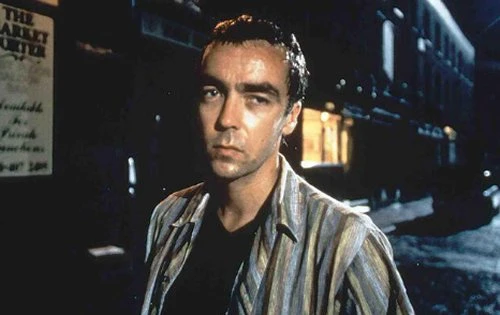
As the series progresses, McCallum himself begins to fracture under the weight of his work. Nearly every episode finds a case bleeding into his personal life, blurring the boundary between professional detachment and emotional collapse. Stories such as “Dead But Still Breathing” and “Running on Empty” push the character towards an acute awareness of his own mortality and powerlessness, culminating in moments of withdrawal and resignation that feel earned rather than melodramatic.
John Hannah’s departure ultimately proves fatal to the series. A 1999 revival episode, “Beyond Good and Evil”, attempts to continue without its eponymous character, introducing Nathaniel Parker and Eva Pope as new pathologists. While the episode is ambitious—veering almost into gothic horror, complete with internet-era villainy and grotesque murders—it also underlines how thoroughly the show was shaped around McCallum himself. Without Hannah’s presence, the emotional centre collapses, and the replacement characters struggle to inspire either sympathy or interest.
Despite an unsatisfying final note, McCallum remains a compelling piece of television. It is not an easy watch, nor a comfortable one, demanding patience and attention from its audience. Yet in return it offers something richer and more reflective than many of its peers: a forensic drama that understands death not as a puzzle to be solved, but as a lingering presence that scars everyone it touches. Like an autopsy itself, McCallum is methodical, unsettling and strangely addictive—and all the more memorable for it.
Seen this show? How do you rate it?
Seen this show? How do you rate it?
Share on...
Published on December 19th, 2025. Written by Laurence Marcus for Television Heaven.