

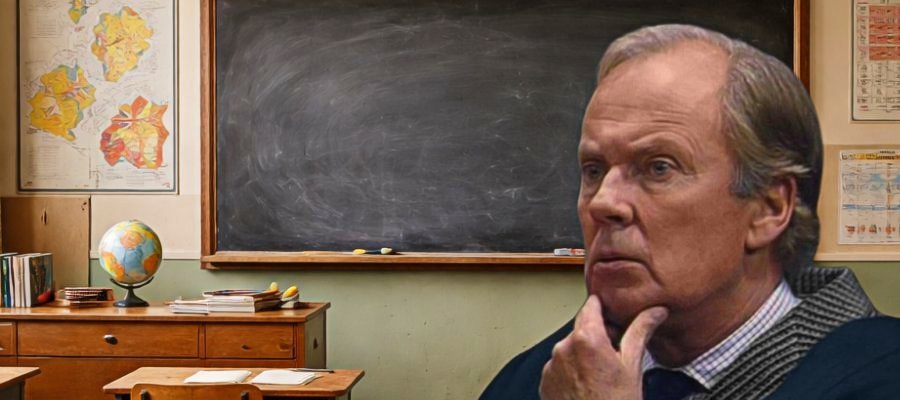
Nightingale's Boys
1975 United KingdomIf the cast of Nightingale’s Boys look like they know their way around a staff room, that’s because quite a few of them actually do. Before the greasepaint and stage lights, several had chalk dust on their sleeves. That lived-in authenticity seeps into this thoughtful, occasionally prickly seven-part drama.
The series kicks off with Tweety, a nickname given—half affectionately, half mockingly—to schoolmaster Bill Nightingale. The name fits. Bill is the sort of capable, slightly fussy teacher boys both admire and roll their eyes at.
Played with beautifully judged restraint by Derek Farr, Nightingale is approaching retirement and feeling it. “I’m just tick-tock away,” he muses, painfully aware that the authority he once wielded is ebbing. Looking back over 35 years at the blackboard, he fixates on the shining moment of his career: the 1949 sixth form. His “star™ class.” Why not organise a reunion and bask in reflected glory?
That’s the hook—and the potential heartbreak.
As the reunion looms, the series asks the awkward question: did those brilliant boys live up to Nightingale’s hopes? Or is he about to discover that memory has been doing some heavy editing?
When the old boys finally gather, the result is more muted than explosive. They’re sketched lightly—almost indistinguishable at times—which blunts what should have been the dramatic payoff. Nostalgia, it turns out, doesn’t always come with sharp edges.
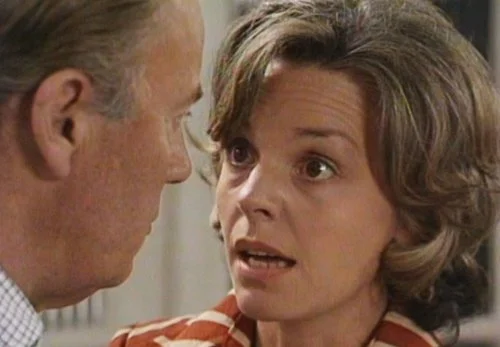
Away from the classroom, Nightingale’s personal life is just as tangled. Pauline Yates’ Margaret—cool, patient, loving but fiercely independent—is weighing up a job move to Slough. Bill’s reaction? Quoting poetry in protest:
“Come friendly bombs and fall on Slough,
It isn’t fit for humans now.”
It’s funny, sad, and very revealing. For a man who spent decades shaping young minds, emotional change seems to catch him off guard.
The later episodes branch out, each penned by a different writer including Jack Rosenthal, Alexander Baron, Colin Spencer, C. P. Taylor, and John Finch.
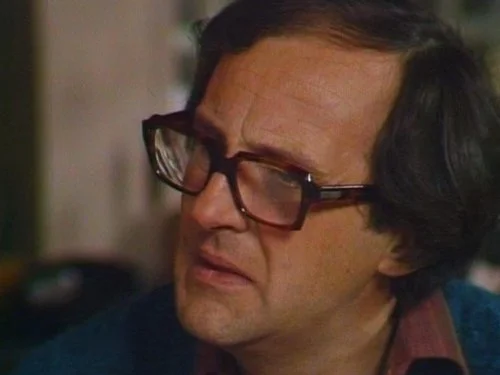
We meet Izzy—real name Cyril Coutts (Anton Rodgers)—a once-brilliant musician now juggling two wives, two houses, four children and three careers, none of them especially successful. Living in reduced circumstances in Cheshire, he’s stalled on a concerto and half-considering labouring work. His plan to remarry in a registry office doesn’t thrill his orthodox Jewish parents either. The prodigy hasn’t quite panned out.
There’s “Spivvy,” in which Harry Selby’s well-meant family holiday idea carries its own complications.
We encounter A.J.—once shy and withdrawn—now Major Alistair James Cartwright after 22 years in the army, who stumbles back into his old master’s life at an inconvenient moment and tries, awkwardly, to help.
In Big Sid, Sid Taylor (Ronald Lewis), 42 and facing the end of a professional cricket career, and a future that looks barren, is given a chance to present prizes at his old school and uses the opportunity to deliver a brutally honest speech. It’s less nostalgia, more existential reckoning—a highlight for its bite.
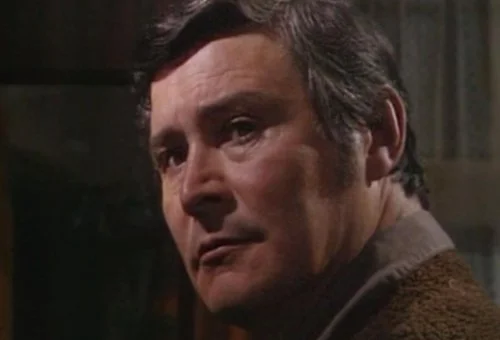
Then comes Decision, bringing things painfully close to home. Nightingale’s own son David returns from voluntary service overseas, forcing Bill to confront his estranged wife Agnes, his stalled marriage, and the possibility that retirement may not be his biggest life change. With Margaret preparing to move to Slough, it really is decision day—with a vengeance.
The series began strongly, though some critics felt it drifted as it went on. Viewers were divided. One complained it had descended into “free love and bad language.” Another meticulously counted 51 uses of “bloody” in Izzy, with “for God’s sake” close behind—leaving, in his view, “not much time for the rest of the script.”
It’s oddly fitting. Nightingale’s Boys is about disillusionment—the gap between promise and reality, between memory and truth. Perhaps some viewers felt that gap a little too keenly.
At its best, the series is a sharp, melancholic look at ageing, legacy, and the uncomfortable afterlife of youthful expectation. Derek Farr anchors it with a performance full of absent-minded dignity and quiet panic. When it falters, it’s usually because the former pupils never quite become as vivid as the man who remembers them.
Still, as a meditation on teaching, time, and the dangerous glow of nostalgia, it earns its place at the front of the class—even if it occasionally forgets its homework.
Seen this show? How do you rate it?
Seen this show? How do you rate it?
Share on...
Published on March 4th, 2026. Written by Laurence Marcus for Television Heaven.