

The History Man
1981 United KingdomMalcolm Bradbury’s The History Man made a confident leap from page to screen in 1981, emerging as a four-part BBC drama that distilled the novelist’s sharp eye for human detail into a vividly watchable satire. Bradbury’s great strength had always been his ability to anatomise people as he found them in real life — their habits, verbal tics, gestures and contradictions — and the television adaptation preserves that forensic precision while giving it dramatic bite.
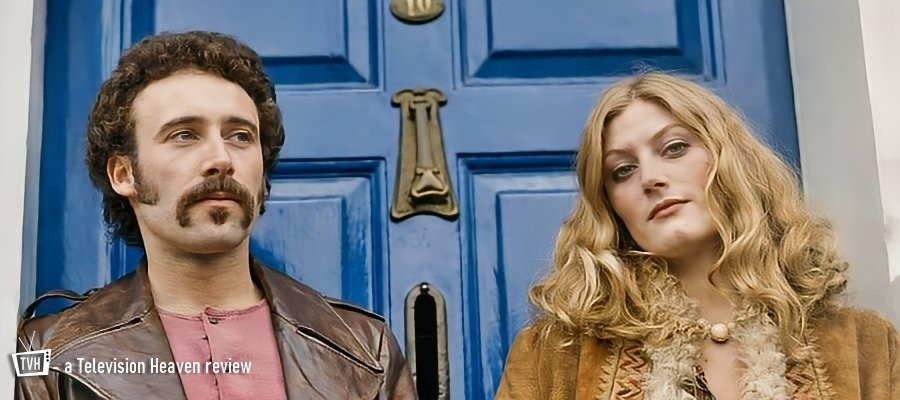
Set at the fictional University of Watermouth, one of the “new” universities that sprang up across Britain in the post-war decades, the series uses academia as both setting and subject. At its centre are Howard and Barbara Kirk, a strikingly modern couple whose open marriage and radical politics appear, at first, to place them on the cutting edge of social change. Yet this apparent progressiveness quickly reveals itself as something more troubling, particularly in the case of Howard, played with unnerving assurance by Anthony Sher.
What begins as a portrait of campus life soon widens into a caustic study of institutional power. Committees that achieve nothing, rivalries dressed up as ideological disputes, and administrative paralysis all come under Bradbury’s microscope. The university is shown as a place where lofty rhetoric thrives alongside moral compromise, and where radical posturing often masks naked self-interest. The series captures the atmosphere of 1970s academic culture — a volatile mix of political activism, sexual liberation and personal conflict — with an edge that still feels sharp.
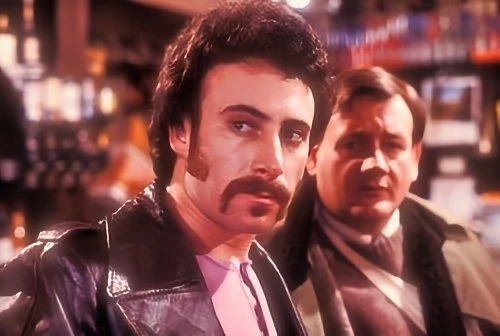
Howard Kirk embodies these contradictions perfectly: a charismatic lecturer who urges his students towards ever-greater radicalism while quietly manipulating the system to protect his own status. Sher’s performance is the engine of the series. His Howard is seductive, calculating and deeply hypocritical, using his intellect, sexual confidence and ideological language as tools in a relentless campaign of self-preservation. The tension between his public persona and private conduct drives the drama forward, particularly as his relationships with students threaten to derail his career. Geraldine James brings nuance to Barbara, whose commitment to their unconventional marriage is steadily eroded by Howard’s behaviour.
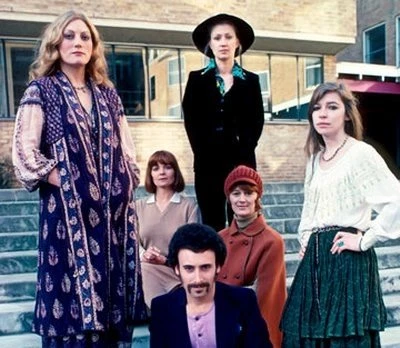
Around them, a strong supporting cast adds texture to the university ecosystem. Figures such as Isla Blair’s coolly strategic social psychologist Flora and Paul Brooke’s hapless Henry Beamish underline the range of personalities drawn into Howard’s orbit, while familiar faces including Miriam Margolyes and Maggie Steed enrich the wider ensemble. Together, they reinforce the series’ central concern with how power circulates through institutions, exploiting both idealism and vulnerability.
Under Christopher Hampton’s adaptation, and guided by Michael Wearing’s production and Robert Knights’ direction, the series shed some of the novel’s dense, ornate prose in favour of clarity and pace, without losing its intellectual bite. In doing so, it became one of the BBC’s most high-profile dramas of the early 1980s. Its reputation was further cemented by its daring content, including some of the longest nude scenes yet seen on British television, which provoked debate about censorship, taste and artistic freedom while underlining the show’s refusal to soften its themes.
Sher’s performance, widely praised at the time, stands as one of the defining achievements of his early career. Having emerged from the Liverpool Everyman Theatre in the 1970s — alongside figures such as Trevor Eve, Bernard Hill, Julie Walters and Jonathan Pryce, and writers Alan Bleasdale and Willy Russell — Sher brought to The History Man a theatrical intensity honed on stage. His West End debut as Ringo Starr in Russell’s John, Paul, George, Ringo… and Bert hinted at his range, which he would later confirm through his work with the Royal Shakespeare Company, multiple Laurence Olivier Awards, and eventual knighthood in 2000. Such later accolades only reinforce the significance of his work here.
Seen now, The History Man remains a landmark in British television drama: a biting satire of academic life, a study of moral corruption dressed up as progress, and a vivid snapshot of a turbulent cultural moment. Its critique of power, ideology and hypocrisy has lost none of its force, and its central character remains one of television’s most compelling and unsettling creations. For viewers drawn to intelligent drama that challenges as much as it entertains, it remains an essential and resonant work.
Seen this show? How do you rate it?
Seen this show? How do you rate it?
Share on...
Published on February 7th, 2026. Written by Laurence Marcus for Television Heaven.