

The Shadow of the Tower
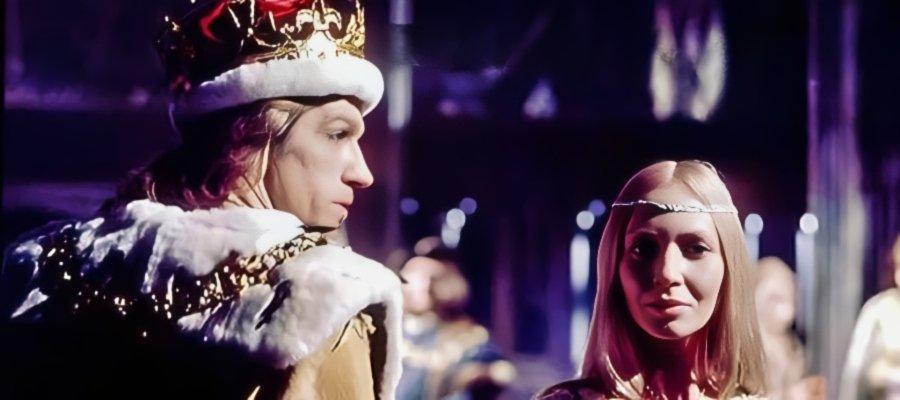
1972 United KingdomThe Shadow of the Tower opens in the uneasy calm after Bosworth Field, with Henry VII stepping onto a precarious throne and immediately confronting pretenders, rebellion, and the lingering tremors of civil war. The series presents a ruler not only fighting for legitimacy but also painstakingly rebuilding a monarchy drained by conflict—amassing a healthy treasury through methods that, while effective, often relied on harsh financial penalties later exposed as widely abused. It’s a portrait of a king who left the crown solvent and formidable, though not universally admired. Rather than reaching for spectacle, the production leans into the delicate equilibrium Henry had to maintain as a just monarch, a wary statesman, and a family man, favouring political subtlety and character over action.
James Maxwell anchors the series with a thoughtful portrayal of Henry as compassionate yet calculating, a man burdened by responsibility but rarely overwhelmed by it, standing out among a solid ensemble of British stage actors, including early appearances from Geoffrey Palmer, John Castle, Rachel Kempson, and Peter Bowles, giving weight to the dense, dialogue-heavy scripts.
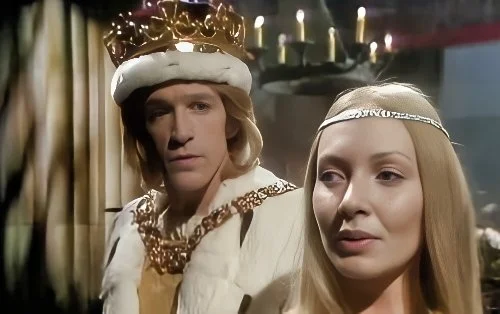
Produced as a companion piece to The Six Wives of Henry VIII and Elizabeth R, (although made after those two mammoth productions) the series works best when viewed as part of a broader Tudor chronicle. Taken together, the three productions offer a coherent and engaging journey through a dynasty that shaped English history, with this instalment filling in the often-overlooked origins under Henry VII.
The writing leans toward a pseudo-Shakespearean style—formal, deliberate, and occasionally verbose—but rarely wasteful. Even weaker episodes remain engaging thanks to a strong commitment to historical detail, and scripts by Hugh Whitemore stand out for their depth and clarity. The show often feels closer to a dramatized documentary than a conventional drama, prioritizing accuracy and insight over sensationalism. This approach may alienate viewers expecting the intrigue and excess of more modern historical series, but it rewards those interested in the mechanics of power and governance.
There is an undeniable theatricality to the production. Limited budgets result in confined sets and a somewhat static visual style, with lighting and staging that occasionally diminish the sense of scale. Yet this “stagy” quality also works in the show’s favour, lending it an intimacy that suits its dialogue-driven storytelling.
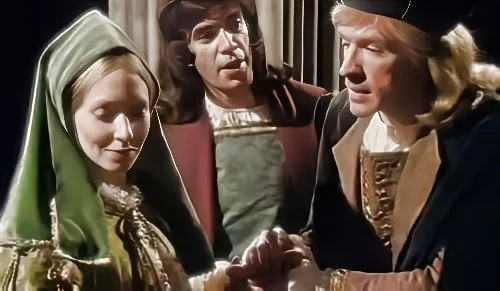
The episodic structure covers both well-documented events—such as Henry’s marriage to Elizabeth of York (Norma West) and the threat posed by Perkin Warbeck (Richard Warwick)—and more speculative scenarios that explore the moral and political dilemmas of his reign. Some narrative inconsistency arises from multiple directors, and the pacing can feel subdued, but the cumulative effect is a rich portrait of a cautious, intelligent ruler navigating a pivotal moment between the medieval and early modern worlds.
Henry VII is often overshadowed by his son, Henry VIII, and granddaughter, Elizabeth I, yet this series makes a compelling case for his importance. His reign, though less outwardly dramatic, laid the foundations of Tudor stability and prosperity. The Shadow of the Tower reflects that reality: measured, thoughtful, and more concerned with substance than spectacle. It may not appeal to everyone, but for those interested in history presented with care and intelligence, it is a rewarding and surprisingly absorbing experience.
Seen this show? How do you rate it?
Seen this show? How do you rate it?
Share on...
Published on March 23rd, 2026. Written by Laurence Marcus for Television Heaven.