

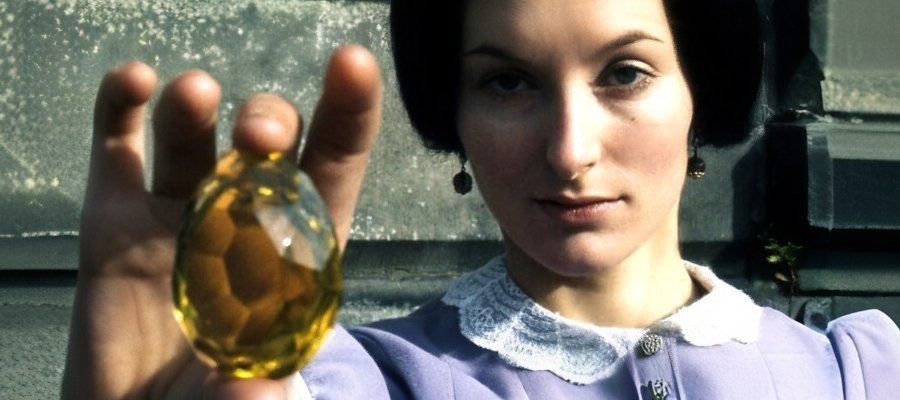
The Moonstone
1972 United KingdomWilkie Collins’ The Moonstone has often been called the grandfather of the modern detective story, and this 1972 adaptation by Irish playwright and author Hugh Leonard for the BBC does a remarkably good job of capturing both the eerie atmosphere and intricate plotting of the original novel.
The story begins with Rachel Verrinder’s eighteenth birthday celebration, where an ominous gift changes everything: the legendary Moonstone diamond, stolen years earlier from a sacred Indian temple by Rachel’s morally bankrupt uncle. From the moment the jewel arrives, there’s a sense of doom hanging over the festivities. Lady Verrinder’s unease proves justified when the diamond vanishes overnight, turning a stately country-house gathering into a web of suspicion, secrets, and emotional betrayal.
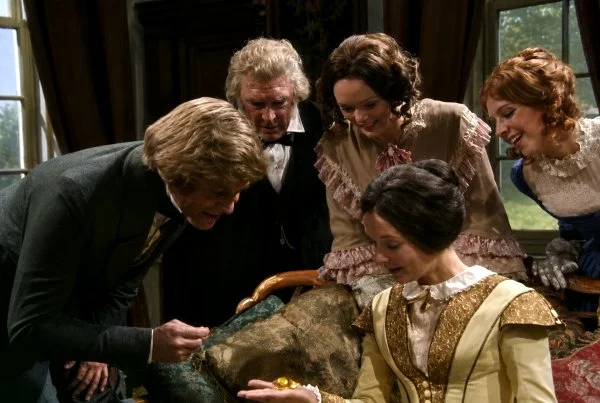
What makes the drama so engaging is how thoroughly everyone becomes a suspect. Franklin Blake, played with charm and nervous energy by Robin Ellis, seems at first like the classic romantic hero, while Martin Jarvis gives Godfrey Ablewhite an outwardly polished respectability that slowly reveals darker undertones. The supporting cast is equally strong, especially John Welsh as Sergeant Cuff, whose calm intelligence and understated methods feel like a blueprint for countless fictional detectives who followed. Other stars of the British screen included Peter Sallis, Brian Murphy, Colin Baker, Sherrie Hewson and Kathleen Byron.
The adaptation leans heavily into atmosphere rather than spectacle. The BBC production clearly operated on a tight budget, but instead of hurting the story too much, it often works in its favour. The shadowy interiors, gloomy corridors, and restrained pacing create an unsettling mood that suits Collins’ mystery perfectly. There’s a distinctly theatrical quality to the performances and staging, which may feel dated to modern audiences, but it also gives the series an oddly timeless charm.
One of the most fascinating aspects of the story is how psychologically layered it becomes. The revelation that Franklin unknowingly removed the diamond while under the influence of laudanum is surprisingly modern in its exploration of altered consciousness and unreliable memory. The mystery unfolds less like a conventional whodunit and more like a study of guilt, obsession, colonial greed, and emotional sacrifice.
The final act is especially satisfying, gradually untangling every thread of the mystery while exposing Godfrey Ablewhite’s financial corruption and desperation. The solution is clever without feeling contrived, and the restoration of the Moonstone to its sacred home in India gives the story a sense of moral closure that was unusually thoughtful for Victorian fiction.
Historically, the importance of The Moonstone can’t really be overstated. T. S. Eliot famously called it “the first, the longest, and the best of modern English detective novels,” while Dorothy L. Sayers considered it perhaps the finest detective story ever written. Watching this adaptation, it’s easy to see why. So many familiar detective-fiction conventions — the country-house mystery, the eccentric investigator, the hidden motives, the red herrings, the final reconstruction of the crime — are all here in early form.
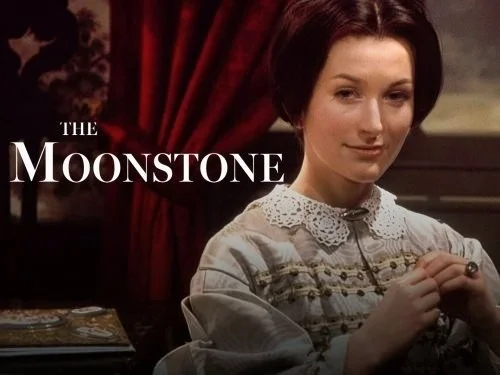
Glasgow born Vivien Heilbron as Rachel Verrinder was nominated for a Primetime Emmy Award for "Outstanding Continued Performance by an Actress in a Leading Role." She would later go on to appear in Target, Take the High Road and EastEnders.
While the production may lack the polish and cinematic flair of more modern period mysteries, its intelligence, faithfulness to the source material, and haunting atmosphere make it rewarding viewing for fans of classic detective fiction. It’s less about action and more about slow-burning suspense, character revelations, and the pleasure of watching an elaborate puzzle click carefully into place.
Seen this show? How do you rate it?
Seen this show? How do you rate it?
Share on...
Published on May 12th, 2026. Written by Laurence Marcus for Television Heaven.