

Tunnel Trench ITV Play 1963

Tunnel Trench

1963 United Kingdom

France, September 1918. Still British blood spills pitifully, pointlessly into the mud of battle. 

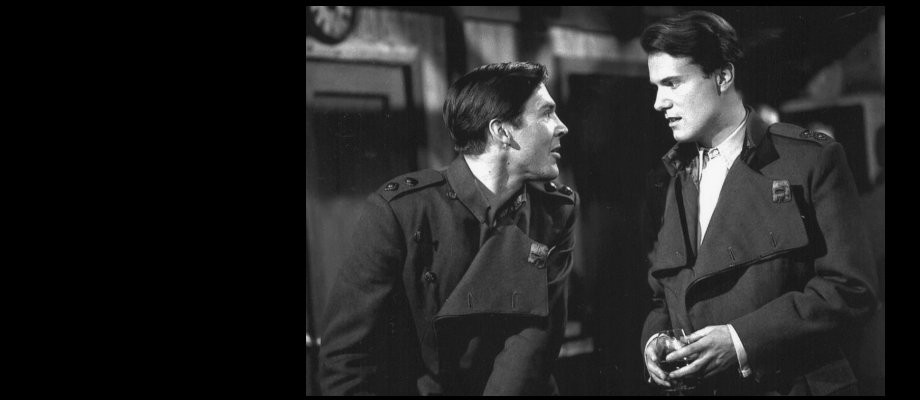
This is the setting for Tunnel Trench, the third in the series of four plays about the first world war called For King and Country. In the play dramatic critic and writer Hubert Griffith -who died in 1953, aged 56- pulls no punches. His play opens on the eve of a battle - a big British push with a German Tunnel Trench as one of its first objectives. We see three aspects of the battle. The Royal Flying Corps squadron is having a fairly clean war. In the words of an observer, Bill St. Aubyn (Robert Morris), they are "drugged with the fun and excitement of it." St. Aubyn's younger brother, Ronny (Nicholas Pennell) is an infantry private in the same action. But his war is grime, vermin and barbed wire, mud, dugouts and duckboards. 

Fighting the war on yet another level, we see the General Staff Officers, with Major Digby (David Burke) in liaison with the flying boys. Starting with the R.F.C. briefing, with St. Aubyn and his pilot, Lieut. Smith (Michael Bangerter), detailed for the first patrol - the play follows the attack, spanning the first day's action. 
Tunnel Trench
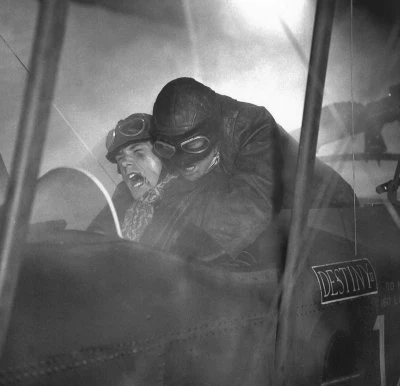
A dramatic scene with Michael Bangerter and Robert Morris.

Also among the cast were Michael Robbins (On The Buses) and Frank Thornton (Are You Being Served?). The play was directed by Derek Bennett and produced by Gerald Savory. 

Here is an excerpt from The Telegraph critique: 'The sincerity of the play has clearly infected the Granada people. It was handsomely mounted and tautly directed; the honesty of Robert Morris's and Michael Bangerter's playing carried off the dated sentimentality of the relationship between the central characters.' 

Other plays in the For King and Country short series: Part One-Out There Part Two-The Barricade Part Four-The Enemy

Production photographs and critique courtesy of Michael Bangerter.

Share on...

Published on April 4th, 2020. Based on original TV Times article and adapted.

Read Next...

Albert TV Play 1951

Also tagged Single Play

Single play based on a true story about an ingenious and daring escape from a German POW camp for Allied naval officers during WW2

The Dick Emery Show

Also released in 1963

BBC televisions longest running sketch-show, running as it did from 1963 until 1981, was one that introduced some of the mediums most memorable and enduring comedic characters, skilfully brought to life by an undisputed master of his craft.

Alice in Wonderland TV play

Also tagged Single Play

The earliest television version of Lewis Caroll's fantasy masterpiece was broadcast before most people in Britain had televisions...

Cathy Come Home

Also tagged Single Play

Harrowing drama of one family's downward spiral into poverty that sparked a national debate in the Houses of Parliament on the plight of the homeless.

The Naked Civil Servant

Also starring Michael Bangerter

The story of Quentin Crisp, from his youth in the early 20th century to his emergence as a flamboyant gay icon, made a star of actor John Hurt and catapulted Crisp himself into overnight celebrity status

A Builder by Trade

Also released in 1963

Pamela Gems' first play for ITV is about two sisters, May Vine (Vanda Godsell), Louie Robbins and the man who becomes their lodger.

Emerald Soup

Also starring Michael Bangerter

In a laboratory an exciting new experiment is underway, but unexpected results occur. Three children discover that mysterious parties are interested. Can the teenagers stop the gang from leaving the country with stolen samples?

The Major Barbara

Also starring Michael Bangerter

"The greatest of our evils and the worst of our crimes is poverty, and our first duty, to which every other consideration should be sacrificed is not to be poor."

Citizen 63

Also released in 1963

One of the most significant TV shows of 1963, this five part John Boorman documentary, made by BBC West filmed five individuals as they confronted and conformed to the problems and pressures of everyday life in Britain in 1963.