

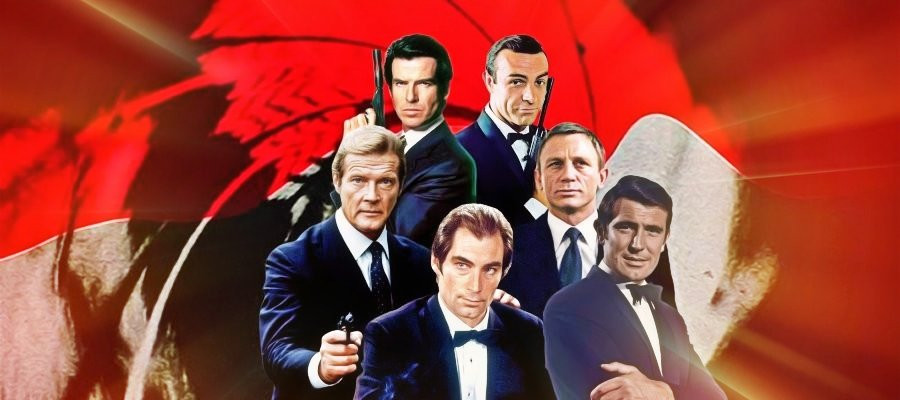
Double-0 Heaven
aka James Bond on the Small Screen
Of all the big multimedia franchises - Marvel, DC, Star Trek, Harry Potter, etc. - none, with the obvious exception of Star Wars, is more closely associated with the big screen than James Bond. True, Bond started out in novels, but, being honest, these are now rather dated, and the cinematic series left them behind a long time ago.
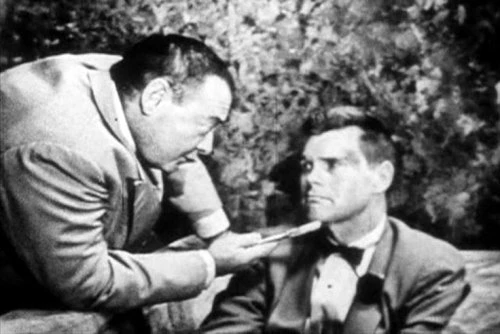
Some might therefore be surprised to learn that Bond's first assignment from the literary to the dramatic was not in the cinema but on American television. Soon after it was published, and when it was still not selling well, a cash strapped Ian Fleming had sold the rights to his first Bond novel Casino Royale for $1,000. It was promptly turned into a one-hour drama for CBS starring Barry Nelson as Bond and the legendary Peter Lorre as Le Chiffre in 1954, and shown as part of an anthology that ran for four seasons initially under the name of - I am honestly not making this up - Climax! Please note that the exclamation mark is not mine but was actually part of the official title until it was changed to the slightly less top shelfy Climax Mystery Theater. This was otherwise an unusually family friendly Bond, sanitised and Americanised as one would expect for a US network: Bond became, like Nelson, an American, working for a fictional international agency, the "Combined Intelligence Agency," rather than for MI6 (or the actual CIA, the American entertainment media still being reluctant to acknowledge that Uncle Sam now had spies of his own). Bond was called "Jimmy." Now let us never speak of it again.
Almost as surprising, and the point of this little trip down memory lane, is the reflection that is also on television that the vast majority of Britons under 60 today first encountered James Bond.
The classification of James Bond films by the British Board of Film Censors made it difficult to see a Bond film in the cinema unless accompanied by an adult. Few of my contemporaries did. Of course no young boy could admit this in the early Seventies when the Bond films were a major topic of playground conversation - and the rule of the playground is clear on this point: one can never confess ignorance or inexperience of the topic under discussion (a rule that survives into adulthood only among politicians, men in pubs, and everyone on social media). So, when the one boy who had gone to see the latest Bond film with his dad went on about it, the rest of us were obliged to nod sagely, perhaps adding details about which we had read or heard from others. Little boys being little boys, the increasingly exotic methods by which people were killed was of particular interest. Ah, the innocence of childhood.
All this changed on Tuesday, 28 October 1975, when we finally got to see an actual Bond film, Dr No - on television. ITV won a high profile bidding war to secure the broadcast rights to the first six Eon Bond films for £850,000. It was a big deal in every sense: the sum was astonishing for the time, and was considered a big win for distributor MGM and the producers, Eon, but it was ITV who turned out to be the biggest winners when the films delivered consistently huge ratings whenever they were shown, assisted by the news media giving each Bond film's television premiere a blitz of free publicity. They were real "event television" in the days when that really meant something and when "fear of missing out" was at its height before the expression was even invented.
Indeed, Bond films were practically compulsory viewing when first shown on television, before settling down as reliable Holiday staples, especially at Christmas - a bit like Brussels sprouts. So Bond became in effect a television series as well as a film series. Being more or less grown up, I am no longer bound by the law of the playground, so I can tell you now that it was only in 1987 that I first saw a Bond film, The Living Daylights, in the cinema, but by that point I was familiar with all that had gone before thanks to television.
What follows is less a series of short reviews than the half memories of the general impression those early Bond films had on a young boy growing into a teenager.
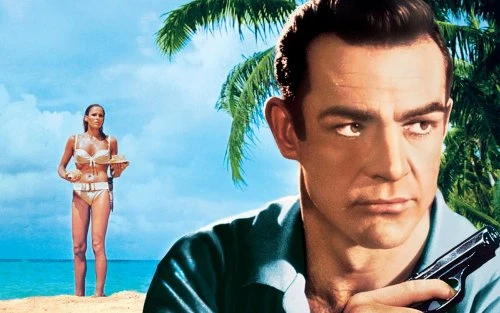
What struck me most about Dr No back in 1975 was its length. I was already used to spy adventures like Mission Impossible but they generally wrapped things up in about an hour. I have to say that, as an eleven-year old, I found Dr No dragged a bit in the middle. Yet even in my prepubescent state I recovered my interest when Ursula Andress turned up, and for many years after she remained the standard by which I judged beauty. The final act seemed ridiculous to me even at that age: like Scott Evil many years later in Austin Powers, I could not understand why the villain did not just shoot the hero instead of keeping him prisoner and inviting him to dinner; and the ending in which the villain's base blew up so conveniently, leaving only the hero and the girl as the sole survivors, struck me as contrived even then. This was not the last time a Bond film would leave me thinking that. Yet despite my childish ruthlessness, the other thing that struck me in sharp contrast with the television spy capers with which I was familiar, was the cold blooded way Bond murdered a man he had at his mercy. While the man in question deserved it, having been responsible for the deaths of Bond's friends, television heroes simply did not do that back then.
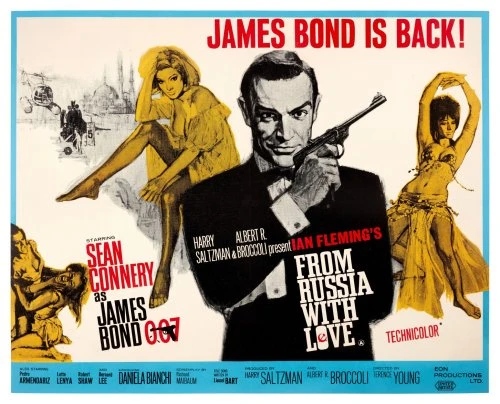
After the glamour of Jamaica and unlikely underground bases immaculately designed by Ken Adam, From Russia with Love marked a return to the grittier tone of the novels and was all the better for it. The plot is a more straightforward Cold War thriller involving the real life spy games then being played between Moscow and the West, with some elements based very loosely on actual events, except with the introduction of an extra dimension in the form of the fictional SPECTRE. Even at this early stage the future management consultant in me questioned the viability of SPECTRE - apart from the organisational and economic problems inherent in such an enterprise, who would want to work for anyone who routinely treated their employees so poorly? Despite Sean Connery reaching his peak as Bond, it was Pedro Armendariz in the first half of the film and Robert Shaw in the second who made the biggest impression on me.
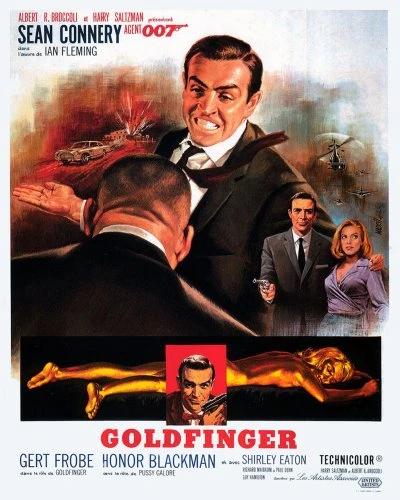
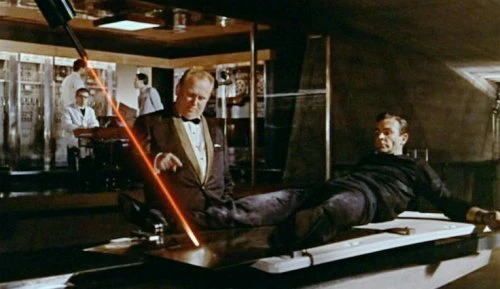
It is an endlessly debated title, and in the end, it must come down to a subjective choice, but with me Goldfinger established itself immediately as the Best Bond Film and has remained so ever since. It certainly has the Best James Bond (Connery, obviously, but I will at least listen to arguments for Dalton), the Best Bond Villain (Gert Frobe), the Best Bond Song (Shirley Bassey dialled up to 11), the Best Bond Gadgets (the Aston Martin), and the Best Bond Method of Disposal (the laser cutter) leading to the Best Bond Dialogue ( "Do you expect me to talk?" "No, Mr Bond, I expect you to die). Against that, the plot makes no sense at all: again the practically minded child I was never understood why Goldfinger did not simply torture Bond on the spot for the information he claimed to have instead of flying him to America by private jet and locking him up so that he could escape; and the fact that Bond allowed not just one but two girls, sisters at that, to die pointlessly, diminished his heroic status with me even before his appalling treatment of Pussy Galore. For all that youngsters today talk of previous generations being misogynistic, the fact is that when I was growing up it was impressed far more strongly on us than it is in these more egalitarian times that boys were stronger than girls and so it was wrong to bully or mistreat those weaker than us.
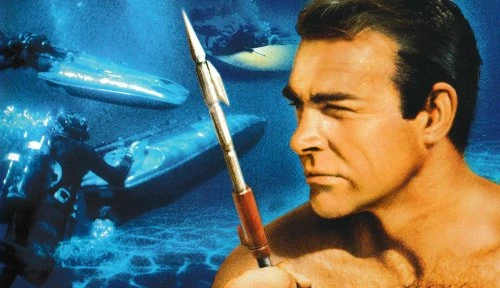
The underwater scenes, which were the major selling point of Thunderball, became a little repetitive to me when I was younger, as was the West Indies setting so soon after Dr No. The more we saw of SPECTRE the more my reservations about it as a commercial venture increased. Bond having to blackmail an employee of a health resort where he was a client to get her to have sex with him detracted further from his image as both a hero and a ladies' man: apart from being immoral even by the standards of the time, it came across as desperate. On the plus side, Adolfo Celi was an impressive villain, and his collapsible boat was a great gimmick.
The non-canonical Casino Royale, which I list here in proper order of cinematic release despite being fairly certain I saw it on television before the Eon films reached there in 1975, was a chaotic mess I could not understand at all, but the music was jolly and it cannot be denied that some scenes stick in the mind.
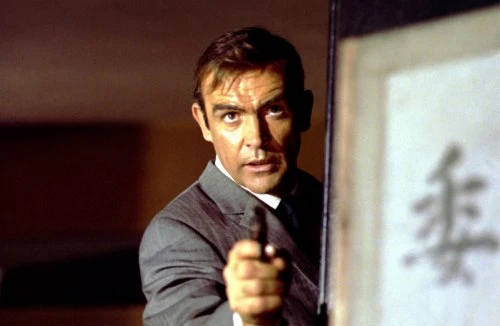
To a much lesser extent, the same can also be said of the next Eon film, You Only Live Twice. There were too many absurdities and inconsistencies - Bond's wholly unnecessary faking his own death only to be recognised immediately by apparently now being the one person in the world to own a PPK, the Director of the Japanese Secret Service travelling only by his own private underground train but leading his Ninjas in person, and Connery passing himself off as Japanese are at the top of a very long list. It was disappointing that Charles Gray's intriguing character introduction went nowhere very fast and that the way Bond seemed to be having genuine romantic feelings towards one Japanese agent did not stop him switching to another after the first was murdered. However, Japan was a suitably exotic new location, the "Little Nellie" sequence was great fun, and the volcano base might be Sir Ken Adam's finest hour, even if I was, even as a youngster, again questioning the logistics and finances such an operation would involve in real life. Donald Pleasence remains for me the definitive Blofeld.
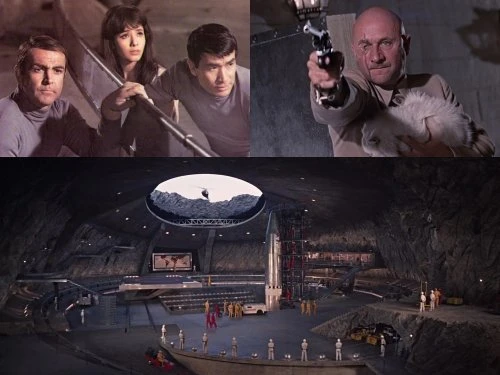
There is today an increasing acceptance of the then heretical opinion I formed of On Her Majesty's Secret Service on my first viewing, that it is a truly great Bond film. Indeed, it might have replaced Goldfinger as the Best Bond Film in my estimation were it not for the casting of George Lazenby. The revisionism goes too far when it tries to defend his performance. He is at his best when being - strangely - dubbed by George Baker, who had only just appeared as another character, but who still sounded more like Bond than the actor playing Bond. The tragedy of the film is that one can only try to imagine what Connery - or any of the Bond actors, except perhaps Daniel Craig, who probably would have tried to milk it too much - would have made of the raw material - a superior script, which stayed relatively close to the novel, gave to Lazenby, with Bond finally having to confront his emotions. There is a wonderful scene when Bond looks genuinely exhausted and on the point of despair, and I have to say Lazenby handles it well, but I cannot help but thinking how much more impact it would have had if it had been Connery who had his arrogance knocked out of him at last and we saw real fear in those expressive brown eyes.
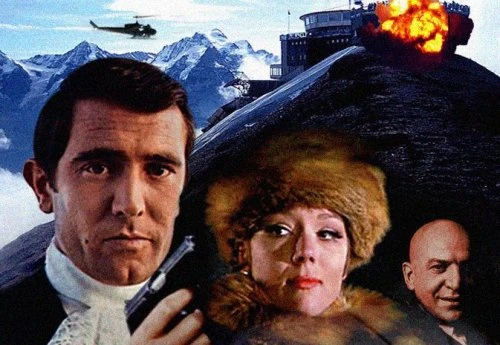
It helped that this was the film with the Best Bond Girl, Diana Rigg. It also had a truly great ski chase leading to the Best Bond Callous One-Liner. Louis Armstrong singing the poignant "We Have All the Time in The World" is one of the most atypical Bond theme songs and yet one of the most appropriate in how it was used. Personally, I missed Pleasence as Blofeld, but the plot was a semi-"reboot," dependent on Bond and Blofeld not recognising each other from before, so there was logic to the recasting and Telly Savalas is a welcome presence in any project, remaking the role completely in his own image as he always did. Nevertheless, it always struck me as a missed opportunity not to use Bond's ridiculous plastic surgery in You Only Live Twice as an excuse for the change of actor - they could have said the reversal procedure had encountered difficulties. It is also worth noting, given the connection that has built up between Bond films and Christmas, that this is the only one in which a Christmas setting is significant.
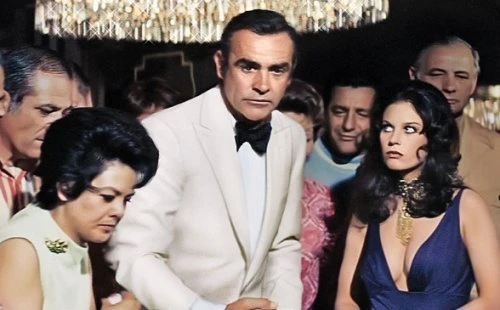
If that sounds contrived, it is no worse than what came next. Connery's return in Diamonds Are Forever only serves to prove that his feeling even as he was filming You Only Live Twice that he was played out as Bond was entirely correct. It abandons all pretence of seriousness in favour of what can only be described as whimsy. As such it is entertaining, especially in the Las Vegas sequences, but it is not Bond. The change of tone serves as a suitable transition to the increasing absurdity of the Roger Moore Years.
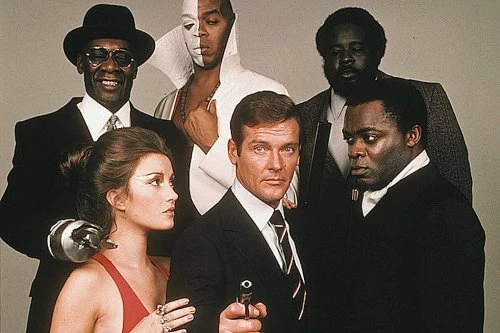
We all liked Roger Moore. He was a friendly and familiar presence in The Saint, and to a great extent his tenure as 007 had more in common with Simon Templar than with James Bond as written by Fleming. As such, he was a more suitable Bond for television than the hard edged Connery, and the scripts played to his strengths, but something essential was lost. It did not help Moore that he was introduced in one of the weakest films, Live and Let Die, which seems more like a satire on the then increasingly popular "blaxploitation" genre than a spy film - for this reason it can be uncomfortable viewing today. Some of the set pieces work well, including a New Orleans jazz funeral with a twist and a tense escape from an alligator farm. There is a great speedboat chase and personally I liked Clifton James' comic relief Louisiana Sheriff - well, I was young. However, while Yaphet Kotto was a powerful actor in the right role, this Bond villain was not the right role for him and the supposed big twist was visible a mile off.
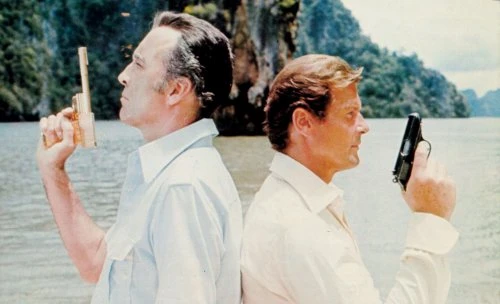
The great Christopher Lee, by contrast, was perfectly cast as the titular assassin in The Man With the Golden Gun, and it is a pity he was not given a film worthy of his performance. Like its predecessor it seemed to be chasing the latest fad, so we get a Kung Fu sequence and even the return of Clifton James' Louisiana Sheriff, both jarringly out of place in Thailand. Even more out of place is a sound effect that almost ruins one of the greatest live action car stunts in film history. That pretty much sums up the whole thing. The best scene is in fact not an action scene but a lunch in which Lee questions Moore's 007 about his philosophy and asks if they are really that different. Bond cuts the discussion short but there is no doubt that Lee was getting the better of it and that an opportunity to explore the incongruity of a State sanctioned assassin was wasted.
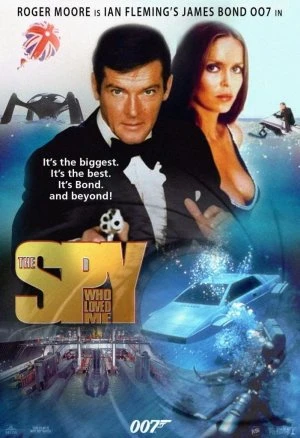
Moore's next outing The Spy Who Loved Me is widely considered his most successful. It had a superb opening sequence, an actual story with actual human emotions on the line, one of the most memorable Bond Girls (Barbara Bach), one of the most memorable Bond Gadgets ("Wet Nellie," the Lotus car that transforms into a mini submarine), a superior Bond Villain (Curd Jurgens) with arguably the Best Bond Henchman (Richard Kiel as Jaws), and a great title song by Carly Simon. It is notable as being the first film in which Bond casually but deliberately killed a woman. This shocked me for two reasons: first, it is the sort of thing one might expect of Connery but surely not Moore; and second, the woman in question was the lovely Caroline Munro, whom I could never imagine killing even if she had just tried to kill me. It also struck me as odd that Jurgens not only murdered retiring employees - which surely would have demotivated his remaining workforce - but did so in such a needlessly expensive and elaborate fashion, blowing up a helicopter and, presumably, its pilot in the process. Between that and poor Caroline, it was not a happy film for helicopters and helicopter pilots.
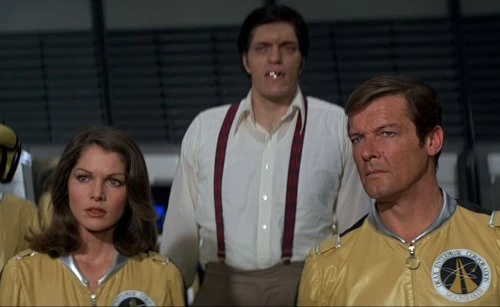
Eon's habit of jumping on the latest trendy new thing in the Seventies was at its worst with Moonraker which was little more than a Star Wars pastiche. The only good things about it were the return and redemption of Richard Kiel's Jaws. Even the excellent Michael Lonsdale was unusually underpowered as the villain.
Happily, Eon then brought the franchise back down to Earth, in every sense, with For Your Eyes Only, a more grounded, low key Cold War spy thriller without a countdown to Armageddon, and as such a welcome relief. This is an often underrated film. True, the simple plot meanders a bit, but its simplicity gives the film a stronger spine than most, and the film as a whole has a lot going for it, including a lovely theme song from Sheena Easton and appropriately Flemingesque performances from Topol, Julian Glover, and Michael Gothard. Best of all was the final sequence set on a spectacular mountain monastery in Greece, capped with a subversive ending which, having recently seen Anyone For Denis on stage, I found particularly amusing. I was also pleased by the opening scene which, belatedly, confirms the life changing events Bond experienced in On Her Majesty's Secret Service as "canon."
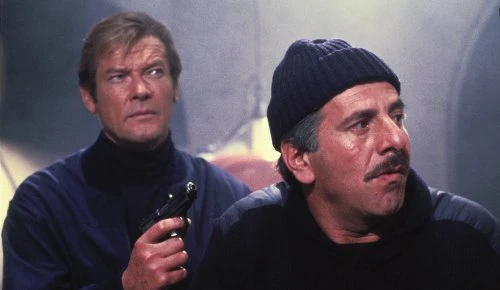
Of the last three Bond films I first saw on television before rediscovering Bond in the cinema, little need be said. By this time I was in any case growing out of Bond, a process accelerated by the films themselves becoming increasingly childish. I was old enough by this point to have seen all three in the cinema, but I simply could not be bothered.
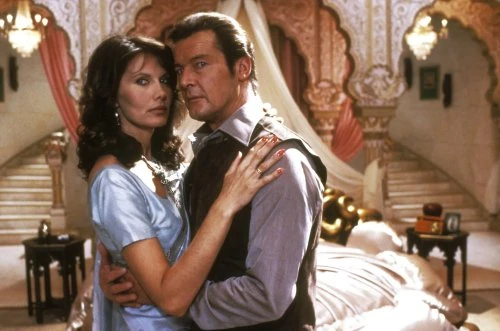
To be honest I can remember little of Octopussy apart from tennis player Vijay Armritraj's cringeworthily "on the nose" cameo. Perhaps it is kindness that I cannot recall much more, except my astonishment at seeing the name of George MacDonald Fraser, one of the great novelists of our time, credited as co-writer, together with Richard Maibaum, the most experienced writer for the franchise and one of the most talented, and producer Michael Wilson. It is textbook case of too many even really good chefs spoiling the broth.
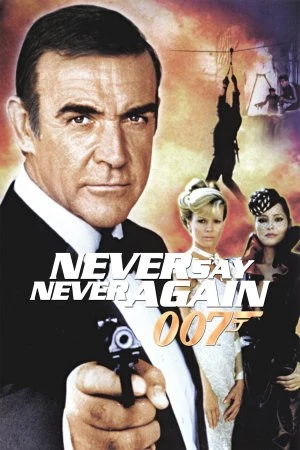
Sean Connery returning as Bond in a non-Eon retread of Thunderball renamed Never Say Never Again - the title a heavy handed joke that sums up the whole project - served no purpose except, presumably, to make some money for Connery and score points in whatever incomprehensible private war he was still fighting in his own mind with Eon's Cubby Broccoli. He did not come well out of it on any level, except perhaps the financial. That the film was actually well made, with good performances from Klaus Maria Brandauer and Barbara Carrera as the villains, only seemed to emphasise its pointlessness.
Of A View to A Kill, I remember little except it rather offended me to see Patrick Macnee used so poorly and then thrown away, as if the Eon machine was demonstrating that the beloved John Steed was no more than a disposable sidekick to Bond.
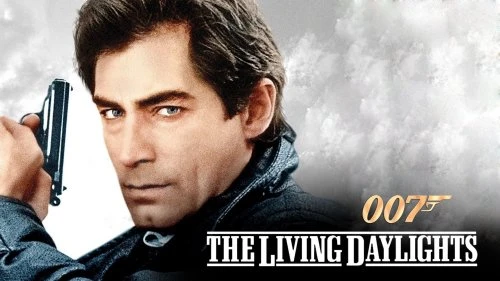
It was only because some friends were going and invited me to join them that I went to see The Living Daylights. There I finally saw Bond for the very first time as he should be seen, on the big screen. That, combined with Timothy Dalton's more mature approach to the character, reignited my interest in the franchise - at least until it died of apathy in the Daniel Craig years (this is no disrespect to Craig, a fine actor, but Bond lost all touch with his roots during the domestic drama of his tenure).
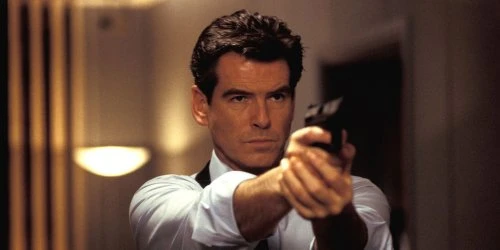
In between came the Pierce Brosnan films, which were essentially cinematic in style. No one has a bad word to say about Brosnan as Bond, but someone - I wish I could remember who - observed perceptively that neither is he anyone's favourite Bond, and while that is a bit of an exaggeration, his name tends not to crop up in those endless "Best Bond" conversations. Most put him second or third, but he does not have his passionate partisans like Connery, Moore, Dalton, and even Craig. The Brosnan films were, without exception, tight, well made, and efficiently entertaining, just no longer "events" in their own right. Bond had become reliable.
Earlier this year, after much dancing around, Eon finally sold out to Amazon, who had already bought their distributor MGM. This latest deal brings with it, among other things, the prospect of a specifically produced Bond television show, or even shows. Given Amazon's track record with adaptations of literary franchises, most notably The Lord of the Rings: the Rings of Power and The Wheel of Time, Bond fans have every reason to be nervous.
Nor does Amazon's previous use of the Bond name, on a basically unrelated game show, give much hope for confidence. Yet it is possible that Amazon have learned from their mistakes. There have also been significant changes in their management this year, and it is encouraging that they have brought in experienced hands Amy Pascal and David Hayman to oversee their new acquisition. It is also cheering to remember how Reacher and The Terminal List proved that Amazon can be quite good at handling male orientated literary properties when they respect their target markets.
In the meantime, I look back on my own childhood and growing up with James Bond - entirely on television - with sweet nostalgia. Bond was never my favourite hero, but he was a regular part of our family viewing, especially at Christmas, and as such I remember him with more fondness than the psychopath deserves. Unless he is again revived unexpectedly, as he was for me by Dalton and Brosnan, he is now very much part of my past. Yet, to steal an analogy from Will Jordan, the fact that I no longer play with my childhood toys does not mean I can feel nothing if I see them abused, and for that reason I hope Amazon MGM get this one right.
Share on...
Published on December 23rd, 2025. Written by John Winterson Richards for Television Heaven.