

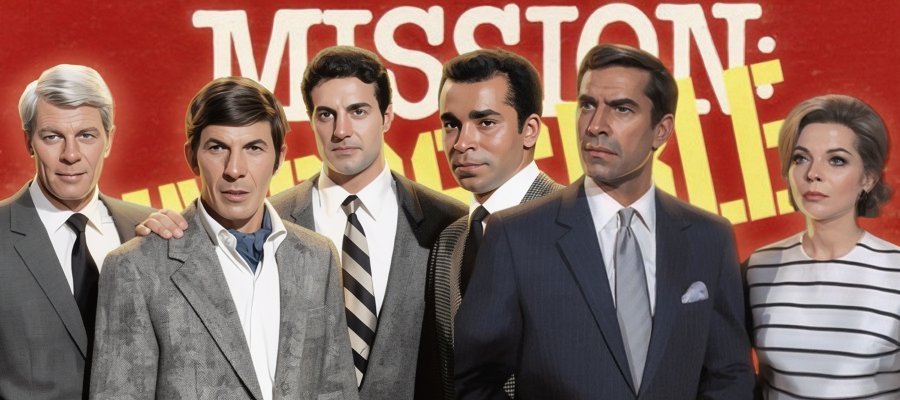
Mission: Impossible - Accomplished
Mission: Impossible has achieved something very few franchises ever manage. It began life as a cool, intelligent television spy series in the 1960s before reinventing itself as one of cinema's premier action franchises. Across nearly six decades it has evolved dramatically, yet the core ingredients have remained remarkably consistent: elaborate planning, impossible odds, clever deception and nerve-shredding suspense.
The original series was created by Bruce Geller and financed and produced by Desilu Productions. Geller's biggest inspiration came not from another spy story, but from Jules Dassin's 1964 heist film Topkapi. Rather than focusing on criminals, Geller took Dassin's meticulous approach to planning and execution and applied it to secret agents. The result was a show built around precision rather than spectacle. Dialogue was kept to a minimum, music carried much of the tension and every mission unfolded with the mechanical precision of a Swiss watch. Quite literally in some cases, as frequent close-ups of an agent's wristwatch reminded viewers that every second mattered.
One of Geller's more controversial creative decisions was to keep his characters deliberately underdeveloped. He believed audiences would find undercover agents more convincing if they remained blank slates rather than fully explored personalities. He was so committed to this philosophy that he regularly vetoed writers' attempts to flesh out the main cast. Even after Geller eventually left the series, the agents were almost never shown in their personal lives, with only a single scene of the team gathering at Jim Phelps' apartment throughout the original run.
The show's originality was questioned early on when the producers were sued by the creators of the short-lived detective series 21 Beacon Street, who alleged plagiarism. The case was settled out of court, although Geller always maintained he had never even seen the earlier programme. Ironically, 21 Beacon Street story editor Laurence Heath would later go on to write several episodes of Mission: Impossible himself.
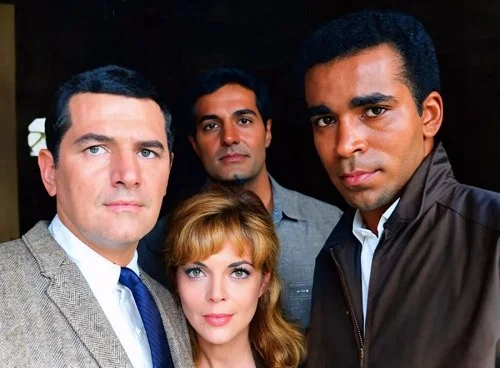
Although most people immediately associate the series with Peter Graves' Jim Phelps, the Impossible Missions Force was originally led by Dan Briggs, played by Steven Hill. Early episodes even opened differently, with Bob Johnson's disembodied voice greeting viewers with "Good morning, Mr Briggs." Hill's departure came about largely because of production difficulties surrounding his Orthodox Jewish faith, which required him to leave work before sunset every Friday and prevented him from filming until after dark on Saturdays. As filming became increasingly demanding, Briggs appeared less and less, eventually missing three complete episodes, with Martin Landau's Rollin Hand effectively stepping into a larger role. Hill was replaced in the second season by Peter Graves as Jim Phelps, although Hill himself later suggested he left simply because the role had become too routine.
The series was originally intended to feature Briggs or Phelps assembling a different team of specialists for every assignment. In practice, however, viewers quickly became attached to a dependable core cast. Rollin Hand, played by Martin Landau, was the brilliant master of disguise. Barbara Bain's Cinnamon Carter could convincingly become almost anyone required for the mission. Greg Morris brought quiet intelligence to Barney Collier, whose electronic wizardry frequently saved the day, while Peter Lupus provided the team's physical presence as Willy Armitage.
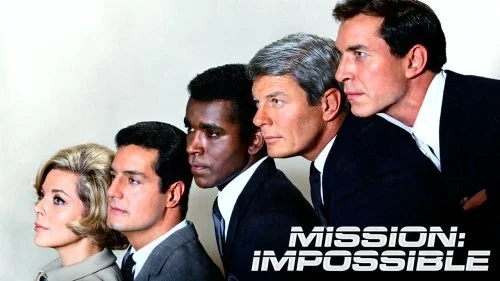
The first season laid the groundwork, but it was the second that truly captured the public's imagination, becoming the programme's biggest success and collecting four Emmy Awards. Barbara Bain's contribution was particularly remarkable, winning the Emmy for Outstanding Actress three consecutive years, making her the first actress ever to achieve that feat.
Mission: Impossible also stood apart from many of its contemporaries through the nature of its missions. Most assignments involved protecting strategically important fictional nations from communist influence or overthrowing ruthless dictators and tyrants. Yet unlike many spy adventures, the IMF rarely stormed in with guns blazing. Instead they relied on deception, elaborate confidence tricks and psychological manipulation. The moral lines could become surprisingly blurred. The team had few reservations about kidnapping targets, framing individuals or plotting assassinations, even if they never personally carried them out. Justice was achieved through manipulation rather than brute force, making the show feel considerably more sophisticated than many action series of its era.
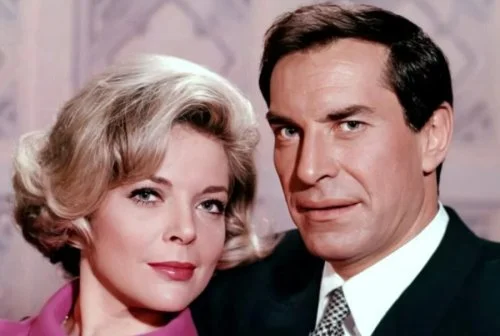
The franchise's biggest behind-the-scenes drama arguably came with the departures of Martin Landau and Barbara Bain. Landau, still working on yearly contracts, reportedly sought an increase from $7,000 to $11,000 per episode, which would have placed him above Peter Graves' salary. Graves' contract guaranteed he would remain the highest-paid cast member, creating an impasse. Landau left, and Bain soon found herself caught in the fallout after Paramount had acquired Desilu. Decades later, in a 2019 interview, Bain rejected suggestions that money had been her motivation, explaining that she had simply become entangled in disputes over Landau's contract. According to Bain, publicity suggesting they were jointly holding out for more money was completely inaccurate and the entire experience was deeply upsetting.
As the years progressed, the series inevitably evolved. During its first four seasons the IMF operated largely in colourful fictional countries such as San Cordova, Puerto Huberra and Santa Costa. However, America's growing involvement in Vietnam made stories about interfering in foreign governments increasingly uncomfortable. By the fifth season, the focus shifted towards organised crime operating within the United States.
Around the same time, creative cracks also began to show. Season four lacked a permanent female operative, relying instead on a succession of guest stars including Dina Merrill, Lee Meriwether and Barbara Luna. Leonard Nimoy joined as the wonderfully named master of disguise The Great Paris, effectively replacing Rollin Hand, while perhaps the most significant off-screen change saw Bruce Geller dismissed after repeatedly exceeding budgets. Bruce Lansbury, younger brother of Angela Lansbury and already an experienced television producer, stepped in to take control.
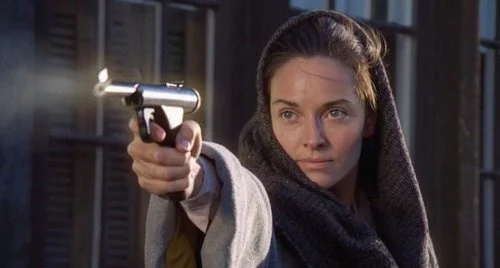
Lansbury's first priority was restoring a permanent female team member. Unfortunately, Lesley Ann Warren's Dana Lambert never really connected with audiences, and Leonard Nimoy soon departed to pursue other acting opportunities. For season six, Lansbury essentially merged the two missing characters into Lisa Casey, played by Lynda Day George, who handled both disguise work and undercover assignments. Another addition, Dr Doug Robert, played by Sam Elliott, proved even less successful. Introduced as a possible replacement for Peter Lupus' Willy, viewers never accepted the character, and after Paramount was flooded with "Bring Back Willy" letters, Lupus remained firmly in place.
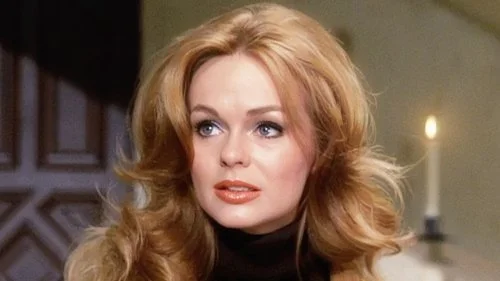
The revolving cast continued into the seventh season when Lynda Day George took maternity leave for ten weeks. Her temporary replacement, Mimi Davis, portrayed by Barbara Anderson, arrived with an unusual backstory as a woman on parole recruited by the IMF.
Despite scripts already being prepared for an eighth season, CBS abruptly cancelled the original series.
Mission: Impossible refused to disappear quietly. Throughout the 1980s Paramount explored various revival ideas, including television films and theatrical releases, but none materialised. Then an unexpected opportunity arrived when, in 1988, the Hollywood Writers Guild strike created demand for new programming. ABC commissioned a new weekly Mission: Impossible series, filmed in Australia. Peter Graves returned as Jim Phelps, while the rest of the cast was entirely new. The idea was to use scripts from the original series, suitably updated. In the end, only a few episodes were outright remakes of the original series.
Set 15 years after the original series, the revival finds the retired Phelps returning after the murder of his successor. His new IMF included Nicholas Black, a professor of acting and disguise played by Thaao Penghlis; Anthony Hamilton's Max Harte, combining brute strength with weapons expertise; Terry Markwell's Casey Randall, an interior designer turned undercover operative; and Grant Collier, played by Phil Morris, the real-life son of Greg Morris, portraying Barney Collier's equally gifted son.
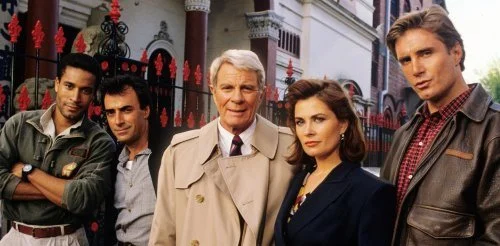
The revival even delivered genuine emotional stakes. Casey Randall is murdered midway through the first season, prompting Phelps to swear revenge before recruiting Jane Badler's Shannon Reed. Fans were also rewarded with the return of Barney Collier after he was rescued from a Turkish prison, while Lynda Day George reprised Lisa Casey for a guest appearance.
Despite an appealing cast and Australia's attractive locations, the revival never truly found its footing. Much of the blame lies with inconsistent scripts and, even more significantly, ABC's disastrous scheduling decisions. After beginning on Sundays, it was shifted to Saturday evenings before being moved to Thursday nights opposite NBC's ratings juggernaut The Cosby Show. Predictably, viewing figures collapsed. Returning it to Saturdays failed to halt the decline and the series was cancelled after just two seasons.
Six years later, on the original programme's 30th anniversary, Mission: Impossible finally reached the big screen after years of failed attempts to crack the right story. The breakthrough largely came thanks to Tom Cruise, who had loved the television series since childhood. He selected Mission: Impossible as the very first project for his new production company and persuaded Paramount to invest $70 million.
Released in 1996, the film divided critics but thrilled audiences. It grossed an impressive $457.7 million worldwide, making it the third highest-grossing film of 1996. Jon Voight stepped into the role of Jim Phelps, while Cruise introduced audiences to Ethan Hunt, a younger IMF agent who would ultimately become the defining face of the franchise.
The film also wisely embraced one of the television show's greatest assets: Lalo Schifrin's unforgettable theme music. U2's Larry Mullen Jr. and Adam Clayton, lifelong fans of the original theme, produced a fresh interpretation despite admitting they were nervous about reinventing such an iconic piece. Their version became an international hit, reaching the top ten in charts around the world. Both their recording and Schifrin's orchestral version performed by the London Philharmonic Orchestra received Grammy nominations.
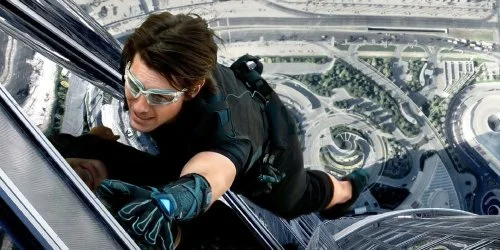
That first film laid the foundations for one of Hollywood's most successful franchises. Following on with Mission: Impossible 2 in 2000, the series steadily reinvented itself as a globe-trotting action spectacle built around Tom Cruise's increasingly ambitious practical stunt work. Across eight films, the franchise has earned more than $4.35 billion worldwide, making it the 16th highest-grossing film series of all time. The most recent entry, Mission: Impossible – The Final Reckoning, arrived in 2025, and at its New York premiere Cruise confirmed what many had suspected, declaring that it would indeed be his final appearance as Ethan Hunt, joking that "The film is the final! It's not called 'final' for nothing."
Looking back, Mission: Impossible's greatest achievement is not simply its longevity but its adaptability. The original television series succeeded because it trusted audiences to enjoy carefully constructed puzzles rather than endless shoot-outs, while the films transformed those same ideas into exhilarating blockbuster entertainment without completely abandoning the franchise's roots in elaborate planning and impossible missions. Whether it was Bruce Geller's elegantly choreographed television capers or Tom Cruise hanging from aircraft and scaling impossible heights, the central appeal has always remained the same. Watching an expertly assembled team overcome impossible odds through intelligence, preparation and sheer nerve never really goes out of style.
Share on...
Published on July 21st, 2026. Written by Marc Saul for Television Heaven.