

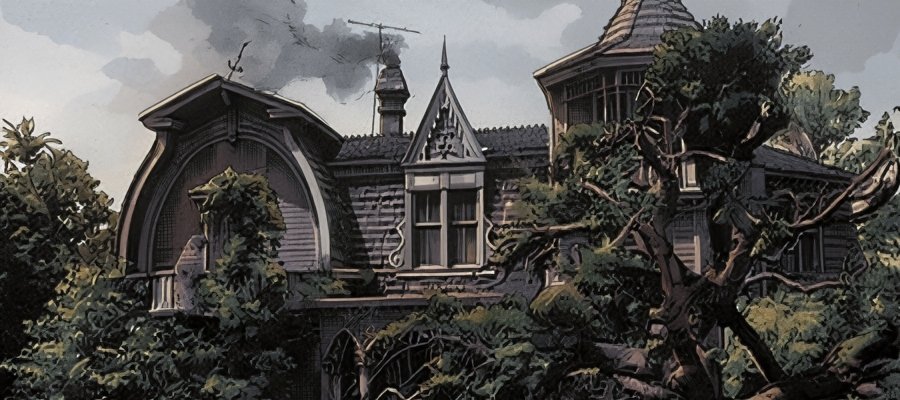
The House on 'The Lane'
Long before it became television’s most famous spooky address, the Munster Mansion was simply another hardworking Hollywood house trying to make a living on the Universal lot. Like many stars of the golden age, it reinvented itself several times, survived dramatic makeovers, and somehow kept standing through decades of explosions, sitcoms, and suspiciously bad neighbourhood luck.
The story begins in 1946, when Universal built the house for the romantic period film So Goes My Love. Designed in the grand Second Empire Victorian style, the structure was originally constructed on Stage 12 alongside another Victorian home created specifically for the production. At the time, nobody could have guessed this slightly gloomy-looking residence would eventually become one of television’s most recognisable homes.
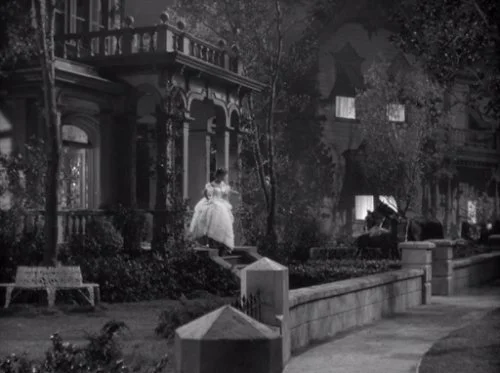
After filming wrapped, the house was dismantled and tucked away in storage — the Hollywood equivalent of putting your Christmas decorations in the attic and forgetting about them for a few years. Fortunately for the future Munsters, Universal had bigger plans. In the early 1950s the studio began building a new residential area on its front lot called River Road. The old Victorian sets were dusted off, rebuilt, and placed into active service once again.
From there, the house became one of those familiar “Hey, I’ve seen that place before!” locations that constantly popped up in classic television and film. It appeared in productions including Abbott and Costello Meet the Invisible Man, Alfred Hitchcock Presents, Wagon Train, Dragnet and Coogan's Bluff. At this stage it was still just another respectable Victorian home — no cobwebs, no bat-shaped weathervanes, and certainly no laboratory in the basement.
That all changed in 1964.
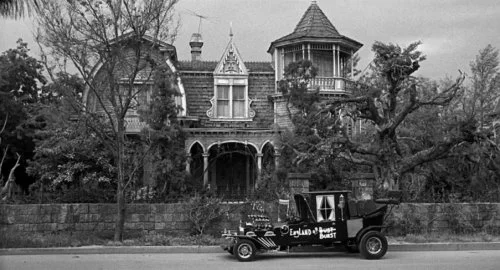
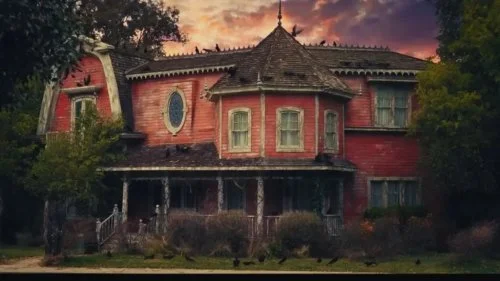
When Universal prepared the new sitcom The Munsters, the house underwent the architectural equivalent of a Halloween costume montage. Designers transformed the elegant Victorian residence into a delightfully creepy mansion worthy of Herman, Lily, Grandpa and the rest of television’s favourite monster family.
The third-floor octagonal tower was modified into a covered widow’s walk with a tented roof. A faux gingerbread gable appeared above the second-storey centre window. A chimney and crooked vampire-bat weathervane were added for good measure, because apparently subtlety was not part of the design brief. The grounds were dressed with dead trees, piles of leaves, and a dramatic stone entrance gate that practically screamed, “Nothing normal happens here.”
A darker paint job completed the transformation. While all interior scenes were filmed on separate soundstages, the exterior became instantly iconic. Television viewers soon learned the address by heart: 1313 Mockingbird Lane in Mockingbird Heights. Interestingly, the house was initially supposed to be located at 43 Mockingbird Lane in Camelot, New Jersey, but that changed before filming fully settled in.
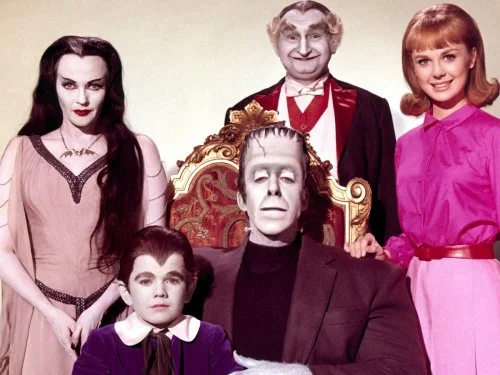
Within the fictional world of the show, the mansion itself had a wonderfully bizarre backstory. According to series lore, it had been built atop the remains of an old fort, with Grandpa helping Herman and Lily buy the property by providing the down payment. Real estate agents rarely mention ancient fort ruins in listings these days, but perhaps they should.
After The Munsters ended in 1966, along with the feature film Munster, Go Home!, the spooky decorations were stripped away. Gone were the dead trees, iron gates and gothic landscaping. Interestingly, although fans and studio workers began referring to the building as “the Munster Mansion,” that name was never actually used in the television series itself.
Then came another major upheaval. Universal redesigned much of its front lot, relocating numerous sets — including the famous house — to the backlot area known as Colonial Street. Unfortunately, by the time production began on the television movie The Munsters' Revenge, the mansion had changed so much that filmmakers could only use limited close-up shots of windows and garden areas. For wide exterior views, they relied heavily on stock footage from Munster, Go Home!.
The 1980s were not particularly kind to the old house. Renovations modernised the structure and removed many of the details added during its Munsters glory days. The charmingly spooky gingerbread gable disappeared, the widow’s walk tower lost its distinctive appearance, and the original porch was replaced with a larger wrap-around design. It was less “haunted mansion” and more “suburban home with surprisingly high renovation costs.”
Things got even rougher by 1987. The building had deteriorated so badly it could not properly appear in the pilot for The Munsters Today. Once again, producers turned to old stock footage to recreate the classic look audiences remembered.
Still, the house remained a dependable Hollywood workhorse. It continued appearing in productions such as The 'Burbs, another version of Dragnet, and the sitcom Coach.
Then came perhaps the most dramatic makeover of all.
During the mid-2000s, producers of Desperate Housewives decided the old Munster house needed a complete identity change. Concerned audiences would immediately recognise it as the Munsters home, they demolished the second floor and rebuilt it in a more modern Dutch Colonial Revival style. The distinctive mansard roof was replaced with a gambrel gable, and nearly all traces of the classic gothic detailing vanished.
Suddenly, the former Munster Mansion had a new life as 4351 Wisteria Lane.
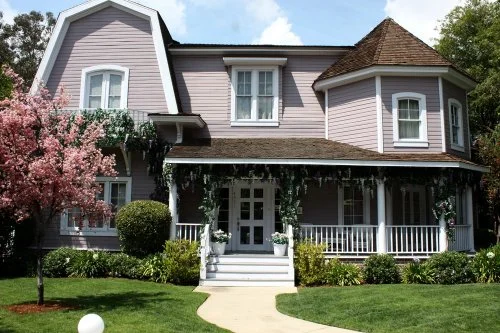
Ironically, even without Herman and Grandpa living there, the property still attracted chaos. On Desperate Housewives, the home became a magnet for spectacularly bad luck. Residents met grim fates involving murder charges, rooftop falls, attic imprisonment, and various other events guaranteed to lower nearby property values.
Today, the original structure technically still exists — but only in its heavily remodelled Wisteria Lane form. The once-spooky mansion has been transformed into a modernised shell that barely resembles the wonderfully weird home television audiences fell in love with during the 1960s.
Still, beneath all the renovations and reinventions, there’s something rather fitting about the house’s long career. Much like the Munster family themselves, it never quite disappeared. It simply changed costumes, moved neighbourhoods, and kept shambling cheerfully along through Hollywood history.
Share on...
Published on May 13th, 2026. Written by Laurence Marcus for Television Heaven.