

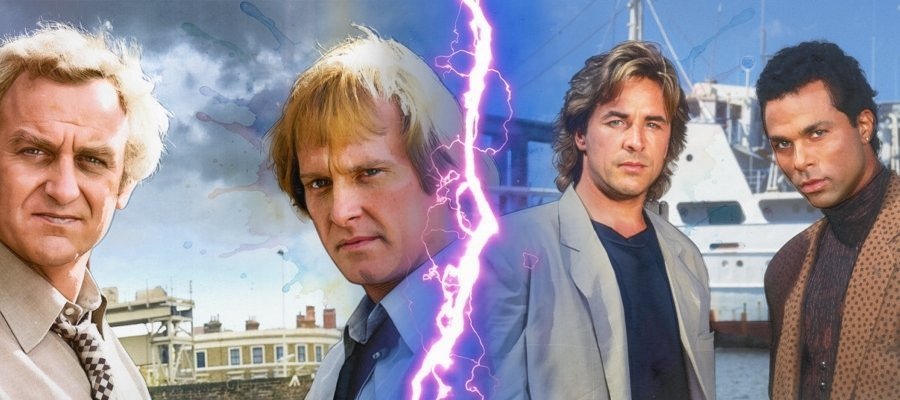
The Sweeney Vs Miami Vice
The Great Cop Show Showdown
by Marc Saul
Let us imagine, if we dare, a crossover episode. Detective Inspector Jack Regan — rumpled, furious, smelling faintly of Scotch and a Ford Granada — materialises somehow on the sun-bleached docks of Miami. He squints. He sweats through his mackintosh. He watches two immaculately dressed men in pastel blazers glide past on a speedboat, listening to Phil Collins. He reaches for his flask and mutters something unrepeatable. That, in essence, is the entire cultural gap between The Sweeney and Miami Vice, and it is magnificent.
Both shows were, without question, the coolest police dramas their respective countries had ever produced. The trouble is they had entirely opposite ideas about what "cool" actually meant. One thought cool meant a fast car, a leather jacket, and not taking any nonsense from villains or superintendents. The other thought cool meant a faster car, no socks, and looking like the inside of an Italian fashion magazine while busting drug cartels. One is absolutely right. So is the other. This is the problem.
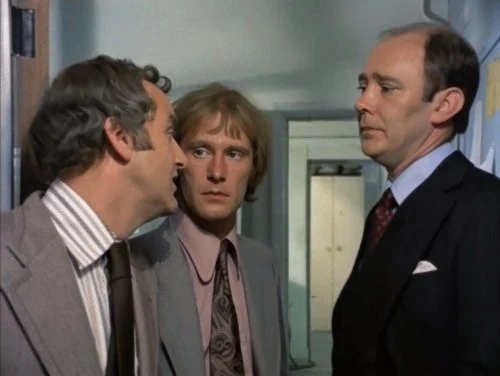
Jack Regan and his long-suffering sidekick George Carter were the Flying Squad — Scotland Yard's finest, which in 1970s television meant they were allowed to shout at people, kick in doors without much paperwork, and occasionally thump a villain in a way that would cause modern IOPC departments to spontaneously combust. Regan, played by the magnificent John Thaw, operated on the theological principle that the rules existed primarily as obstacles between him and the bad guy, and that any superintendent who disagreed could get stuffed.
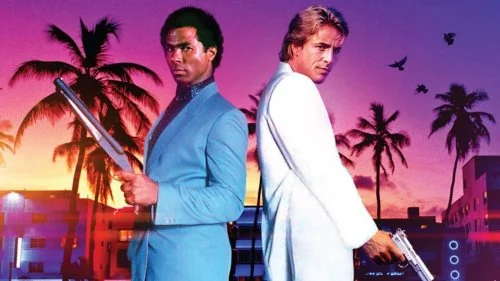
Sonny Crockett and Rico Tubbs, meanwhile, looked like they had been assembled in a laboratory by scientists who had been asked to make policemen who could also plausibly be on the cover of GQ. Don Johnson's Crockett had stubble so precisely maintained it must have required a dedicated team. He lived on a boat. He had an alligator called Elvis. He wore Armani to crime scenes. You would not invite Jack Regan to your fashion show. You would absolutely invite Crockett — and he would arrive in a Ferrari.
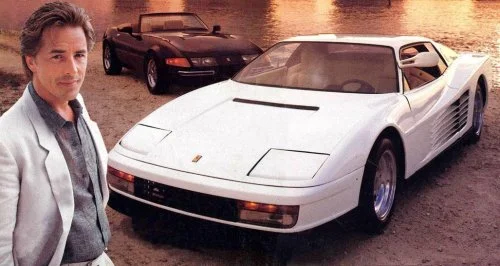
"Regan would look at Crockett's wardrobe and genuinely not know whether to nick him or ask for the name of his tailor. Probably both."
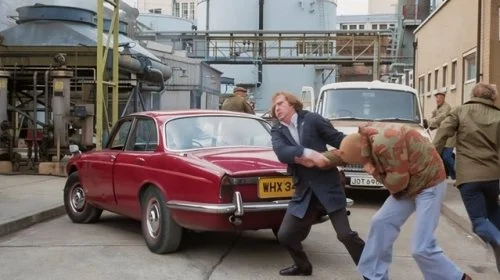
The Sweeney had the Ford Granada. Now, say what you like about the Ford Granada — and we say this with genuine affection — it was a car that communicated a very specific message, which was: "I am a serious man doing a serious job in a serious country where it is raining." It was comfortable, it was capable, and it could pursue a transit van full of armed robbers down the M4 with considerable conviction. It was not, however, a Ferrari Daytona Spyder. This is where Miami Vice stepped in.
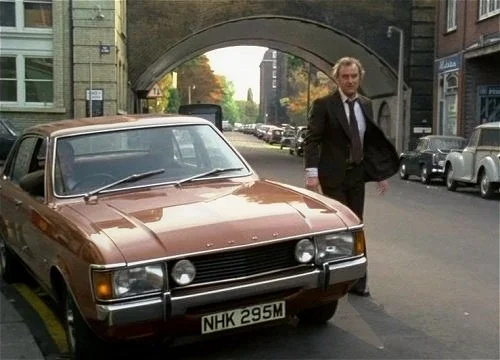
Crockett drove a Ferrari because it was justified in the show by the concept of "asset forfeiture," which is apparently a real legal thing that allowed undercover cops to drive confiscated vehicles, so they looked the part. We choose to believe this entirely because the alternative — that the Miami-Dade Police Department simply had a very generous fleet policy — is less fun. The point is: Ferrari versus Ford Granada. Neon Miami sunsets versus the elevated section of the A40. It is not a fair fight, and everyone knows it.
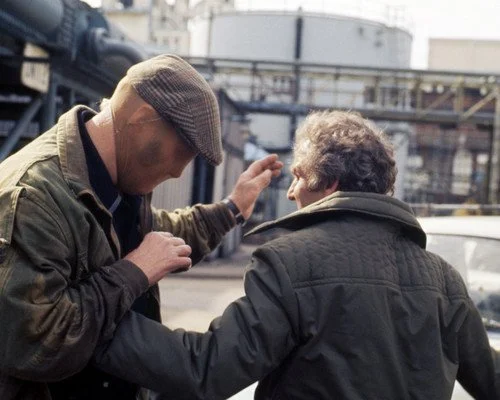
The Sweeney dealt with the cream of British criminality: bank robbers, armed blaggers, lorry hijackers, the occasional bent copper. These were proper villains — men who wore sheepskin coats and used phrases like "I'll 'ave you, Regan" with genuine menace. They were villains you could imagine meeting in a pub in Bermondsey. They had mortgages. Some of them had kids in football. The wrongness was very relatable.
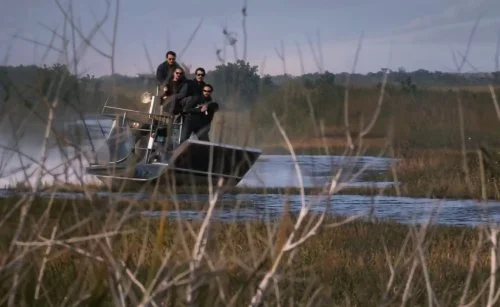
Miami Vice, by contrast, gave us Colombian drug lords, South American arms dealers, Haitian crime lords, and at least one terrifying general from a fictional dictatorship. The villains wore white suits and spoke in cold, measured sentences and had enormous yachts. They were not relatable. They were terrifying and exotic and largely beyond the conceptual reach of anyone who had grown up watching someone in a sheepskin coat threaten a jeweller. Different class of menace entirely. Literally.
The Sweeney had a theme tune that sounded like someone had set fire to a brass section and recorded what happened next. It was urgent, punchy, and completely unpretentious. It said: things are happening, they are probably violent, here is some brass. It was perfect.
Miami Vice had Jan Hammer, an entire New Wave soundtrack, Phil Collins' In the Air Tonight deployed at a dramatically pivotal moment so effectively that it is now physically impossible to hear that song without imagining a speedboat at dusk. The show treated its music like a co-star — every scene had a carefully curated track doing emotional heavy lifting. It was genuinely innovative television. It also meant that if you watched it in 1985 and the VHS had slightly degraded audio, the whole aesthetic collapsed immediately, which is the one weakness of building your entire brand on a killer soundtrack.
London in the 1970s, as depicted in The Sweeney, looks like it was filmed through a lens coated lightly in despair. The skies are grey. The buildings are grey. The faces are grey. Even the villains' Ford Cortinas are a sort of defeated beige. It is not a critique — this is accurate. Britain in 1975 was living through power cuts, industrial disputes, and the slow-motion implosion of everything. The Sweeney captured it with uncomfortable honesty, and that authenticity is a huge part of why it still holds up.
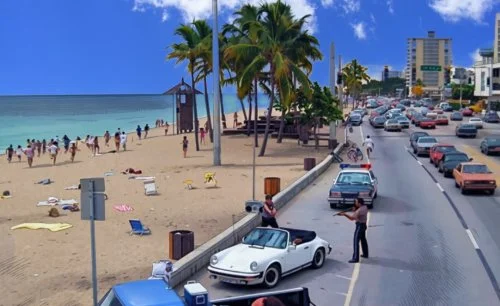
Miami Vice looked like someone had decided that television should be beautiful. Executive producer Michael Mann famously banned earth tones from the set. Everything had to gleam, glow, or pulse with neon. The result was a show that looked like a dream version of America — decadent, gorgeous, and faintly dangerous in the way that only truly beautiful things can be. Whether this bore any resemblance to actual Miami is a separate question that actual Miami residents are welcome to answer.
The Verdict
Both shows were correct about everything. The Sweeney was right that policing is dirty, unglamorous, and morally complicated. Miami Vice was right that it could also look absolutely incredible while being all of those things. Together, they make a perfect television marriage — Regan bringing the beef, Crockett bringing the blazer, and nobody, at any point, wearing socks.
Neither Jack Regan nor Sonny Crockett was available for comment. Their respective publicists said they were "following a lead." We believe them.
Share on...
Published on June 6th, 2026. Written by Marc Saul for Television Heaven.