

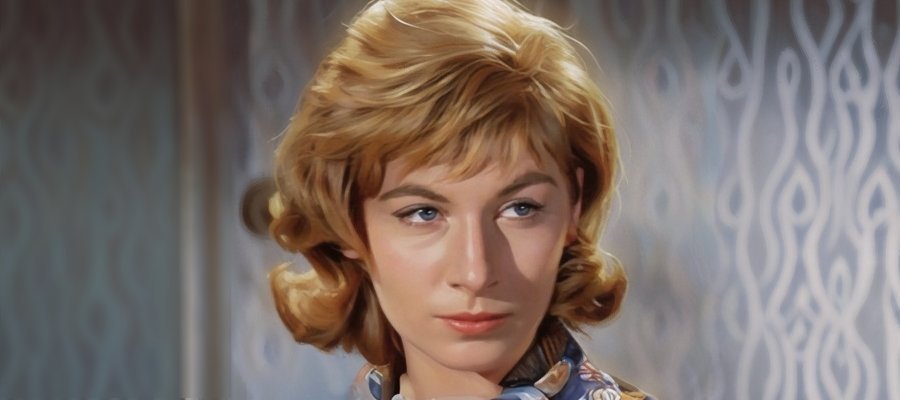
Ann Lynn
Ann Lynn was one of Britain's most enduring and versatile character actresses, appearing hundreds of times on television across a career that spanned more than four decades. Although she worked extensively in drama, film, and theatre, she became especially beloved by television audiences for her comic role as Rita Pinner, the spirited mother of Paul Nicholas's character in the popular sitcom Just Good Friends.
Born on 7 November 1933 in Fulham, London, Ann Lynn was the daughter of Olive (née Harvey) and Basil Lynn. Showbusiness was deeply embedded in her family. Her father worked as assistant house manager at the Streatham Astoria cinema, while her great-uncle was the celebrated farce actor Ralph Lynn. Her cousin, Robert Lynn, later became a film director and producer, best known for producing the classic children's film The Railway Children.
Lynn's connection to performance began almost from birth. At just six months old, she appeared as the daughter of Fay Compton in the film musical Song at Eventide (1934). As a teenager, she initially pursued a career in dance, joining the renowned Tiller Girls troupe at the age of sixteen. However, her ambitions soon shifted towards acting, and after training at the Guildhall School of Music & Drama, she graduated in 1952.
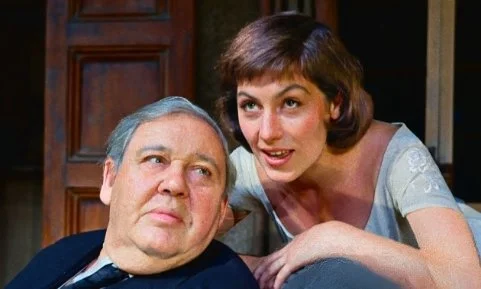
Following her studies, Lynn honed her craft with repertory companies, toured in Wild Horses (1953), and worked as assistant stage manager to the actor-manager Brian Rix at London's Whitehall Theatre. Her West End debut came in 1958 in Jane Arden's controversial play The Party at the New Theatre. As Henrietta Brough, the troubled daughter of an alcoholic father portrayed by Charles Laughton, Lynn earned praise for capturing the character's emotional turmoil. The production also featured Albert Finney in his first London stage role.
Early in her career, Lynn demonstrated a willingness to tackle challenging and provocative material. In the television drama The Report on Jessie Dean (1958), she played an unmarried mother whose baby is stolen by a grieving woman, a storyline that confronted social taboos of the era. Further controversy followed with the film The Party's Over (1965), in which she starred opposite Oliver Reed. The film's depiction of the darker side of Swinging London prompted British censors to demand substantial cuts before granting it an X certificate.
Although Lynn appeared in more than twenty films after making her screen debut in 1956, her greatest impact was arguably on television. Her film credits included A Shot in the Dark (1964) and I'll Never Forget What's'isname (1967), among many others. Critic David Quinlan observed that her distinctive, somewhat melancholy appearance often led to her being cast as downtrodden daughters or scheming women, yet he noted that she was frequently the standout performer in otherwise unremarkable productions.
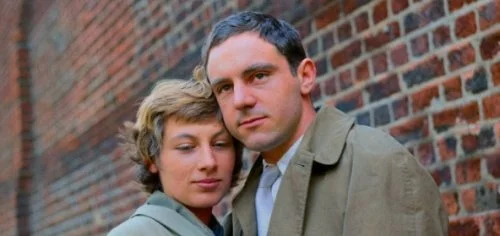
Her personal life, however, was marked by considerable heartbreak. At eighteen, she fell in love with the actor and entertainer Anthony Newley. Their relationship was passionate but turbulent. After becoming pregnant, Lynn underwent an illegal backstreet abortion at a time when abortion remained against the law in Britain. “He wasn’t very supportive,” she said of Newley. “He just wanted to get rid of it and forget about it.” A second pregnancy led to their marriage in August 1956, but tragedy followed when their son, Simon, was born with spina bifida and died at only six weeks old.
As Newley's career flourished, he engaged in a series of affairs. Lynn endured his infidelities for years, including relationships with actress Anneke Wills and, later, Joan Collins. In 1963, she successfully petitioned for divorce on the grounds of his adultery with Collins, who subsequently became Newley's second wife. Following the breakdown of her marriage, Lynn devoted herself fully to her acting career.
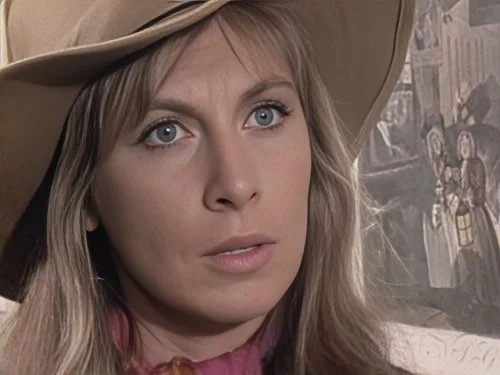
Her extensive television work showcased remarkable versatility. Among her many appearances were roles in The Count of Monte Cristo (1956), Ghost Squad (1962), Danger Man (1965), The Baron (1966), Adam Adamant Lives! (1966), The Saint (1967), The Champions (1968), A Family at War (1972), and Minder (1979–80). One of her finest dramatic performances came in 1974 when she played Regan in a television adaptation of King Lear, demonstrating her classical acting credentials.
Despite this extensive body of dramatic work, many viewers remember her most fondly as Rita Pinner in John Sullivan's sitcom Just Good Friends. Appearing in the second and third series in 1984 and 1986, Lynn played the lively wife of a scrap dealer, cruising around in a flashy car with rock-and-roll music blasting from the speakers. Rita's cheerful working-class outlook contrasted sharply with the snobbery of Penny Warrender's parents, who viewed her son Vincent as little more than a "wideboy." Lynn's warm comic timing made Rita one of the series' most memorable supporting characters.
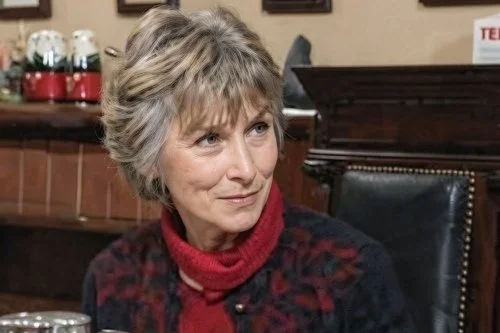
Later in her career, she portrayed Jackie Wallace in EastEnders, the mother of a chef who dies from AIDS, bringing sensitivity and compassion to a storyline that reflected important social issues. Her final screen appearance came in the 1996 Christmas special of Only Fools and Horses, in which she played Audrey Turner, mother of Raquel.
After retiring from acting, Lynn lived quietly in Oxfordshire, away from the spotlight that had been part of her life since infancy. She died on 30 August 2020 at the age of 86.
Remembered for her professionalism, versatility, and resilience, Ann Lynn left behind a remarkable body of work across theatre, film, and television. Whether portraying tragic figures, comic mothers, or classical heroines, she brought authenticity and depth to every role, securing her place among Britain's finest character actresses.
Share on...
Published on May 29th, 2026. Written by Laurence Marcus for Television Heaven.