

Fury from the Deep
Review by Daniel Tessier
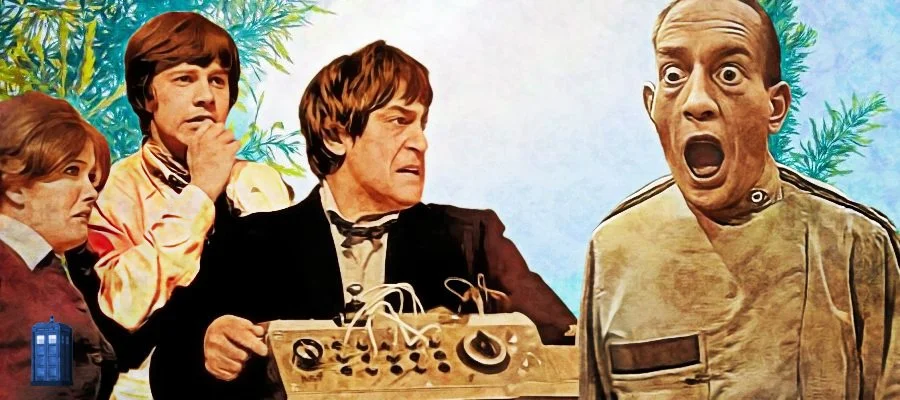
Fury from the Deep, the penultimate serial of Doctor Who's fifth season, is one of the best examples of the period's “base under siege” story format. Set on an isolated oil rig, still one of the most unknowable environments for most people, the serial sees the rig and its crew infiltrated by an insidious, bizarre entity that threatens their bodies and minds. While gaining a mixed response back in 1968, the serial has been reevaluated in recent years and is now popularly thought of as one of the highlights of the era. So, naturally, it's missing.
The BBC wiped it in the 1970s, along with the majority of the programme's monochrome episodes. Fury from the Deep has been particularly badly hit by this maddening practice; not only was it wiped, but not one copy of any episode has been recovered in the intervening years. All six episodes are therefore missing from the archives. Perhaps “Fury at the Beeb” would be a more appropriate title. Still, we do have the soundtracks, thanks to the ingenuity of 1960s fans, and much of the serial's atmosphere comes from its use of sound. There are telesnaps of all episodes, and a few short film excerpts to enjoy, the latter being scenes cut by Australian broadcasters for being too violent or scary for children. The BBC have also had an animated version utilising the original soundtrack.
On paper, the synopsis of Fury of the Deep doesn't sound all that chilling. An oil rig assailed by... seaweed? Not really the stuff of nightmares. Yet it works brilliantly, partly by being so incongruous, partly by how it's realised, and partly because it actually is rather unsettling when you think about it. Vast forests of algae exist under the surface of the ocean, a canopy of not-quite-plants that are among the most abundant organisms on Earth. If seaweed suddenly started rising from the depths and trying to take us over, then we'd all be in some serious trouble.
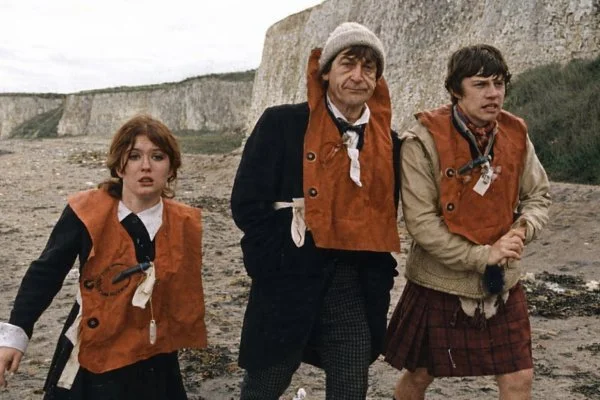
North Sea gas and oil was a topical subject in the 1960s. The idea that pumping gas could awaken a dangerous, unknown life form from the depths of the ocean is a potent one. Combined with the isolated nature of the rigs, this created an ideal setting for a tense and sinister story. The story actually starts on the beach on the English coast, where the Doctor, Jamie and Victoria are able to hear an ominous, heartbeat-like sound emanating from a gas pipe. It's not long before they're arrested and brought onto a rig by its controller, the ruthlessly dedicated Robson. Directing an entire network of rigs, Robson prides himself on never having switched off the pumps, and he's not going to change his mind just because of some unexplained events and his rigs breaking contact one by one. Victor Maddern is brilliant as Robson, giving an intense performance as a man driving himself to breaking point, giving in to arrogance and paranoia. For much of the story, Robson is as much a threat as the creature.
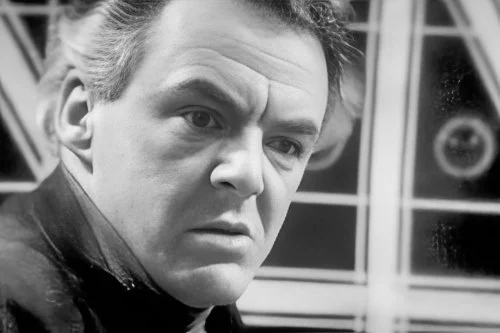
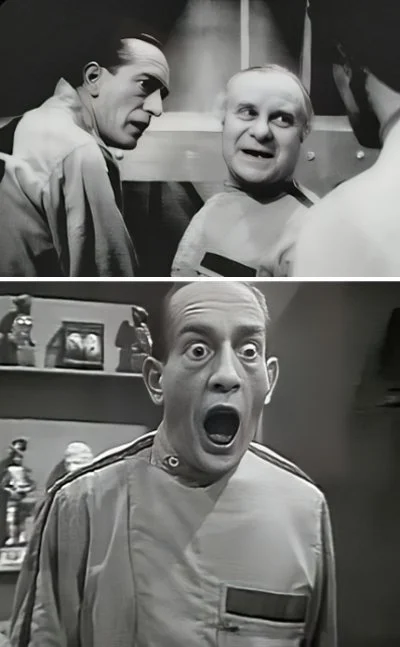
Opposed to Robson is Harris, played by Roy Spencer (The Paradise Makers). A quiet scientist, he's the polar opposite of the bullish Robson, and is out of his depth as second-in-command of the rigs. His wife, Maggie (June Murphy – Compact) lives with him on the rig compound, and is among the first to come into contact with the seaweed. Briefly stung by it, she becomes seriously ill and begins to exhibit strange behaviour. She doesn't fall under its influence completely until she's confronted by the serial's unnerving double act: Oak and Quill. Apparently intended as a sinister version of Laurel and Hardy, the two engineers – the tall, emaciated Quill (Bill Burridge) and short, stout and waxy-faced Mr Oak (John Gill) – appear to have fallen under the influence of the creature before the story began. Mentally they are now completely under its control and are capable of emitting the toxic gas it uses to subdue people. Again, the idea of a couple of odd-looking gents in overalls opening their mouths and attacking with evil halitosis doesn't sound too terrifying, but the footage itself is astonishingly unsettling. Indeed, that's the reason we have that snippet of material at all.
Two outsiders to the rig try their best to influence Robson as he becomes increasingly unhinged and blind to the danger his crew are in (and that's before he becomes another algal acolyte). John Abineri (Red Dwarf, Survivors, Robin of Sherwood) plays Van Lutyens, a Dutch engineer representing his government and providing technical advice to Euro Sea Gas. Robson absolutely despises him, likely because he actually knows more about the rigs' processes. The only person who can make Robson listen to reason, even a little, is his superior and friend (and it's hinted, possibly more) Megan Jones. Played by Margaret John (Pobol y Cwm, Gavin & Stacey), Jones is the chairperson of Euro Sea Gas and visits the rig to find out why its siblings have all been losing contact. While the exact setting of the serial isn't given, the presence of a powerful female authority of an international European energy concern clearly suggests it's the future from 1968's perspective.
What makes the drama of the story so effective is that all the main characters feel like real people, thanks to some strong, consistent writing and acting. Well, except for Oak and Quill, but they effectively ceased to be people once the seaweed got into their brains. It makes the unsettling imagery all the more powerful as it packs an emotional punch; the sight of the weed's possessed victims calmly walking into the sea until submerged is chilling, even as an animation. Not everything is realised well; although the rig complex itself is realistic and the weed creature itself isn't badly done, this story takes the Troughton era's obsession with foam up to a new and ridiculous level. Of course, sea foam and seaweed go together naturally, but it really seems like the production crew had overordered on the supplies for their foam machine and were desperately trying to empty a few tanks before the budget was audited.
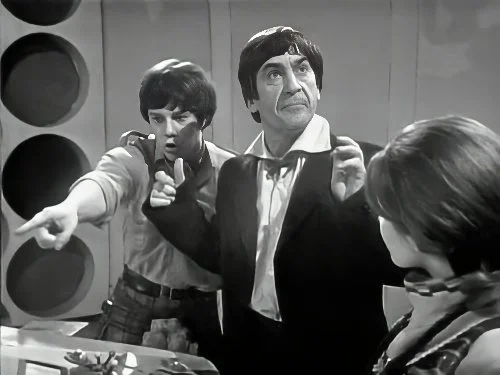
As for the regulars... well, it's becoming difficult to find new ways to say how spot-on Troughton is as the Doctor by this stage, so we'll just take it as read. Frazer Hines remains as likeable as Jamie as ever, but the big surprise here is how good Deborah Watling is in her final story as Victoria. Wanting to move onto bigger things, Watling decided not to renew her contract and was therefore written out in this story. Unlike a lot of companion goodbyes, Victoria's desire to leave is signposted throughout rather than being tacked on. She is, understandably, sick and tired of being terrified by nightmares beyond human comprehension every four-to-six weeks, and decides that she's getting off the TARDIS regardless of where she ends up. Giving Victoria a realistic response to the situation means that Watling gets to put more into her performance than usual. Before she goes and settles down in a foreign century, Victoria gets to save the day. The creature's only weakness turns out to be sound, and Victoria's famously ear-piercing scream becomes weaponised against it. Watling had one last opportunity to demonstrate why her nickname in the business had become “Old Leather-lungs.”
Fury from the Deep is the only Doctor Who television script credited to Victor Pemberton. He also worked as a secondary script editor on the series around this time, but it seems that he didn't have a very good experience bringing this story to screen. It began as The Slide, a story about an attack by living mud, submitted to the Doctor Who production office in 1964. A very Quatermass-like story (although perhaps even more like Quatermass knock-off X the Unknown), it was rejected by then script editor David Whitaker. Pemberton then reworked it as a standalone radio script, which was commissioned by Peter Bryant and broadcast in seven parts in 1966. (The Slide is easily available as an audio release and is worth listening to if only for future Master actor Roger Delgado as a scientist in what would have been the Doctor's role.)
By 1967, Bryant was script editor for Doctor Who and asked Pemberton to rework the script as a new serial for Troughton's Doctor. The monstrous mud was reimagined as natural gas and then as the sinister seaweed, that uses a toxic gas to kill and subdue its victims. Bryant was soon replaced by Derrick Sherwin as the main editor, who made significant alterations to the script, much to Pemberton's displeasure. Part of this was to make the story more screen-friendly; Pemberton's main experience was in radio, and he tended to write scenes with heavy dialogue. Still, this might be why the serial works so well even when just listening to the soundtrack. On the other hand, a lot of the rewriting was necessary to make Victoria's exit work convincingly.
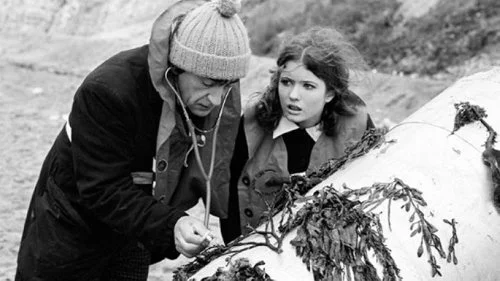
The serial's most significant addition to Doctor Who's ongoing story, though, is the introduction of the sonic screwdriver. It's a mere shadow of what it will one day become, being used simply to unscrew things rather than as an all-purpose magic wand, but nonetheless, it starts here. Without footage, it's hard to be sure what the screwdriver even looked like. Some accounts state that the prop was simply the pen torch the Doctor had used on-and-off since Hartnell's day, while others say that Troughton kept dropping this in the cold weather, so improvised using a life jacket whistle.
Pemberton never wrote another Doctor Who script for television but would later write the very first Doctor Who audioplay, the Tom Baker vehicle Doctor Who and the Pescatons, and an expansive novelisation of Fury from the Deep almost twenty years after broadcast. Watling would return as Victoria in the baffling charity skit Dimensions in Time for Children in Need 1993, and the licensed but unofficial video spin-off Downtime in 1995. Many of the other cast members would return to Doctor Who in different roles. June Murphy was out at sea again in 1972's The Sea Devils, while John Abineri made three appearances in the 1970s, in The Ambassadors of Death, Death to the Daleks and The Power of the Kroll. By far the longest gap was for Margaret John, who played Grandma Connolly in the 2006 episode “The Idiot's Lantern.”
Share on...
Published on March 24th, 2026. Written by Laurence Marcus for Television Heaven.