

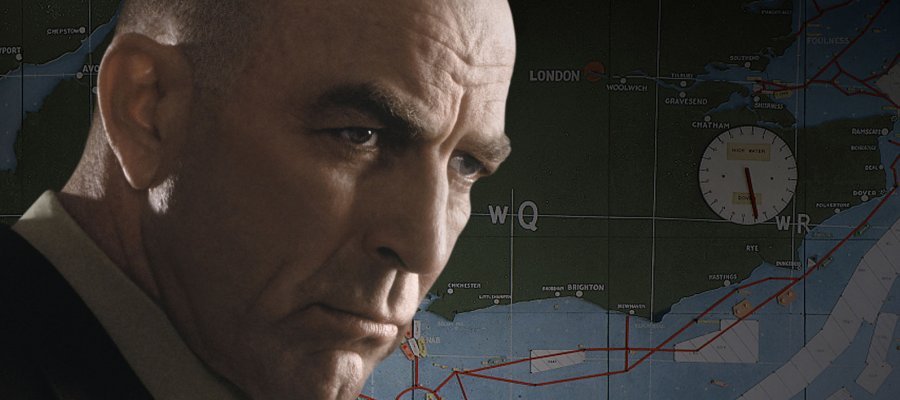
Ike: Countdown to D-Day
2004 United StatesReview: John Winterson Richards
The feature film Pressure on how the decision making before D-Day came down to a weather forecast received good reviews on its recent cinematic release. The title has a clever double meaning, referring to both the intense political and psychological pressure on the Supreme Allies Commander, General Dwight D Eisenhower, to get the decision right, and to the unpredictable pressure front that threatened to wreck the whole landing, perhaps literally. The film marked another phase of the "Brenaissance," the much deserved revival of the career of Brendan Fraser (see our review of Trust), who received acclaim for his portrayal of Eisenhower in spite of a complete absence of physical resemblance.
Yet Fraser is not the first odd choice to play Eisenhower who turned out well. Over twenty years ago, in the run up to the 60th Anniversary of D-Day, Tom Selleck was cast to play "Ike" in Ike: Countdown to D-Day, a compelling television movie that covers much of the same ground as Pressure. Selleck is destined to be remembered for a single role, that of private detective Thomas Magnum in Magnum P.I. His image is that of a healthy outdoorsman, which he seems to be in real life. Eisenhower, by contrast, has the image of being a somewhat nerdy soldier - despite his having a distinguished record as an athlete in his younger days.
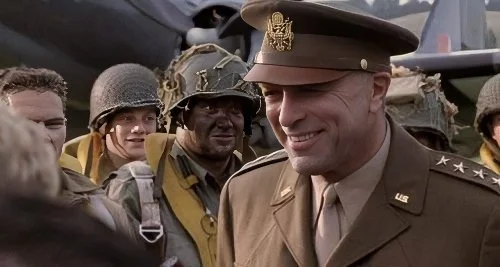
This unfair image is due to his highly unusual military career. He had never commanded soldiers in battle before he was suddenly catapulted to the post of Supreme Commander at the age of 52. He had been stuck at the rank of Major for 12 years in the relatively small professional US Army between the Wars. However, he had impressed several Generals, including Douglas MacArthur, to whom he makes unflattering reference in Countdown, and George Marshall, who became his mentor and patron. When his big break came, it came quickly. Even by the standards of the rapid expansion of an Army on war mobilisation, his rise was meteoric. The beginning of 1941 found him second in command of an Infantry Regiment as a Lieutenant Colonel, the end of 1942 Supreme Commander in North Africa with the temporary local "in Theatre" rank of Lieutenant General. The significance of the difference between these temporary local ranks and substantive Regular Army ranks is well made in Countdown.
He was a blatantly political appointment. Marshall, Chief of the US Army Staff, seems to have sent him to London as his advance man prior to his own coming over later on to take Supreme Command of the invasion of Europe in person. As the man on the spot, Eisenhower was then the obvious choice for the North Africa command, in which he impressed many with his performance. When President Roosevelt decided he wanted to keep Marshall in Washington, that left Eisenhower as the only American candidate for the European command with high level experience of actual war who was known and respected by the British. Several Britons, including Brooke, Wilson, Alexander, Ramsay, and Mountbatten, had far more experience, but since most of the men, material, and money necessary for the North West European Front were coming from the United States, the Supreme Commander really had to be an American.
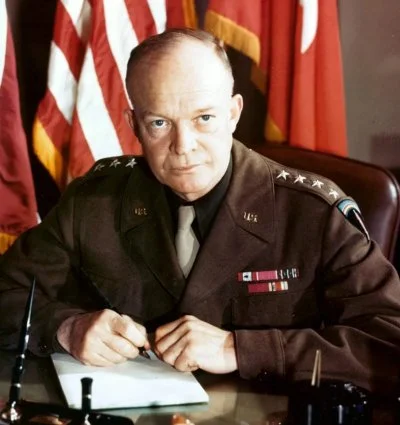
This put Eisenhower in a delicate position, which the Countdown script conveys very effectively. On paper the Supreme Commander was very powerful, but he depended on the co-operation of both Marshall in Washington and the British around him, some of whom were unhappy with the appointment of the relatively inexperienced American. The most visible of these was Sir Bernard Montgomery, the Victor of El Alamein and a veteran combat soldier of undeniable effectiveness. He was never a serious candidate for Supreme Commander himself, but, typically, thought he should have been. This was after all a man who is said to have once began a speech with the words "The Lord God has said, and I think quite rightly..." - and Monty did not do irony.
It was therefore necessary for Eisenhower to be a diplomat as much as a strategist, and in this - most military historians, even those critical of his strategy, agree he was a great success, more so than most of the other candidates would have been. The secret of this success seems to have been that he impressed everyone with his genuine integrity, an essential but often overlooked quality in leadership.
People really did like Ike - but, more importantly, they trusted him. Privately religious, he believed passionately in the Allied cause, which he described as a Crusade in his war memoirs, but at the same time cared deeply for the lives of the men under his command whom he might be sending to their deaths. Those who met him sensed his sincerity, and contrasted it favourably with more flamboyant leaders like Montgomery, Patton, and even Churchill, who usually meant well but were never free of ego.
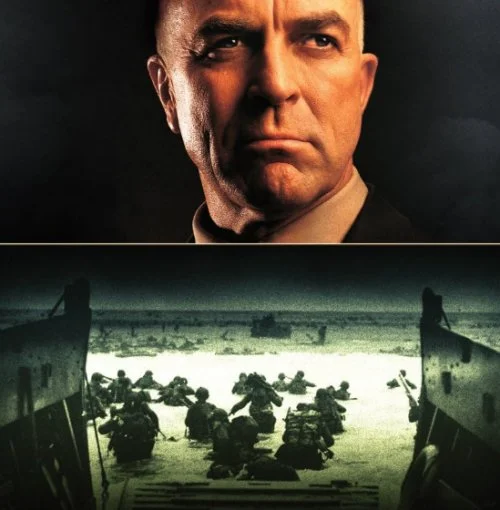
Selleck conveys this quite brilliantly, and his performance is the best reason to watch Countdown. It ranks alongside David Niven's in The Way Ahead, Daniel J Travanti's in Hill Street Blues, Sir Patrick Stewart's in Star Trek: the Next Generation, Viggo Mortensen's in The Lord of the Rings, and Russell Crowe's in Gladiator and Master and Commander: the Far Side of the World as one of the great screen studies of leadership. Anyone wanting to know why one man follows another should reflect on it. This is a convincing portrait of a leader for whom others really did risk their lives. Ask yourself why.
James Remar is equally credible as the respected Omar Bradley, the commander of the American ground contingent, and Timothy Bottoms is a pleasant surprise as Ike's Chief of Staff, Walter Bedell Smith. Gerald McRaney (Major Dad, Deadwood) has an unflattering cameo as Patton, whose actual relationship with Eisenhower went back many years and was far more complex than it is presented here: it seems that at one point, long before his spectacular ascent, Ike had really looked up to the high flying Patton, his senior by a few years. Filming took place in New Zealand, and the production took advantage of the disproportionately deep pool of acting talent there, most notably Sir Ian Mune playing a more authentic Churchill than most English actors, and John Bach and Kevin J Wilson, both familiar faces from the likes of Spartacus: Blood and Sand, as Eisenhower's Air Force and Naval commanders respectively.
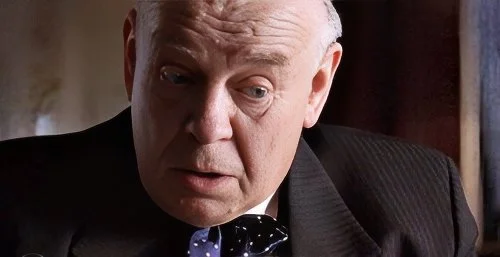
Some might be disappointed that a war drama consists almost entirely of meetings, but such is the nature of modern warfare at the very highest levels, and there is sufficient drama in the meetings to maintain the tension. We know now that D-Day was a success, but in 1944 no one had ever landed a whole army, with all its necessary supplies, on a well defended coast after crossing such an unpredictable expanse of water and there was real uncertainty whether it was logistically possible. A smaller raid on Dieppe less than two years before had been a disaster.
The script maintains the essence of the dilemma very effectively, even if it was necessary to telescope or oversimplify some events, and World War Two history buffs will wince at quite a number of unforced errors as your reviewer did. Production values are excellent, especially on a very tight television budget, with a number of nice period details and clever photography.
In the end, however, it is Selleck's show, and he takes the opportunity to remind us that there is far more to him as an actor than Magnum. Indeed, if he has ever put in a bad performance, your reviewer has never seen it, and one cannot help wondering how history would have been different if Selleck played Indiana Jones, as originally planned before his contractual obligations to Magnum got in the way. Here he commits totally, even shaving off his trademark moustache, to provide a convincing performance of a well known historical figure who looks nothing like him. He was rewarded with a big ratings win for A&E, breaking their previous record.
Seen this show? How do you rate it?
Seen this show? How do you rate it?
Share on...
Published on June 15th, 2026. Written by Laurence Marcus for Television Heaven.