


The Big M
1967 United KingdomOne of the many thriller serials that populated BBC Television schedules during the early 1960s, The Big M is an engaging six-part mystery that demonstrates just how accomplished the format had become. Written by Lester Powell and produced and directed by Alan Bromly, it combines a slow-burning detective story with a distinctly summery atmosphere, creating a serial that feels more interested in building intrigue than rushing from one cliffhanger to the next.
The title itself is rather clever. The "M" stands for mañana – tomorrow – reflecting the idea of putting things off until another day. That laid-back attitude perfectly suits seedy private detective Johnny Treherne, played by Michael Bryant. Based in the district of Sidwell, Devon, Treherne initially appears content to drift through life with little sense of urgency. However, his easy-going existence is abruptly interrupted when a mysterious visitor, Mr Hassett, arrives at his office intending to hire him, only to suffer a fatal heart attack before explaining exactly why he has come.
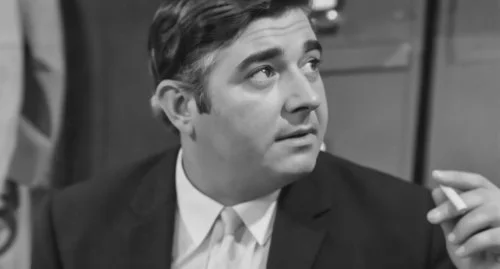
The following day Inspector Scott, played by Barry Linehan, arrives with some awkward questions. When Treherne explains that Hassett died before revealing the purpose of his visit, Scott remains unconvinced. Matters become even more complicated when the police encourage Treherne to continue investigating. Before long, virtually everyone connected to Hassett begins knocking on his door. His widow (played by Morecambe and Wise regular Ann Hamilton), his daughter Verity (Mitzi Rogers), rival investigators and the police all want to know the same thing: why was Hassett seeking out Johnny Treherne?
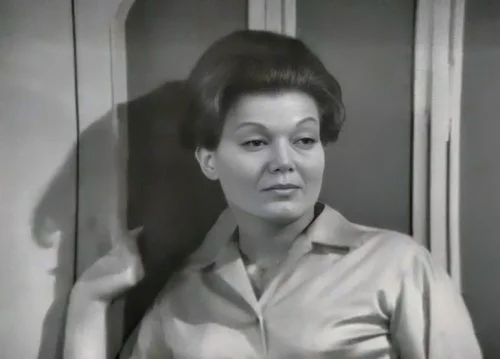
For his own reasons Treherne kept Hassett’s visit to himself. It eventually emerges that Hassett had wanted help identifying those behind a protection racket that had been exerting pressure on both him and his business interests. Against a backdrop of oppressive summer heat, Treherne pursues his enquiries with the same unhurried manner suggested by the title. Yet his relaxed approach becomes increasingly difficult to maintain once the police begin treating Hassett's death as suspicious. With Inspector Scott and Inspector Spain (Victor Brooks) both considering him a potential suspect, Treherne suddenly has every reason to solve the case.
The investigation eventually leads him towards Seymour Tancred, Hassett's business partner and supposedly close friend, played with appropriate authority by Reginald Marsh. Joining forces with Verity, Treherne follows a trail of deceit, corruption and hidden relationships that culminates in the discovery of Hassett's widow's affair and her role in the circumstances surrounding her husband's death. The plotting is carefully structured, allowing each revelation to emerge naturally rather than feeling forced.

What stands out throughout is Bromly's handling of the material. He later described The Big M as one of the tautest thrillers he had worked on, and there is certainly a confidence in the way the serial unfolds. Bromly had strong views on what made an effective thriller writer, observing in Radio Times that while many writers could produce a good single play, constructing a compelling six-part serial was a far rarer skill. Watching The Big M, it is difficult to disagree. Powell demonstrates a clear understanding of how to sustain suspense over multiple episodes without exhausting either the story or the audience.
The production also arrived at an interesting point in Michael Bryant's career. Although he would become a familiar face on British television, he was still something of a newcomer to the medium at the time. Most of his earlier experience had been gained in repertory theatre, including periods in Worthing and Oxford, before moving to the West End where he famously succeeded Alec Guinness in Ross. He subsequently spent two years with the Royal Shakespeare Company. Bryant often described himself as an actor who relied on technique rather than inspiration, and that disciplined approach is evident here. His performance as Treherne is understated but consistently engaging, making him an appealing guide through the serial's twists and turns.
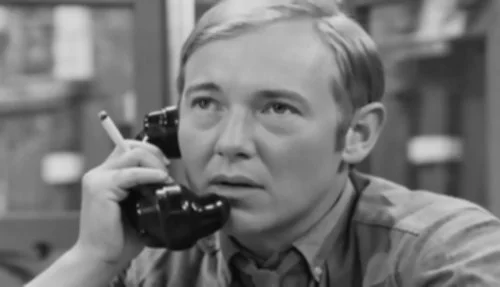
Lester Powell himself had one of the more unusual backgrounds among television writers of the period. Before turning to journalism he worked in a curtain shop, on a poultry farm and in a designer's office. During the Second World War he served in the Royal Army Medical Corps, was wounded during the Dunkirk campaign, and later returned to newspaper work with publications including the Daily Express and News Chronicle. He also worked for the BBC's overseas services before creating the popular radio detective Philip Odell in 1947. Odell was a hard-boiled private investigator whose adventures brought an American-style detective sensibility to post-war Britain, blending cynicism, humour and moral ambiguity. Elements of that experience can certainly be detected in The Big M, particularly in its portrayal of corruption lurking beneath respectable appearances.
The serial would ultimately prove to be Powell's final television credit, bringing to a close a remarkably varied career that also included a film adaptation of his Odell stories and contributions to The Avengers. Seen in that context, The Big M feels like a fitting farewell. It may not be the most famous BBC thriller of the era, but it is a well-crafted example of a format that was hugely successful both at home and overseas, selling to audiences from Norway and Australia to Malaya and Zimbabwe (the first and last episodes can be found online).
More than sixty years later, The Big M remains an enjoyable reminder of a time when television thrillers relied on atmosphere, character and carefully developed suspense rather than spectacle. Its measured pacing will not appeal to everyone, but for viewers who appreciate classic detective fiction and intelligently constructed mysteries, it still has plenty to offer.
Seen this show? How do you rate it?
Seen this show? How do you rate it?
Share on...
Published on June 8th, 2026. Written by Laurence Marcus for Television Heaven.