

War and Peace
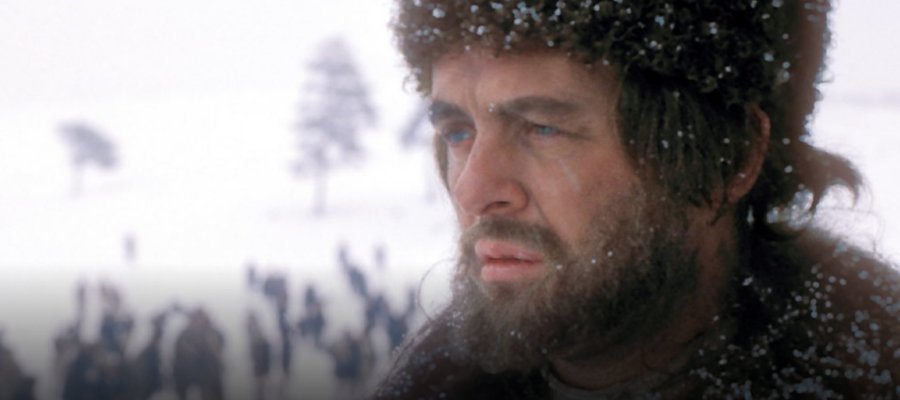
1972 United Kingdom, YugoslaviaThe BBC's 1972 adaptation of War and Peace remains a hugely ambitious television production. A co-production between the BBC and Time-Life, filmed in the former Socialist Federative Republic of Yugoslavia with the assistance of Avala Films, this monumental miniseries took director John Davies two years to bring to the screen—and the result is an achievement that still commands admiration more than fifty years later.
From its very first moments — the Imperial Russian Anthem performed by the band of the Welsh Guards — the series, running for well over twelve hours, signalled its ambition to adopt the full sweep of Tolstoy’s epic in a way that no feature film could hope to match. The generous running time allows every major character room to breathe, making the complex relationships, shifting loyalties, and personal journeys far easier to follow than they often are in the novel itself. For viewers who found Tolstoy's masterpiece intimidating or difficult to navigate (my hand is raised), this adaptation offers an accessible and deeply rewarding alternative without sacrificing the richness of the source material.
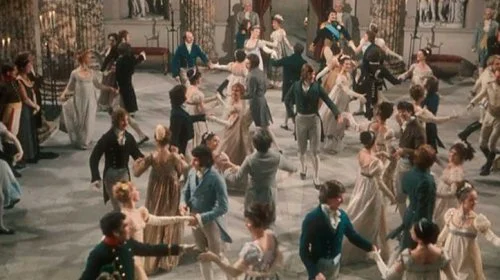
At the time of its original broadcast, television critics were divided. Some questioned its pacing and theatrical presentation, while others hailed it as a landmark adaptation. Looking back today, it's much easier to appreciate the extraordinary scale of the production. The sheer size of it is astonishing, from its enormous ensemble cast to the endless parade of meticulously designed locations—palaces, grand ballrooms, cathedrals, military headquarters, country estates, drawing rooms, village inns, and battlefields. Every set feels carefully lived in, with imaginative production design and lighting that create an immersive portrait of early nineteenth-century Russia.
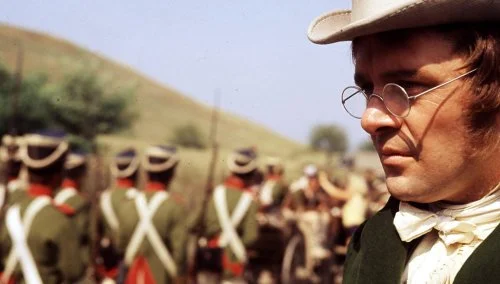
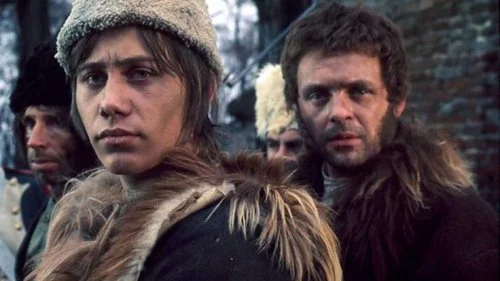
The performances are consistently excellent, led by Anthony Hopkins in the role that first announced him as a major acting talent. His BAFTA TV Award-winning portrayal of Pierre Bezukhov is thoughtful, vulnerable, and deeply human. While he may not physically resemble Tolstoy's imposing description of Pierre, Hopkins captures the character's emotional uncertainty, spiritual longing, and gradual maturity with remarkable conviction. Watching such an accomplished actor at the beginning of his career is fascinating, and it's easy to see the promise that would later blossom into one of cinema's great careers.
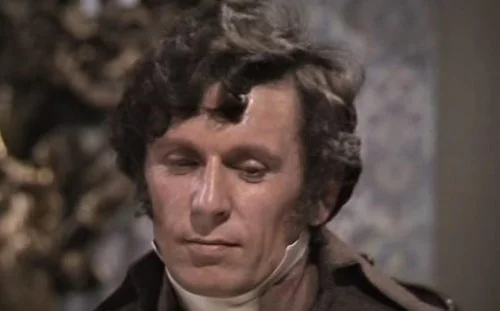
The supporting cast is equally impressive, featuring what feels like a who's who of British character actors from the 1970s. Apart from Hopkins, the large cast features Morag Hood as Natasha, Alan Dobie as Andrei, Sylvester Morand as Nikolai Rostov, Rupert Davies as Count Rostova, Faith Brook as Countess Rostova, David Swift as Napoleon, and Angela Down as Maria. Other actors appearing include Colin Baker, Kevin Stoney and Michael Billington. Even when the actors don't perfectly match the physical descriptions from the novel, they embody the spirit of their characters so convincingly that appearance quickly becomes irrelevant.
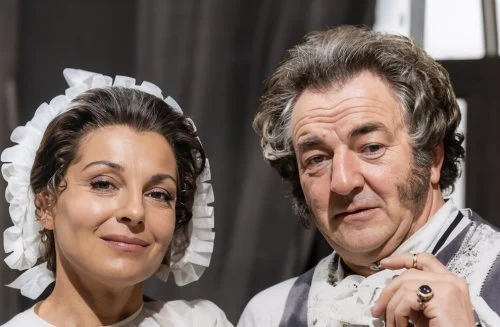
Visually, the production naturally shows its age. Exterior scenes often display the graininess typical of early-1970s television, particularly when contrasted with the cleaner studio interiors. Yet these technical limitations rarely distract from the storytelling. The wide-open landscapes do admirable justice to the Russian countryside, while the contrast between rural life and the glittering society of St. Petersburg and Moscow is vividly realised.
One particularly striking creative decision is the near absence of a traditional background score. Rather than manipulating emotion through music, the production allows conversations, battlefield sounds, and moments of silence to create an almost documentary-like realism. Whether depicting massive armies marching toward battle or two characters quietly talking in a drawing room, the effect is surprisingly powerful.
Compared with other screen versions, this adaptation stands out for its fidelity to Tolstoy's novel. The Hollywood version directed by King Vidor condensed the story into a conventional epic but suffered from significant miscasting, while Sergei Bondarchuk's magnificent Soviet production dazzled with spectacular battle scenes yet could sometimes overwhelm viewers with its operatic intensity. The BBC's version may not possess the same cinematic extravagance, but its patience, careful storytelling, and character development make it arguably the most satisfying adaptation of the three.
If there's any disappointment, it's that this remarkable production has remained difficult to obtain for many years, leaving generations of viewers unable to discover one of television's greatest literary adaptations. It deserves far wider recognition than it has received.
War and Peace is not simply an excellent adaptation of Tolstoy's masterpiece—it's one of the finest television dramas ever produced. Ambitious, intelligent, richly acted, and remarkably faithful to its source, it proves that sometimes television, given the time and space to tell an epic story properly, can surpass the cinema.
Seen this show? How do you rate it?
Seen this show? How do you rate it?
Share on...
Published on July 11th, 2026. Written by Laurence Marcus for Television Heaven.