

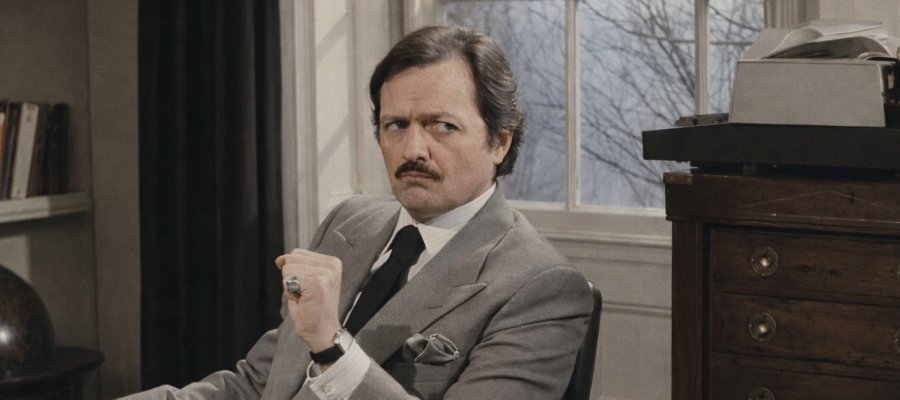
Peter Bowles
Peter Bowles carried himself with the ease of a man born to refinement, yet his life and career tell a far richer, more surprising story than the archetype of the “quintessential British gent” he so often embodied. Early in his training, casting directors warned him that his swarthy looks would prevent him from ever playing an Englishman—a prediction that would prove not only wrong, but almost comically so in hindsight.
His roots were, in fact, deeply and unmistakably British. Born in London on 16 October 1936, Bowles came from a background steeped in service to the great houses of the country. His father, Herbert Reginald Bowles, served as valet, chauffeur, and butler within aristocratic circles, while his Scottish mother, Sarah Jane Harrison, worked as a nanny to the Duke of Argyll before coming to England to join the household of Lord Beaverbrook. It was a world of tradition, duty, and quiet discipline—qualities that would later inform Bowles’s poise on screen.
The upheaval of the Second World War saw the family relocate to Hucknall, near Nottingham, where his father contributed to the Rolls-Royce aero-engine effort. From these modest surroundings—a small “two-up, two-down” house—Bowles’s path to the stage began to take shape. At Nottingham High Pavement Grammar School, he was taught English by the novelist Stanley Middleton, an influence that likely sharpened his appreciation for character and text. Winning a scholarship to RADA, and later the Kendall Prize, confirmed his promise.
His early career was grounded in the rigour of classical theatre. With the Old Vic Company from 1956, he took on small roles in Shakespeare’s great works—Macbeth, Romeo and Juliet, Troilus and Cressida, Richard II—alongside distinguished actors, before touring North America and finishing with a successful Broadway run. Back in Britain, his steady progression through repertory theatre—from Nottingham Playhouse to the Bristol Old Vic, and on to the Royal Court—revealed a dependable, versatile performer willing to take on any role, from pantomime wolf to Chekhovian drama.
Like many actors of his generation, Bowles transitioned gradually into television and film. He had made his film debut, uncredited, in a 'blink and you'll miss him' part in The Extra Day, a 1956 film that starred Richard Basehart and George Baker, before making his TV debut in 1958 in a now lost ITV production Underground, a story in the Armchair Theatre Strand. The play, which was broadcast live on 30 November 1958 and also starred Donald Houston and Warren Mitchell, is chiefly remembered for actor Gareth Jones suffering a fatal heart attack during transmission, meaning the play's final act was partly improvised to accommodate his sudden absence.
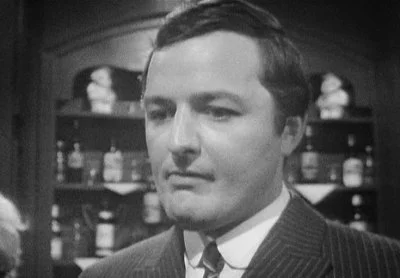
The 1960s brought increasing visibility. He was Callan’s fellow agent Toby Mears in the 1967 Armchair Theatre production A Magnum for Schneider, and even though he was replaced for the series by Anthony Valentine he appeared across a wide range of top dramas such as Crane, Emergency-Ward 10, Redcap, The Baron, The Saint, The Prisoner and Adam Adamant Lives! often cast as foreign villains, ironically echoing the early doubts about his “Englishness.” Yet even in these roles, there was a distinct intelligence and charm that hinted at something more.
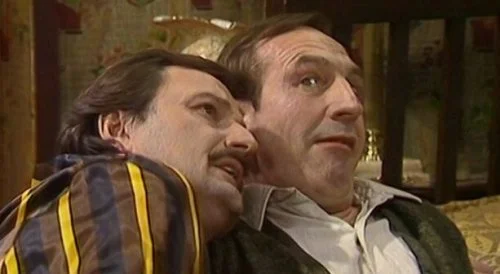
It was in the 1970s that his career found its defining rhythm, appearing in Crown Court, Arthur of the Britons, I, Claudius, Rumpole of the Bailey and Napoleon and Love. A guest appearance in Rising Damp as a foppish actor by the name of Hilary caught the attention of sitcom writers, and soon he was cast in Only When I Laugh as the impeccably mannered, hypochondriac Archie Glover.
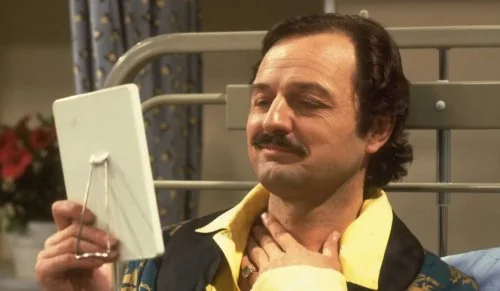
Then came the role that would immortalise him: Richard DeVere in To the Manor Born. Opposite Penelope Keith, Bowles created a character of suave self-assurance, dry wit, and understated vulnerability. DeVere was at once the embodiment and gentle satire of upper-class Englishness—and Bowles played him with perfect balance.
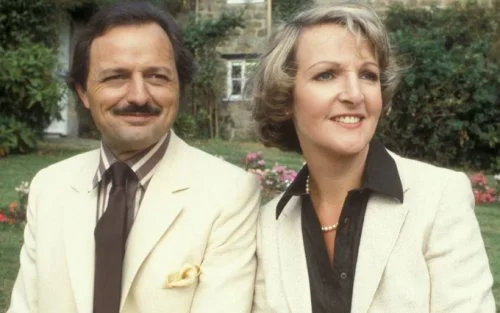
Success followed naturally. Leading roles in series such as The Bounder, The Irish R.M., and Lytton's Diary confirmed his status as a television mainstay, while Executive Stress reunited him with Keith to great effect. His work reached audiences far beyond Britain, earning admiration from an eclectic group of American fans, including Stephen Sondheim, Quentin Tarantino, and Marlon Brando—a testament to the breadth of his appeal.
Yet Bowles was not content merely to perform. In 1991, he brought a dramatic idea to the BBC, resulting in Running Late, a film he both starred in and co-produced. Its success, including a Golden Gate Award in 1993, demonstrated his creative ambition and commitment to storytelling beyond acting alone.
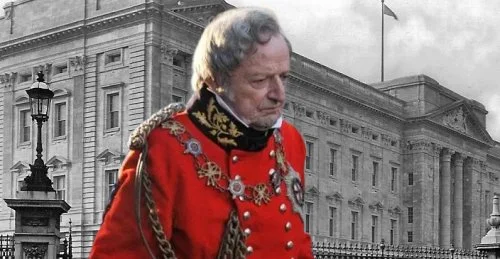
Even in later years, Bowles continued to bring gravitas and quiet authority to his roles, notably as the Duke of Wellington in Victoria from 2016 to 2019. It was a fitting late-career turn: a figure of history portrayed with the same elegance that had defined his entire body of work.
Off screen, his life was marked by stability and devotion. He married Susan Bennett in 1961, and together they raised three children. His personal life, like his performances, seemed guided by a sense of constancy and grace.
Peter Bowles died on 17 March 2022 at the age of 85, after a career spanning more than 140 screen roles. What remains is a legacy of remarkable consistency and quiet excellence. He was never the loudest presence on screen, nor the most flamboyant, but he possessed something rarer: a precision of tone, a command of character, and an instinctive understanding of the worlds he inhabited.
In the end, the young actor once told he would never play an Englishman became, for many, the very image of one.
Share on...
Published on April 16th, 2026. Written by Laurence Marcus for Television Heaven.