

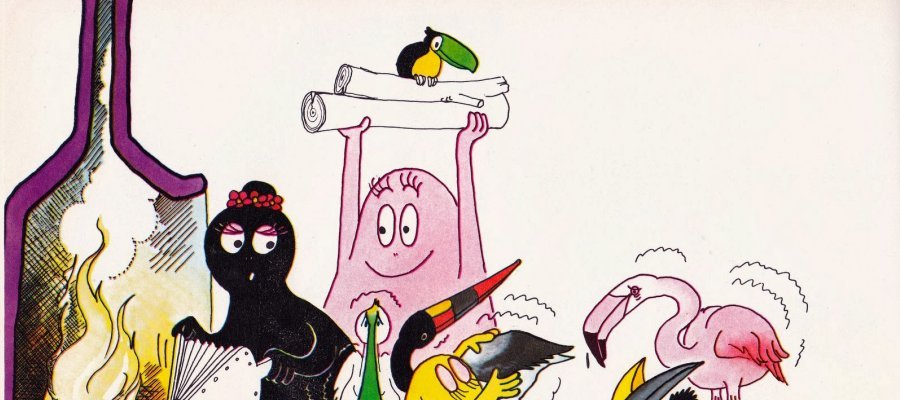
Barbapapa
1974 NetherlandsFew children's creations have enjoyed the quiet longevity of Barbapapa. First appearing in 1970, the lovable pink shapeshifter was created by American children's author Talus Taylor and French architect and writer Annette Tison, and what began as a simple picture book has grown into an international franchise spanning books and several generations of animated television.
The origins of Barbapapa are as charming as the character himself. During a stroll through Paris's Luxembourg Garden, Taylor overheard a child asking for barbe à papa—the French name for candy floss (or cotton candy). Intrigued by the unusual phrase, he and Tison later sketched a soft, rounded pink character on a café tablecloth, giving birth to one of children's literature's most recognisable creations. The sweet inspiration is reflected perfectly in Barbapapa's friendly, comforting appearance.
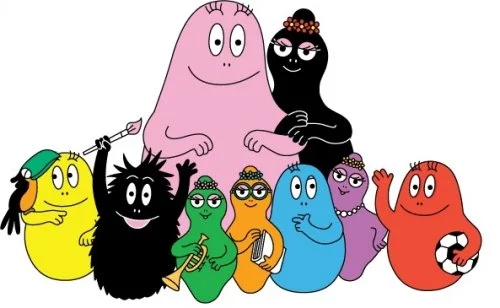
Barbapapa's greatest appeal lies in his remarkable ability to transform into virtually any shape imaginable. Alongside Barbamama and their colourful brood of Barbababies, each family member can reshape themselves while remaining instantly recognisable through their distinctive colours and expressive faces. The endless possibilities of their transformations encouraged imaginative storytelling long before shape-shifting heroes became commonplace, and it's easy to see echoes of later characters in Barbapapa's inventive design.
Success did not come immediately. Although several European publishers admired the concept, they hesitated over the production costs. Fortunately, Dutch publisher Frank Fehmers recognised its potential, organising a co-production that allowed the books to be published across multiple countries. That decision proved inspired, paving the way for an enduring international success.
The transition to television only enhanced Barbapapa's popularity. The original animated series debuted in 1974 (in 1975 on the BBC), bringing the stories to audiences across Europe before reaching Japan in 1977. With its gentle pacing, colourful animation and memorable transformation catchphrases—whether "Clickety Click—Barba Trick" or the delightfully simple British "All Change!"—the series captured the same warmth and creativity that made the books so appealing.
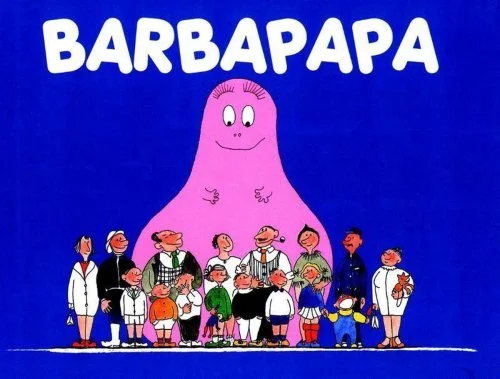
Subsequent revivals have ensured that new generations continue to discover the family. Barbapapa Around the World expanded the concept through globe-trotting adventures, while 2019's Barbapapa: One Big Happy Family! updates the characters for modern audiences without losing their original charm. It's especially fitting that the newest series was written in part by Alice Taylor, daughter of the original creators, preserving the family's creative legacy.
More than fifty years after his debut, Barbapapa remains a shining example of timeless children's entertainment. Built on kindness, imagination, cooperation and environmental awareness rather than conflict or spectacle, the stories possess a universal quality that transcends language and culture. Whether encountered through the original books or the various animated adaptations, Barbapapa continues to demonstrate that the simplest ideas—born from a chance misunderstanding and a sketch on a café tablecloth—can become truly enduring classics.
Seen this show? How do you rate it?
Seen this show? How do you rate it?
Share on...
Published on July 3rd, 2026. Written by Laurence Marcus for Television Heaven.