


Barriers
1981 United KingdomBarriers is one of those children's drama serials that quietly lingers in the memory long after the closing credits. Produced by Tyne Tees Television and created and written by William Corlett from an original concept developed with producer Margaret Bottomley, the series proved that children's television could tackle emotionally demanding subjects without ever speaking down to its audience. Premiering in January 1981, its 20-episode run across two series delivered an absorbing blend of mystery, drama and European adventure that still feels remarkably ambitious for its era.
At its heart is Benedict Taylor's excellent performance as Billy Stanyon, a teenager whose life is turned upside down after the loss of his parents reveals long-hidden truths about his past. Taylor gives Billy a quiet determination that makes him easy to invest in, balancing youthful vulnerability with increasing maturity as his search for answers takes him far beyond the familiar surroundings of home. His portrayal never feels overly sentimental, allowing the emotional weight of the story to emerge naturally through his growing confidence and resilience.
Rather than relying solely on suspense, Corlett's writing gives equal importance to the emotional consequences of grief, belonging and identity. While the mystery provides the momentum, the series is ultimately far more interested in how someone rebuilds their sense of self after discovering that everything they believed about their family has changed.
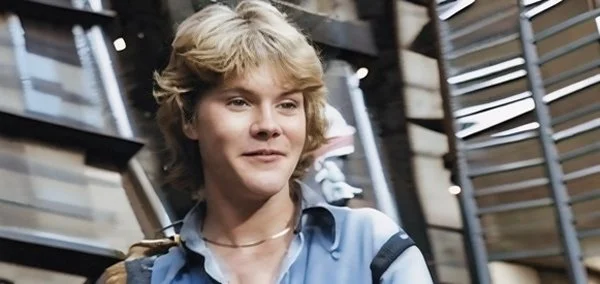
Vincent Walker (Paul Rogers) Billy's unconventional guardian, reveals that the Stanyons were actually Billy’s adoptive parents creating a scenario that gradually develops into one series' strongest emotional anchors; Billy’s search for his real parents. Patricia Lawrence offers dependable support as Miss Price, while Laurence Naismith lends authority and compassion as Dr Ernest Jolland, whose knowledge helps illuminate the historical backdrop without resorting to lengthy exposition. Even characters with relatively limited screen time leave an impression. Siân Phillips is particularly memorable as Mrs Dalgleish, while guest appearances from familiar faces including Nicholas Courtney, Walter Gotell, Michael Gough and Joan Hickson add extra depth and variety throughout the journey. It is also fascinating to see an early supporting appearance from Denise Welch before she became a household name.
One of the series' greatest strengths is its atmosphere. The decision to film extensively on location gives Barriers a cinematic quality that many contemporary children's dramas simply could not match. The rugged Northumberland coastline around Bamburgh, the sweeping Scottish Highlands and the authentic European locations (Germany and Austria) all contribute to an ever-present feeling of movement and discovery. Instead of relying on studio sets, the production embraces real landscapes that reinforce both the physical and emotional distances Billy must overcome.

The European setting also allows the series to introduce younger viewers to aspects of Cold War history without turning into a history lesson. Corlett cleverly integrates historical events, cultural references and even occasional foreign language phrases into the unfolding narrative.
Structurally, the serial format works exceptionally well. Each half-hour episode ends with enough uncertainty to make the next instalment feel essential viewing, reflecting an era when weekly cliffhangers genuinely built anticipation. Flashback sequences are used effectively to provide context, gradually revealing pieces of the larger picture while maintaining narrative momentum. Although some pacing reflects television production of the early 1980s, the measured storytelling allows both character development and emotional moments the room they need to breathe.
The production values are impressive considering the period and Bert Grund's haunting musical score deserves particular praise, creating an atmosphere that remains one of the series' defining qualities. The theme music captures both the melancholy and mystery that permeate the entire production, becoming instantly recognisable to those who remember the programme.
What makes Barriers especially enduring is its refusal to offer simplistic answers. Although aimed primarily at younger audiences, it explores adoption, displacement, loss, political division and forgiveness with honesty and emotional intelligence. The series recognises that growing up often involves confronting uncomfortable truths, yet it also offers hope through compassion, understanding and the relationships that people build rather than simply inherit.
Its contemporary acclaim was well deserved. Winning the Gold Medal for Children's Drama Series at the 23rd International Film and Television Festival of New York confirmed the quality of the production, which led to a second series in 1982. Over the years it has quietly earned cult status, remembered fondly by viewers who appreciate its thoughtful storytelling, memorable performances and distinctive atmosphere.
Viewed today, Barriers remains an impressive achievement in British children's television. It demonstrates how compelling drama does not require spectacle, but rather believable characters, intelligent writing and the confidence to trust its audience with complex emotions. More than four decades after its original transmission, it stands as a fine example of the ambitious storytelling that characterised some of ITV's most memorable children's productions, and deserves to be rediscovered by anyone interested in the rich history of British television drama.
Seen this show? How do you rate it?
Seen this show? How do you rate it?
Share on...
Published on July 19th, 2026. Written by Laurence Marcus for Television Heaven.