

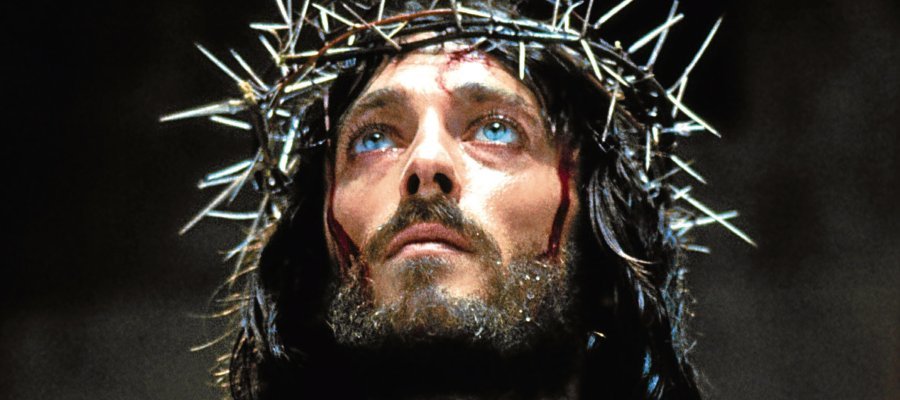
Jesus of Nazareth
1977 United Kingdom, ItalyFew television productions have enjoyed the cultural impact, critical acclaim and enduring reputation of Jesus of Nazareth. First broadcast in 1977, Franco Zeffirelli’s six-hour retelling of the life of Christ remains one of the most ambitious religious dramas ever made, a landmark achievement that successfully combined cinematic spectacle, theological reverence and mainstream accessibility. Nearly fifty years after its debut, it continues to be regarded by many viewers as the definitive screen portrayal of Jesus.
The origins of the project are almost as remarkable as the finished production itself. In his autobiography Still Dancing, television impresario Lew Grade recalled an audience with Pope Paul VI following the broadcast of Moses the Lawgiver in 1974. The Pope praised that production and expressed the hope that Grade would one day tell the story of Jesus. Grade promised that he would, and within three years that promise had become one of the most expensive and ambitious television projects ever undertaken.
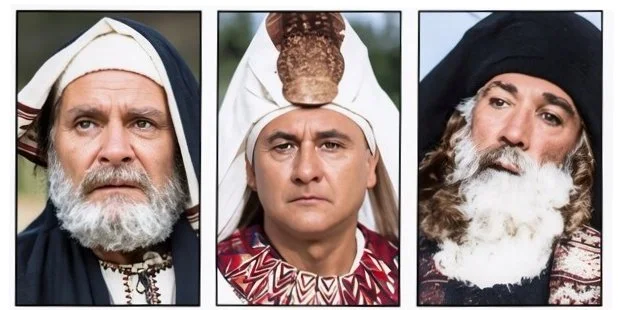
Financing such a production was no small task. Grade secured substantial backing from General Motors in the United States, along with a broadcast agreement with NBC. Yet money alone could not guarantee success. To persuade audiences that this would be an event worthy of attention, Grade assembled one of the most extraordinary casts ever gathered for a television miniseries. The first major name to commit was Sir Laurence Olivier. Although his role would ultimately amount to little more than an extended cameo, Olivier’s participation gave the project immediate prestige and encouraged a procession of distinguished actors to follow. Peter Ustinov, Ralph Richardson, Michael York, Christopher Plummer, James Mason, Donald Pleasence, Ian McShane, Ian Holm, Anne Bancroft, Claudia Cardinale, Olivia Hussey, Anthony Quinn, James Earl Jones, Rod Steiger and Ernest Borgnine all joined the cast, creating a roll call that rivalled the biggest Hollywood epics.
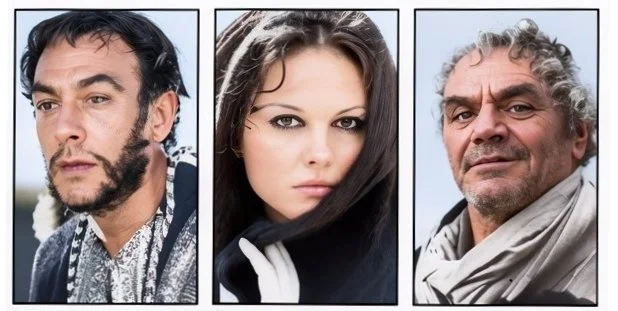
The production itself was mounted on a vast scale. Filmed on location in Tunisia and Morocco and co-produced with Italian state broadcaster RAI, Jesus of Nazareth possessed a scope and visual richness rarely seen on television in the 1970s. Grade entrusted the project to Zeffirelli, a filmmaker whose reputation had been built on lavish productions and whose personal Catholic faith made him a natural choice for such material. Zeffirelli approached the story with seriousness and conviction, seeking neither to modernise nor deconstruct the Gospel narrative but to present it with dignity and emotional immediacy.
Ironically, one of the director’s greatest disagreements with Grade concerned the casting of the central role. The suggestion of Robert Powell came not from Zeffirelli but from Grade’s wife, Kathie, who had been impressed by the actor’s performance in the BBC adaptation of Jude the Obscure. She was particularly struck by his expressive features and piercing blue eyes. After viewing the series himself, Grade became convinced Powell was the ideal choice.
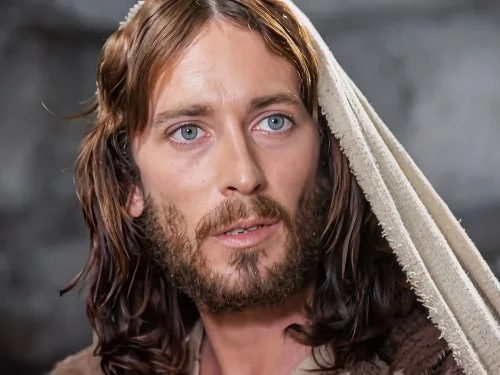
Zeffirelli, however, was far less enthusiastic. At the time, Powell was living with his girlfriend, former Pan’s People dancer Bab’s Lord, and the deeply traditional director reportedly objected on moral grounds. As far as Zeffirelli was concerned, someone living outside marriage was an inappropriate choice to portray Christ. Grade’s response became one of the production’s most famous anecdotes: “Franco, what are you trying to do – crucify the boy?” In any case, the controversy quickly disappeared when Powell and Lord married shortly before filming began. Their marriage has endured for decades, but the episode reveals the seriousness with which many involved approached the role.
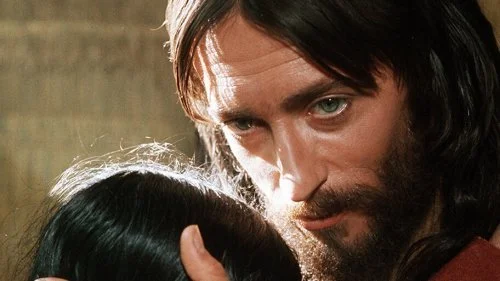
Any doubts about Powell’s suitability vanished once filming commenced. His performance is the heart of the production and the principal reason for its continuing reputation. Rather than portraying Jesus as an untouchable icon, Powell presents him as compassionate, intelligent and quietly authoritative. His Christ possesses warmth and humanity while never losing the sense of spiritual mystery that surrounds the character. The actor’s striking appearance contributes greatly to the effect. Zeffirelli famously emphasised Powell’s eyes through subtle makeup techniques, creating an almost hypnotic screen presence. Whether delivering the Sermon on the Mount, confronting the money changers or enduring the agony of the crucifixion, Powell commands attention with remarkable restraint.
The production was not without controversy. Before its American broadcast, fundamentalist Protestant groups launched a campaign against the miniseries despite many of their leaders never having seen it. Bob Jones III of Bob Jones University and evangelist Bill Bright objected to comments Zeffirelli had made suggesting that Jesus would be portrayed as a gentle and ordinary man. They interpreted this as a denial of Christ’s divinity and publicly condemned the production as blasphemous. Concerns were also raised about whether the Resurrection would be adequately represented.
The campaign generated thousands of protest letters directed at General Motors, prompting the company to withdraw its sponsorship despite its substantial investment. In what proved to be a costly miscalculation for GM, Procter & Gamble stepped in and acquired the American rights at a bargain price. Once audiences actually saw the miniseries, most of the criticism evaporated. Far from presenting a secularised Christ, Zeffirelli’s work treated its subject with profound reverence and sincerity.
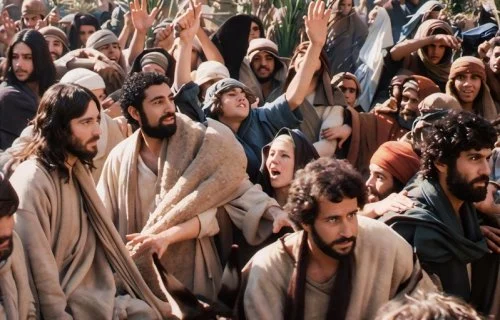
Visually, the production remains deeply impressive. Cinematographers Armando Nannuzzi and David Watkin create imagery that frequently recalls Renaissance religious painting. The landscapes of North Africa provide an appropriately timeless backdrop, while the use of natural light lends many scenes an almost documentary authenticity. Zeffirelli understands when to embrace spectacle and when to exercise restraint. The feeding of the five thousand, for example, is handled with remarkable subtlety. Rather than overwhelming the audience with special effects, the miracle unfolds almost casually, encouraging viewers to focus on the reactions of those present rather than on the mechanics of the event itself.
Elsewhere, the crucifixion sequence demonstrates the director’s ability to shift gears dramatically. Shot with hand-held cameras and infused with a sense of chaos and immediacy, it remains one of the most powerful passages in the entire production. Powell’s agonised performance anchors the sequence, transforming what could have become a familiar religious tableau into something genuinely moving.
At over six hours in length and requiring eight months of filming, the miniseries has room to explore aspects of the Gospel story often omitted from shorter adaptations. The opening episodes devote considerable attention to Joseph and Mary, establishing the political, religious and personal circumstances surrounding Christ’s birth. Modern viewers accustomed to faster pacing may find these early sections unexpectedly deliberate, especially since Powell does not make his full entrance until well into the narrative. Yet this patience ultimately pays dividends by giving the story a broader historical context and a stronger emotional foundation.
Zerah, a character played by Ian Holm, invented specifically for the production, serves as a political intermediary and manipulator, allowing the screenplay to explore the tensions between religious authority and political expediency. Holm imbues the role with intelligence and ambiguity, creating a figure who is both pragmatic and morally compromised. Although absent from the biblical text, the character functions effectively within the drama and provides a useful lens through which to view the escalating conflict surrounding Jesus.
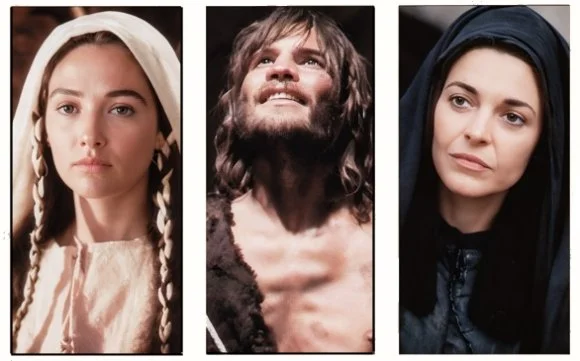
The supporting cast is uniformly excellent. Olivier’s quiet, dignified portrayal of Nicodemus stands out for its emotional subtlety. His scenes—particularly those showing sympathy toward Jesus—are often highlighted as some of the production’s most moving moments. Ian McShane delivers a complex Judas, depicted as initially well‑intentioned but ultimately manipulated and misguided. His performance adds psychological depth to the character, making Judas more tragic than villainous. Anne Bancroft brings dignity and melancholy to Mary Magdalene, presenting her as both vulnerable and resilient.
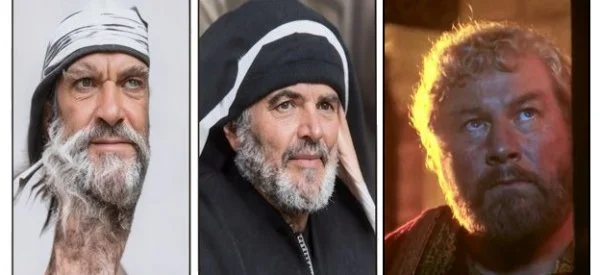
Rod Steiger offers a refreshingly intelligent and restrained interpretation of Pontius Pilate, avoiding the tendency to portray the Roman governor as either a villainous tyrant or a passive bureaucrat. Instead, Steiger creates a complex figure trapped between political realities and personal uncertainty. Anthony Quinn’s Caiaphas is forceful, authoritative, and politically calculating. His commanding screen presence makes him one of the standout antagonistic figures in the series.
Not every miracle recorded in the Gospels appears on screen. Zeffirelli and his writers make selective choices, omitting events such as the changing of water into wine, the Transfiguration and the calming of the storm. Instead, they focus on miracles that serve the drama most effectively, including the healing of Jairus’s daughter, the restoration of the blind man’s sight, the healing of the crippled woman and the raising of Lazarus. The result is a narrative that remains comprehensive without becoming episodic or repetitive.
The ending underwent significant revision during production. Anthony Burgess’s original script reportedly concluded with Ian Holm’s Zerah standing before the empty tomb and uttering the words, “Now it begins.” Grade, however, opted for a more explicitly spiritual conclusion. The finished version includes a final scene between Jesus and his disciples before ending on an unforgettable close-up of Powell looking directly into the camera. It is a bold and surprisingly effective choice, breaking the barrier between performer and audience while reinforcing the sense that Christ’s message continues beyond the confines of the story.
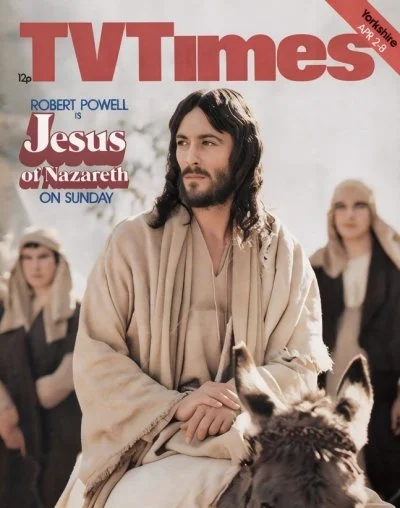
When Jesus of Nazareth premiered in Italy in March 1977 and subsequently aired on ITV during Holy Week in Britain, the response was extraordinary. Audiences numbered in the tens of millions. An estimated 21 million viewers watched in the United Kingdom, while American viewership reached a staggering 90 million. Critical reaction was overwhelmingly positive, with particular praise directed at Powell’s performance. His portrayal is described as serene, emotionally controlled, and spiritually intense, giving Jesus an otherworldly presence that became iconic. Pope Paul VI himself publicly commended the production, further cementing its status as a major cultural event.
Commercially, the miniseries proved equally successful. Lew Grade later claimed it generated a net profit of around $30 million, making it not only an artistic triumph but also one of the most lucrative ventures of his career.
Nearly five decades later, Jesus of Nazareth remains the benchmark against which other screen depictions of Christ are measured. Its combination of scholarly seriousness, emotional sincerity, visual grandeur and exceptional performances has rarely been equalled. While later productions may offer greater historical realism or more modern filmmaking techniques, few possess the same balance of reverence and dramatic power. Above all, Robert Powell’s unforgettable portrayal ensures that Zeffirelli’s epic continues to resonate with successive generations.
As both a monumental television achievement and a deeply felt religious drama, Jesus of Nazareth endures as one of the finest biblical adaptations ever made.
Seen this show? How do you rate it?
Seen this show? How do you rate it?
Share on...
Published on June 2nd, 2026. Written by Laurence Marcus for Television Heaven.