
Terrahawks
1983 United KingdomTerrahawks arrived at a fascinating moment in the career of Gerry Anderson. After the end of Space: 1999 and the collapse of his long-standing backing from Lew Grade, Anderson was effectively starting from scratch. Partnering with Christopher Burr, he set out to reinvent himself—and Terrahawks is very much a product of that reinvention, for better and worse.
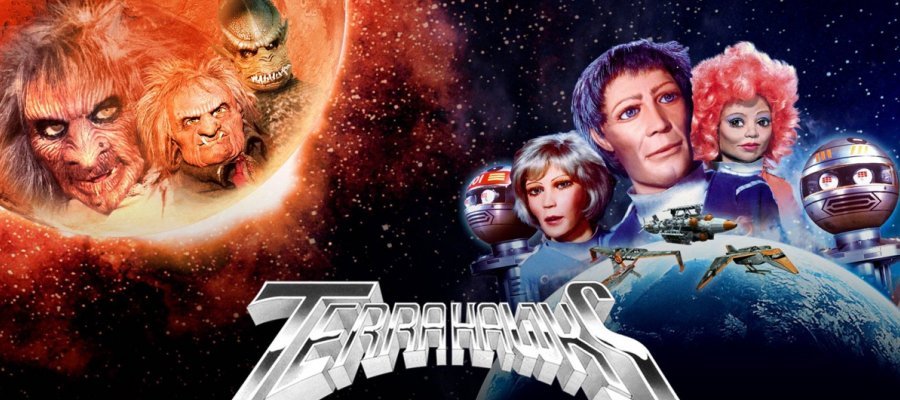
At its core, the show feels like both a return and a departure. It marked Anderson’s first puppet-based production in over a decade, harking back to classics like Thunderbirds and Captain Scarlet and the Mysterons. Yet instead of revisiting Supermarionation, Anderson introduced “Supermacromation,” a glove-puppet technique that gave the characters exaggerated expressions and a more caricatured look. The result is visually distinctive, though not always convincing—especially for viewers accustomed to the relative realism of his earlier work.
Set in the then-futuristic year 2020, the premise is classic Anderson: an elite Earth Defence Squadron battling an alien threat. Led by the eccentric Dr Ninestein, the Terrahawks operate from hidden bases and deploy an array of impressive hardware, including the Battlehawk, Terrahawk, and Hawkwing. Opposing them is Zelda, an android antagonist with a vendetta against humanity, aided by a roster of bizarre monsters like Lord Sram. The world-building is imaginative and unapologetically pulpy, leaning heavily into sci-fi spectacle.
Where Terrahawks truly excels is in its model work. The miniature effects and vehicle designs are every bit as polished as fans would expect from Anderson, with dynamic launch sequences and battle scenes that still impress. These elements carry the unmistakable DNA of his earlier successes and provide much of the show’s enduring appeal.
However, the tone is where the series becomes divisive. Unlike the relatively straight-faced heroism of Stingray or Thunderbirds, Terrahawks embraces a far more comedic and, at times, slapstick approach. This shift alienated many long-time fans, who found the series overly childish. The casting of Windsor Davies—essentially reprising his booming Sergeant Major persona from It Ain't Half Hot, Mum—only reinforced that perception, adding humour that often undercut the drama.
Despite a lukewarm initial reception in the UK, the show gradually built a solid audience, eventually drawing around 9 million viewers and earning an extended run. Yet its attempt to break into the American market faltered, with executives reportedly uncomfortable with human-like puppets in leading roles—a telling sign that Anderson’s experiment hadn’t fully translated internationally.
In retrospect, Terrahawks is an intriguing, if uneven, chapter in Anderson’s career. It blends high-quality effects and inventive sci-fi concepts with a tonal shift that didn’t resonate with all audiences. For some, it represents a bold attempt to evolve; for others, a misstep that strayed too far from what made Anderson’s earlier work iconic. Either way, it remains a unique—and often overlooked—entry in the legacy of one of television’s most influential sci-fi creators.
Seen this show? How do you rate it?
Seen this show? How do you rate it?
Share on...
Published on March 31st, 2026. Written by Laurence Marcus for Television Heaven.