
The Inside Man
1969 United KingdomSome television flops become infamous because they made it to air. Others become fascinating because they never did. Few stories illustrate that better than the curious tale of The Inquisitors, a series that was intended to launch London Weekend Television as a major force in ITV drama, only to be cancelled before viewers ever had the chance to judge it. Even more remarkably, its replacement was hurried into production so quickly that critics almost universally dismissed it as an inferior imitation.
When London Weekend Television took over the prestigious London weekend ITV franchise in 1968, expectations were high. Among its biggest dramatic ambitions was The Inquisitors, starring Tony Selby as McIver, a brilliant psychiatrist who worked alongside Alan Lake as Garcia, described as a "gipsy-like scintillating conversationalist". Together they were recruited by the Home Office to investigate prominent people whose behaviour had become irrational. Rather than conventional detectives solving murders, they were specialists in understanding disturbed minds and uncovering psychological mysteries.
It was meant to be the company's flagship drama series, but despite considerable investment and early publicity, only three episodes were ever completed.
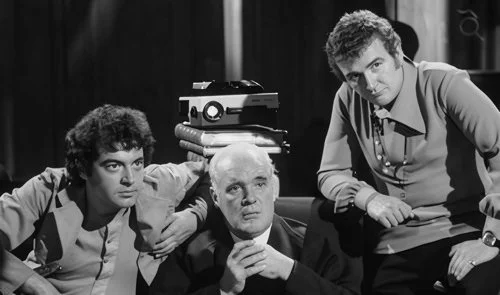
The project was produced by John Bryce, whose previous work included ABC's Redcap and the final Honor Blackman series of The Avengers. Bryce had left ATV following a disagreement, and The Inquisitors was to mark his first producing assignment since his Avengers days, making it an important production both for him and for the newly formed London Weekend Television.
Bryce described the tone of the series in an interview with the Sunday Mirror on 22 September 1968. "There's a lot of mental violence in it," he explained. "The kind that hurts more cruelly than, say, a fist in the eye." He outlined a gallery of intriguing guest characters including a politician, a mercenary, a celebrated film actress and an ageing Mata Hari-style courtesan from the 1930s.
The second completed episode, How Much Milk of Human Thingy, featured Patrick MacGee, playing a High Court judge with "an extraordinary capacity for playing God and handing out harsh sentences." It also starred Luan Peters and John Woodnutt. The third episode, Duet on a Cold Trail, starred Alfred Burke and Philip Madoc. But it was the first episode, The Peeling of Sweet Pea Lawrence, that became significant for reasons that had nothing to do with television.
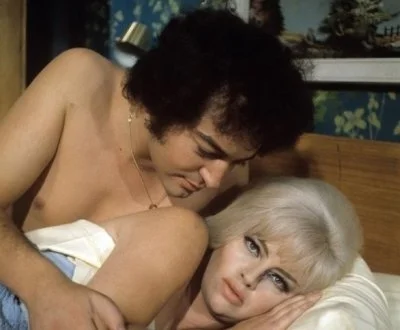
During filming, Diana Dors appeared as a nightclub stripper (Sweet Pea), while Maureen Lipman, speaking to the Hull Daily Mail on 19 November 1968, revealed she played Dors' flatmate, a fellow stripper called Magda Barcelona. More importantly, it was during rehearsals for this production, on 10 October 1968, that Diana Dors and Alan Lake first met. The pair shared a bedroom scene, became engaged just 18 days later and were soon married. Even after their wedding was reported on 25 November 1968, the series still appeared to be progressing normally, with Lake reportedly under option for a second series and The Inquisitors expected to debut in January 1969.
Then everything changed.
After receiving some advance publicity during October 1968, The Inquisitors simply disappeared from schedules. It was not until 2 January 1969 that the Daily Express revealed what had happened. London Weekend Television had quietly scrapped the £150,000 production before any of its completed episodes had reached the screen.
The explanation offered by the company was strikingly blunt. An official stated that the series "did not possess the elements to make a planned 13 episodes." That was the end of The Inquisitors. Three finished programmes were left unseen, and what had been intended as one of the network's showcase productions vanished almost without trace.
What makes the story even stranger is how quickly London Weekend Television found a substitute.
Only weeks earlier, at a press briefing on 10 December 1968, the company's Cyril Bennett had announced a new series as part of its January schedules. The Inside Man would occupy Friday evenings, effectively taking the place originally intended for The Inquisitors.
The similarities between the two productions were impossible to miss.
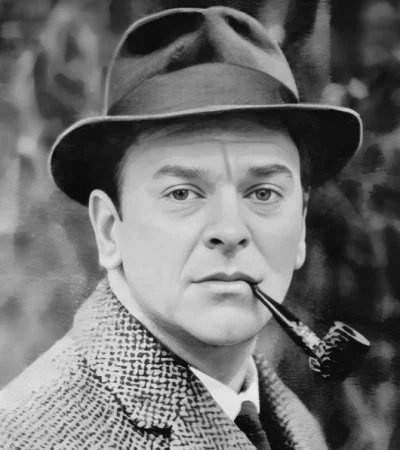
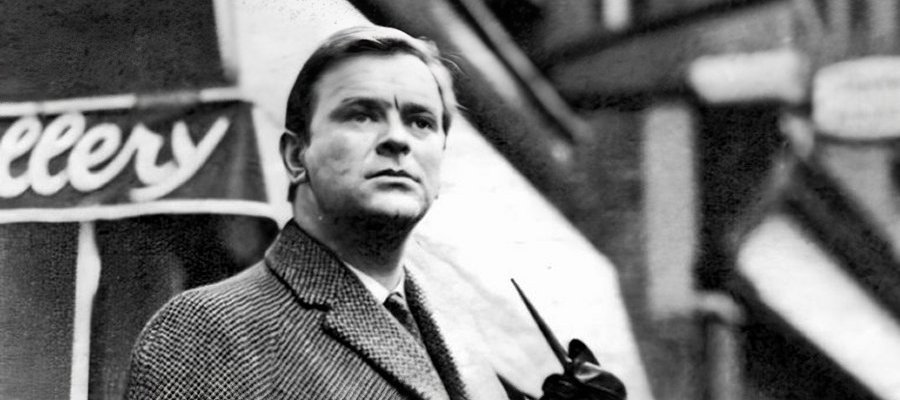
Where The Inquisitors centred on a psychiatrist investigating unusual cases, The Inside Man also featured a psychiatrist acting as a detective. Frederick Jaeger starred as Dr James Austen, both psychiatrist and criminologist, who sometimes worked for the mysterious government organisation known simply as "the Department", represented by Basil Henson's Dawnay, while at other times accepting private cases. Petra Davies played Sarah Worth, Austen's newly recruited assistant, described in the TV Times on 4 January 1969 as having been hired at short notice for "the ITV series whipped into production."
The rushed nature of the production was obvious behind the scenes as well. Derek Granger and David Cunliffe, whose most recent experience had been producing the light entertainment programme Saturday Specials, suddenly found themselves responsible for launching a psychological crime drama.
The series premiered on 11 January 1969.
If London Weekend Television had hoped audiences and critics would simply embrace the replacement, that optimism evaporated almost immediately.
Josephine Haworth, reviewing the opening episode in The Stage, found very little to admire. She argued that the programme failed to establish its leading character effectively, observing that Dr James Austen would never develop into someone viewers would feel compelled to return and watch week after week.
She felt the series occupied an awkward middle ground, neither fully committing to crime drama nor psychological thriller. The plot itself struck her as muddled, giving "the impression of being made up as they went along." Although she praised Fulton Mackay's performance as a disturbed patient searching for the RAF pilot responsible for his family's death, she criticised much of the surrounding drama. Moments of tension repeatedly dissolved into anticlimax, while the final act relied on helicopters, police gunfire and unnecessary action rather than genuine suspense.
Most damagingly, Haworth concluded that Dr Austen himself lacked any meaningful personality. He was competent, compassionate and invariably correct, but never interesting. Frederick Jaeger, she felt, had performed well within the limitations of the material, expressing hope that stronger scripts might eventually appear.
Unfortunately, they never really did.
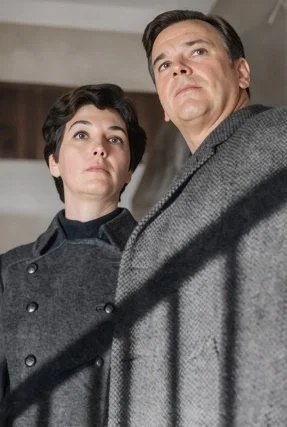
Writing in the Daily Mirror on 8 February 1969, Mary Malone was even more scathing. For her, the central problem was that the supposedly powerful establishment figures populating the stories seemed entirely lifeless. Cabinet ministers, intelligence chiefs and senior officials were, in her memorable phrase, still "inside the boxes in which they were manufactured." They came across as stiff, overstuffed stereotypes whose conversations over brandy and port drained every ounce of excitement from stories that should have been packed with intrigue.
Malone mocked the notion that every crisis automatically resulted in the cry of "Send for the doctor," before delivering perhaps the sharpest verdict of all. "What The Inside Man needs is an outside man. For a start, on the script."
Other reviewers were scarcely kinder. Bill Smith, writing in the Wolverhampton Express, dismissed the programme as "a pale copy of the more polished and more credible series The Human Jungle."
Looking back, it is impossible not to wonder what might have happened had London Weekend Television shown more faith in its original production. Whether The Inquisitors would have succeeded is impossible to know because audiences were never given the opportunity to find out. Many critics felt they were watching an underdeveloped imitation of the very concept it had replaced.
In the end, The Inquisitors entered television history as a series cancelled before transmission, remembered largely through newspaper reports, production stills and the remarkable fact that it introduced Diana Dors to Alan Lake. Its replacement, The Inside Man, did make it onto screens, but not into the hearts of the audience or the critics, who regarded it as a confused, rushed and a dramatically underwhelming attempt to fill a hole that perhaps should never have existed in the first place.
Seen this show? How do you rate it?
Seen this show? How do you rate it?
Share on...
Published on July 23rd, 2026. Written by Laurence Marcus for Television Heaven.