

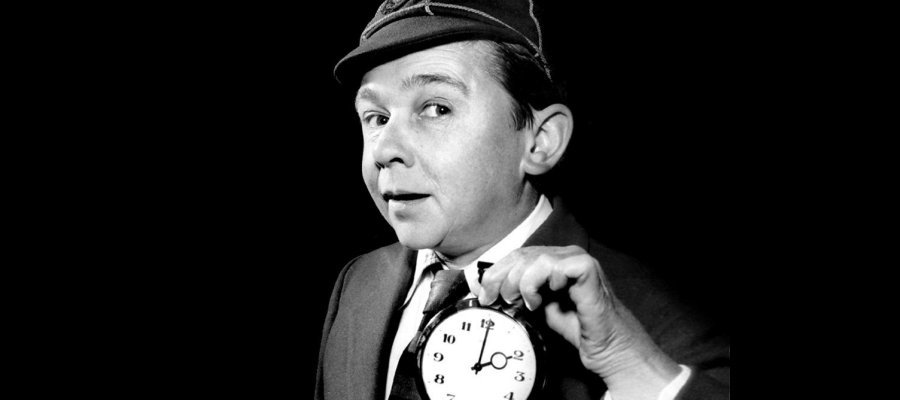
Jimmy Clitheroe
Jimmy Clitheroe was one of those rare entertainers who seemed to belong everywhere at once. Whether it was variety theatre, film, radio or television, he managed to leave his mark, building a career that stretched from the late 1930s right through to the early 1970s. For many people, though, he remains best remembered not for how he looked, but for how he sounded—the unmistakable cheeky schoolboy voice that became his trademark.
He was born James Robinson Clitheroe on Christmas Eve 1921, in the Lancashire town that gave him his surname. His parents were weavers, and his early life was rooted firmly in the rhythms of mill village life in Blacko, near Nelson. Growing up in a row of terraced houses beneath Blacko Tower, his upbringing was modest and typical of the time. Education, back then, only went as far as the age of 14, and after attending local schools, that’s exactly when his formal schooling ended.
By that point, though, it was already clear that Jimmy wasn’t destined for the same path as his parents. At 16, he stood just 3 feet 7 inches tall, eventually reaching only 4 feet 2 inches as an adult. His small stature, caused by a rare genetic condition, meant he couldn’t work in the weaving sheds—he simply couldn’t reach the looms. Instead, he found work in a bakery, but more importantly, he began edging into show business.
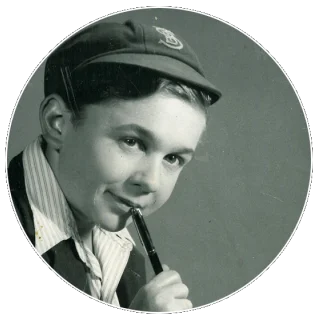
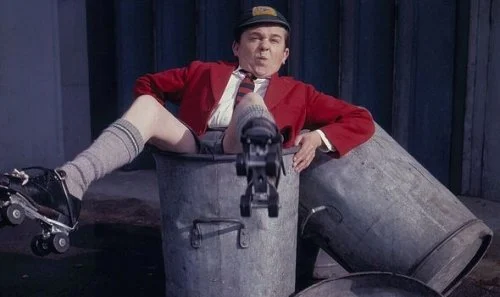
Even as a teenager, he was touring variety theatres across Yorkshire and Lancashire, performing as an accordionist and playing the xylophone and saxophone. By 14, he had joined a professional juvenile troupe and taken on the stage name “Little Jimmie.” It didn’t take long for audiences to notice him. His size, perpetually dressed in short trousers, and a high flutey voice allowed him to convincingly play a child well into adulthood, and that became the foundation of his entire career.
His first pantomime appearance came in 1938 alongside Tessie O'Shea, and from there he built a strong reputation on the variety circuit. Blackpool, in particular, became something of a second home, where he set records for appearances in summer season shows. He shared stages with some of the biggest names of the era, holding his own among seasoned performers and proving he was far more than just a novelty act.
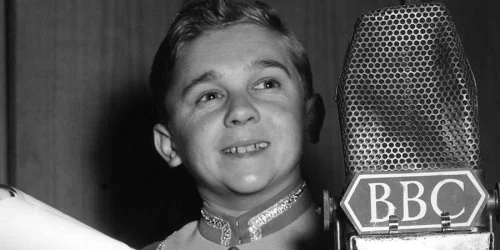
Film work followed in the 1940s, although initially in small or uncredited roles. It wasn’t until the 1950s that things really began to shift for him, when he moved into radio. That transition turned out to be the making of him. After early appearances on the BBC Home Service, in comedian Jimmy James’s show The Mayor’s Parlour, he quickly found himself fronting his own programme and then came the role that would define his legacy.
The Clitheroe Kid debuted in the mid-1950s and went on to run for 16 years, becoming the BBC’s longest-running radio sitcom. At its height, it drew audiences of up to ten million listeners. The premise was simple but endlessly effective: Jimmy as the mischievous schoolboy, constantly misunderstanding situations, eavesdropping on conversations, and getting himself into trouble while trying—usually unsuccessfully—to do the right thing.
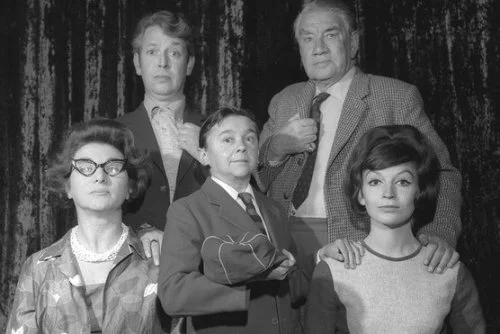
In the pilot series, actors who appeared in guest roles included Violet Carson and Jack Howarth (later better known respectively as Ena Sharples and Albert Tatlock in Coronation Street), and Bob Monkhouse. The lost 1956 pilot episode guest starred Irene Handl. The show was recorded in front of a live studio audience, and it regularly sparked bursts of laughter—whether from Clitheroe’s cheeky schoolboy humour or from Alfie Hall hopelessly tangling the English language as he attempted to explain things, usually only making them more confusing. The humour was warm, character-driven, and full of the kind of confusion and wordplay that radio does so well.
Despite his success on radio, television never quite managed to capture the same magic. In 1957 he starred in a short-lived sitcom titled Call Boy a BBC music-hall based show that ran monthly in which he played the titular role, but it was to be his last TV series until 1963 when he teamed up with Deryck Guyler for the seven-episode series That’s My Boy, though it was only shown in the Midlands and the North rather than across the full ITV network. The following year he began a five-season run in Just Jimmy, an ABC series built around a domestic version of his radio persona, with Clitheroe once again cast as the mischievous Lancashire schoolboy and Mollie Sugden playing his mother. Like his earlier television work, it suffered from limited regional broadcasting, and London audiences didn’t get to see it until after it had finished in 1968, when just 23 of the 52 episodes were finally screened. Although Thames Television later considered reviving the show, plans for a new series never came to fruition. Even so, he remained a familiar and much-loved figure in British entertainment, particularly on the pantomime stage, where he regularly played Wishee Washee in Aladdin, delighting audiences year after year.
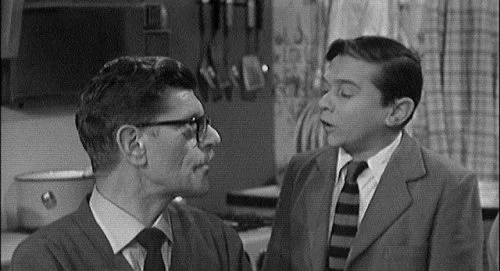
What made Jimmy Clitheroe particularly fascinating was how completely he committed to the illusion of his on-stage persona. He rarely revealed his true age, continued to dress in schoolboy clothes even for radio recordings, and carefully maintained the idea that he really was the eternal child audiences believed him to be. Offstage, he lived quietly, staying with his mother for much of his life and avoiding anything that might break that illusion.
His life, however, came to a sudden and tragic end. He died on 6 June 1973, at the age of 51, after an accidental overdose of sleeping pills combined with alcohol, on the very day of his mother’s funeral. Relatives found him unconscious in bed, and he later passed away in hospital in Blackpool. His mother had died just five days earlier at the age of 84. It was a sad and abrupt close to a career that had brought laughter to millions.
Even though his television work never quite matched his radio success, Jimmy Clitheroe’s impact is undeniable. At a time when entertainment was rapidly evolving, he managed to adapt and thrive across multiple formats. More importantly, he created a character that people genuinely loved—one that felt familiar, mischievous, and timeless. For many, the sound of that unmistakable voice is still enough to bring a smile, a reminder of a performer who turned a unique set of circumstances into a truly remarkable career.
Share on...
Published on April 1st, 2026. Written by Laurence Marcus for Television Heaven.