

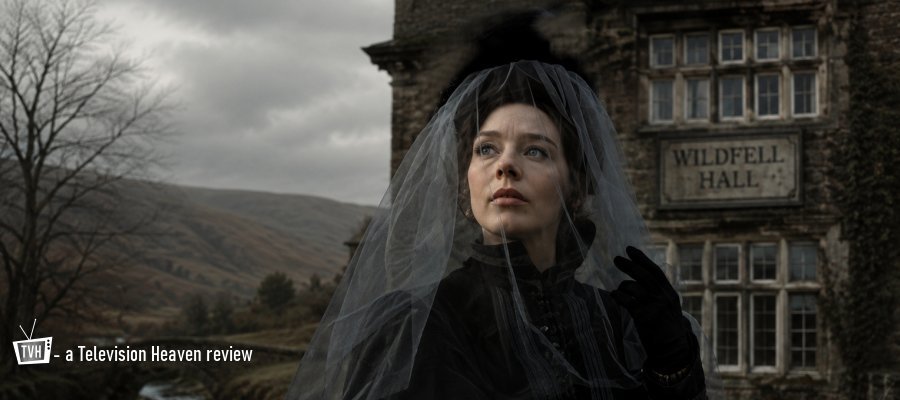
The Tenant of Wildfell Hall
1968 United KingdomAmong the Brontë sisters, Anne has often occupied the shadows cast by her more famous siblings, Charlotte and Emily. Yet The Tenant of Wildfell Hall, published in 1848 under the pseudonym Acton Bell, remains one of the most daring and forward-looking novels of the Victorian era. Its themes of domestic abuse, alcoholism, female independence, and marital oppression were so controversial that after Anne's death, Charlotte Brontë prevented its republication in England until 1854. Today, however, the novel is widely regarded as one of the first feminist works in English literature.
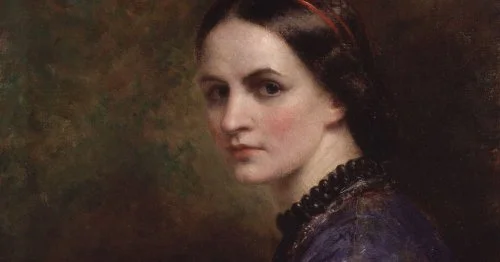
The BBC's 1968 adaptation, dramatised by the celebrated playwright Christopher Fry, was the first television version of Anne Brontë's novel. It sought not merely to recreate a Victorian melodrama but also to restore a neglected literary achievement to public attention. Fry himself was a passionate advocate of the book, arguing that it had been "wrongly neglected and underrated" compared with the works of Anne's sisters. He recognised in it not only emotional intensity but also humour and psychological insight.
Set against the bleak, windswept Yorkshire moors familiar from Jane Eyre and Wuthering Heights, the story follows the mysterious Helen Graham, a young widow who arrives at the isolated Wildfell Hall with her son and a servant. Her determination to earn a living through painting, her refusal to conform to local expectations, and her fiercely guarded privacy provoke suspicion and gossip among the villagers. Through the framing device of Gilbert Markham's letters, the audience gradually discovers that Helen has escaped an abusive marriage to the charming but destructive Arthur Huntingdon. In doing so, she has violated not only social convention but also the legal norms of early nineteenth-century England, which afforded wives few rights over their children or property.
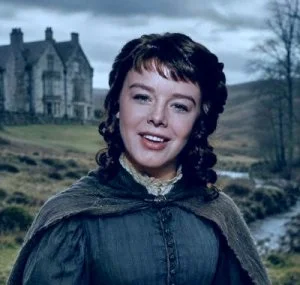
Janet Munro's casting as Helen proved to be one of the production's greatest strengths. Returning to a major role after several years away from acting to raise her family, Munro approached Helen with obvious admiration. She described the character as "unbelievably brave" for refusing to accept her circumstances passively. That admiration is reflected in a performance of remarkable conviction. Helen is a difficult character to portray: reserved yet passionate, morally rigid yet deeply compassionate, and often frustratingly secretive. Munro succeeds in making these contradictions compelling rather than alienating.
Contemporary critics were largely impressed by her work. The Guardian called her performance "a revelation," noting that she had evolved far beyond the ingénue roles of her earlier career into an actress with genuine depth and authority. Looking back, the praise seems entirely justified. Munro gives Helen a quiet determination that anchors the drama and makes the character's suffering and resilience profoundly affecting.
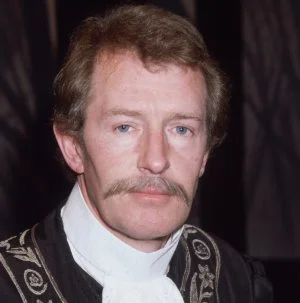
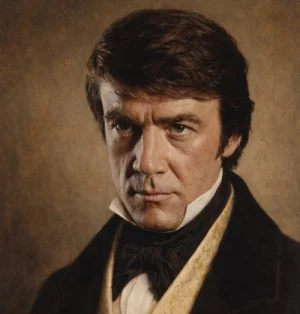
The supporting cast is equally strong. Corin Redgrave brings charisma and menace to Arthur Huntingdon, the handsome libertine whose descent into alcoholism and moral corruption drives much of the narrative. The character bears notable similarities to Anne Brontë's brother Branwell, whose good looks, reckless behaviour, and alcoholism may have inspired the portrait. Bryan Marshall makes an appealing Gilbert Markham, while William Gaunt contributes a suitably enigmatic presence as Lawrence.
The production itself received considerable praise for its visual qualities. The Scotsman admired the serial's atmosphere, observing that it possessed an almost Wuthering Heights-like quality. The contrast between the petty gossip of village life and Helen's guarded mystery was effectively realised, while the costumes and settings were singled out as particularly impressive. The newspaper did, however, wonder whether the Yorkshire accents occasionally sounded a little forced.
Similarly, the Daily Mirror praised the authenticity of the cast's appearance, remarking that the actors looked so comfortable in their period costumes that television seemed capable of transporting performers effortlessly into another century. Marshall, in particular, was highlighted as looking perfectly suited to the role of a Brontë hero.
Not every critic was entirely convinced. Writing in The People, one reviewer acknowledged that the story provided excellent material for the sort of melodramatic serial at which the BBC excelled, but pointed to the challenges posed by Anne Brontë's Victorian language and Helen's intensely moral outlook. The review quoted passages of Helen's earnest reflections on Huntingdon and her loneliness at Wildfell Hall, suggesting that modern audiences might find such sentiments unfashionably pious or overly literary. Yet this criticism arguably highlights one of the adaptation's greatest achievements: rather than modernising the material beyond recognition, it remained faithful to the novel's language and moral seriousness.
Indeed, what makes The Tenant of Wildfell Hall distinctive is precisely its refusal to romanticise destructive behaviour. Unlike many Victorian heroines, Helen does not redeem her husband through love. Instead, she recognises the danger he poses to both herself and her son and chooses independence. Such a decision was revolutionary in 1848 and remains strikingly modern today. Anne Brontë's psychological realism and moral courage feel far ahead of their time.
The 1968 adaptation deserves credit for recognising these qualities long before Anne Brontë's critical reputation was fully rehabilitated. Although the serial itself is now incomplete, with its first episode, "Recluse," missing from the BBC archives, the surviving episodes demonstrate an intelligent and respectful adaptation of a remarkable novel.
A second BBC adaptation followed in 1996, starring Tara Fitzgerald, Rupert Graves, and Toby Stephens. Despite hopes that it would replicate the enormous success of Pride and Prejudice (1995), it achieved more modest results, though it earned recognition for its costume and production design. Nevertheless, both adaptations reflect the growing appreciation of Anne Brontë's achievement.
Viewed today, the 1968 Tenant of Wildfell Hall stands as both an engrossing period drama and an important act of literary rediscovery. Anchored by Janet Munro's powerful performance, enriched by Christopher Fry's thoughtful adaptation, and faithful to the radical spirit of Anne Brontë's novel, it remains a compelling reminder that the youngest Brontë sister was every bit as bold and perceptive a writer as her more celebrated siblings.
Seen this show? How do you rate it?
Seen this show? How do you rate it?
Share on...
Published on June 10th, 2026. Written by Laurence Marcus for Television Heaven.