

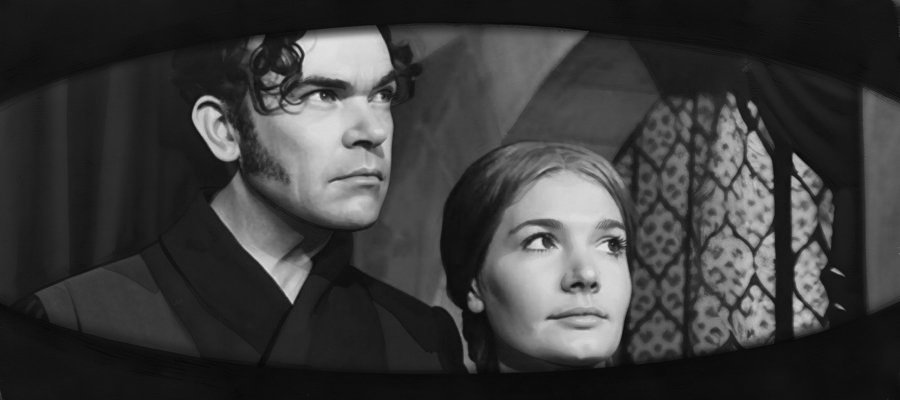
Jane Eyre
1963 United KingdomReview: John Winterson Richards
Charlotte Bronte's 1847 novel Jane Eyre is both the epitome of women's romantic fiction and a clever subversion of the whole genre. It is the classic love story in which the virtues of the protagonist enable them to win their desired love object. In this case, since the protagonist is female, her prize is the dominant male. It is all very primal, but with more than a hint of "Cinderella" about it. Yet at the same time it has been called the first great feminist novel because the plot involves a definite shift in power and agency from man to woman. The eponymous Jane does not merely win the affections of the uncontrollable, hypermasculine Byronic alpha, a wild horse of a man - she tames him.
Much of the novel is based on Charlotte's own life (see our review of The Brontes of Howarth), including the abusive school, early experience of death, a naive young woman falling hopelessly in love with her somewhat exploitative married employer, and the clerical household so poor that the sisters are forced to go away to work as governesses, which they hate. There are also strong elements of the then very popular "Gothic" horror genre and the bildungsroman or coming of age story. There is a definite "hero's journey" to it all but it is the woman's journey not the man's. All ends happily with that great 19th Century cliche, the unexpected inheritance from a childless distant relative.
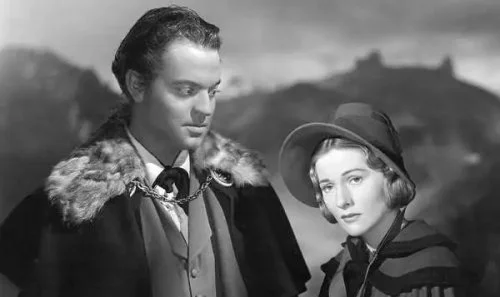
The morally upright character of Jane satisfied the Victorian conscience at the same time as the slightly risqué plot offered a degree of titillation, a powerful combination anywhere but especially in such a straitlaced culture. The novel was an instant success when it was first published and has been adapted many times since, most famously in the cinema with Orson Welles as Jane's romantic interest, Mr Rochester. Hollywood being Hollywood, it is not a faithful adaptation of the novel, and misses its point in several respects, but, Welles being Welles, his is the Rochester by which all others are now judged rather than the one in the book.
This is a review of the brisk 6-part BBC series written by prolific adaptor Constance Cox aired in early 1963.
It is most notable for its distinctive visual style. The director, Rex Tucker, was by that point an experienced "Jack of All Trades" for the BBC, having built up a strong curriculum vitae as a producer and a writer as well as director. His most significant previous work as a producer was the now tragically lost The Cabin in the Clearing and he brought the same mastery of atmosphere for which that series was acclaimed to Jane Eyre. Given the skills on display here, it is surprising he did not go on to much greater things. He is probably best remembered today, at least by those of us who take a slightly obsessive interest in such matters, for his role in the early development of Doctor Who. It has been claimed that he might have been the one who gave the project its name even if Tucker himself said otherwise. However, he seems to have lost a power struggle and was rather written out of the accepted Verity Lambert narrative. Thereafter his career seems to have stalled, apparently another victim of the BBC's Byzantine internal politics.
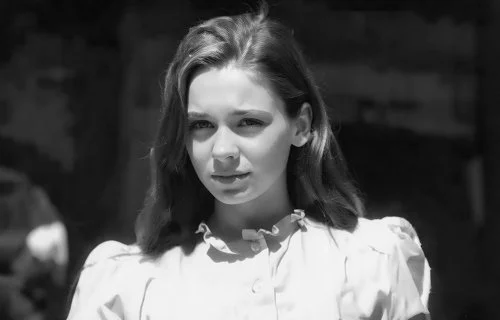
There is no denying that he does a magnificent job with Jane Eyre. He grabs the viewer with a disconcerting angle in the opening seconds and takes only a couple more minutes to sketch a convincing portrait of a young girl traumatised by being locked in the room where a beloved relative died. Nothing horrific is seen, only suggested. The scenes at the school convey an air of oppressive menace combined with resigned depression - reminiscent of many a formal education - again in only a few minutes. The scene set in a cheerful house on a stormswept moor (this is after all a Bronte novel) is brilliantly evocative in spite of the obviously limited budget.
His production experience evidently taught Tucker how to spend that budget to maximum effect. He deploys a large number of extras in early scenes so that one barely notices how few appear later. He makes clever use of models, crude by today's standards but ground-breaking at the time. He is allowed a little location filming and uses it well in a few beautiful shots of Rochester galloping furiously, making a definite statement about his character - the horse visibly emblematic of the man - without saying a word.
Above all he makes a virtue of a necessity: it being 1963, everything was filmed in black and white, but he uses this to his advantage, accentuating the Gothic element. There are hints of German expressionism in his expert use of lighting. Yet at the same time he does not indulge in long sequences that invite the viewer to "feel the atmosphere." Everything moves at a fast pace - again making a virtue of a necessity because each of the six episodes is less than 25 minutes.
That is enough to hit most of the principal emotional beats of the book, even if some important side plots have had to be cut and some relationships are oversimplified.
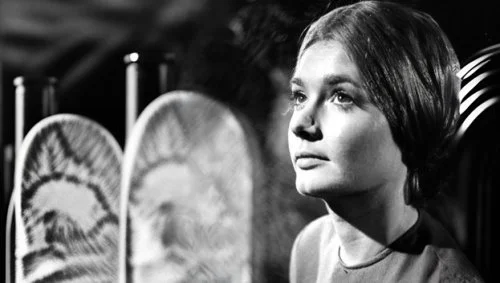
Ann Bell looks the part as Jane. She is plain not in the sense that she is in any way ugly but in that she seems rather ordinary at first. To make her obviously beautiful would miss the point as the Welles film did. It is only when one looks more closely that one realises she has very strong, attractive features. The superb half-lit close-up of her face over the opening titles and end credits emphasises that it is only when the light finally shines on Jane that we really see her.
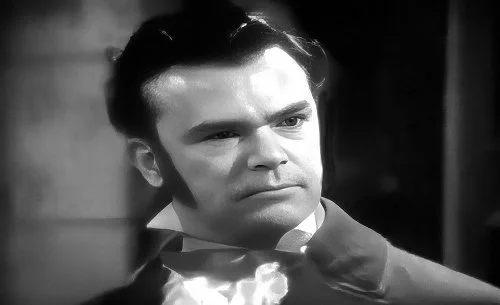
Richard Leech plays a very clever variation on Rochester. His blustering, assertive, masterful manner hides an emotional neediness that becomes apparent at an early stage. While Charlotte herself might not have approved, it makes the character seem far more credible.
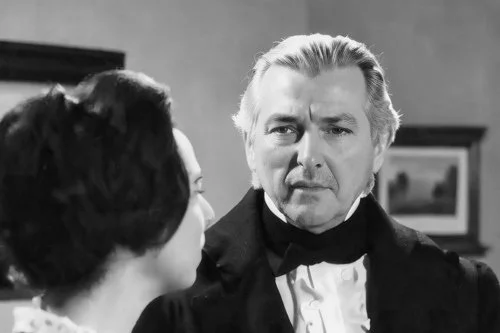
Mark Dignam is so good as the odious Brocklehurst that it is positively disappointing that he does not come to a horrible end, ideally Jane shooting him and following it up with a 1980s action film quip - your reviewer is a child of his generation. At the other end of the story, William Russell (The Adventures of Sir Lancelot) turns St John Rivers into more of a manipulative bully than Charlotte intended. Again she is unlikely to have approved: while one can appreciate the neat symmetry of two negative portrayals of clergymen bookending Jane's struggles, and her rejection of Rivers can be viewed as a rejection of Brocklehurst's enduring psychological influence on her life, it is unlikely that Charlotte, the daughter of a clergyman, whom she loved dearly, wanted to imply anything more than a conflict between love and duty on Jane's part.
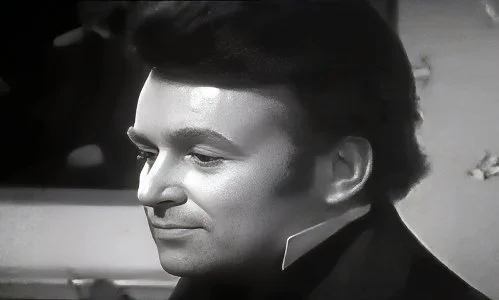
Rachel Clay is impressive as the young Jane and it is a pity that, for whatever reason, she did not continue a promising acting career. Kika Markham makes her mark in a brief role as Jane's saintly childhood friend, as does Jane Merrow as her genuinely beautiful later friend. Arthur Hewlett turns up as a Vicar, as tended to be his lot in life, while William Devlin exudes authority as a Solicitor - that he seems authentic as a lawyer is only to be expected given that his elder brother, the great legal philosopher Patrick Devlin, was a Lord of Appeal in Ordinary at the time.
Apart from some attitudes creeping into the script and the characterisation that have more to do with the 1960s than the 1840s, it is an efficient, well produced adaptation that stands the test of time surprisingly well in spite, or perhaps because, of its technological limitations.
Seen this show? How do you rate it?
Seen this show? How do you rate it?
Share on...
Published on June 7th, 2026. Written by John Winterson Richards for Television Heaven.