

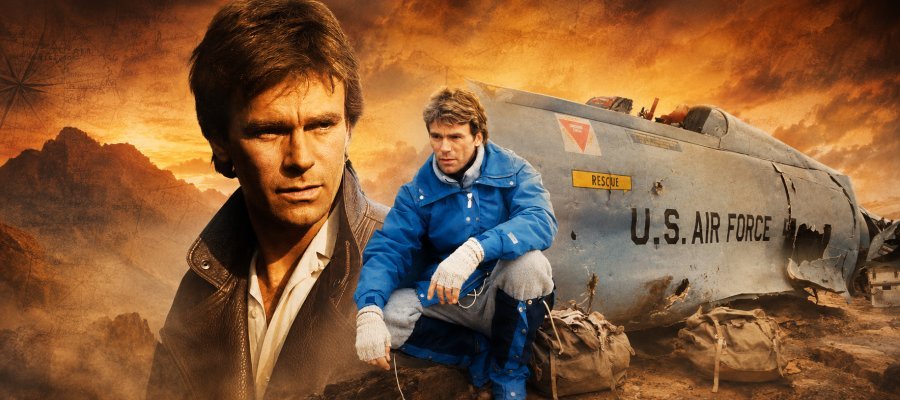
MacGyver
1985 United StatesFew TV shows from the 1980s managed to carve out a legacy quite like MacGyver. On the surface, it looked like another action-adventure series, but what made it stand out was how refreshingly different its hero was. Instead of relying on brute force or endless gunfights, Angus MacGyver relied on intelligence, creativity, and whatever random objects happened to be lying around. Watching him turn a paperclip, duct tape, and a Swiss Army knife into a life-saving invention never really got old.
Created by Lee David Zlotoff and produced by Henry Winkler alongside John Rich, the show ran from 1985 to 1992 and became a genuine cultural phenomenon. It wasn’t just successful in the United States — it built a loyal international fanbase too, and it’s easy to see why. The formula was simple but incredibly effective: throw MacGyver into an impossible situation and let viewers watch him think his way out of it.
A huge part of the show’s charm came from Richard Dean Anderson. Anderson brought a laid-back charisma to the role that made MacGyver instantly likable. He played the character as someone calm under pressure, deeply compassionate, and almost stubbornly committed to non-violence. His refusal to use firearms, rooted in a childhood tragedy, gave the series a moral centre that separated it from many action shows of the era.
What’s especially impressive is how grounded the science often felt. The writers reportedly worked with consulting scientists to make MacGyver’s improvised solutions believable, even if the show occasionally kept dangerous details vague for obvious reasons. That attention to realism gave the series educational value without ever feeling preachy. For a lot of viewers, the show quietly sparked an interest in engineering, physics, and problem-solving.
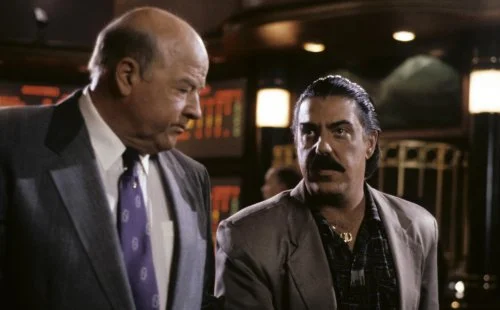
The supporting cast added a lot of personality as well. Dana Elcar was excellent as Pete Thornton, MacGyver’s boss and trusted friend, bringing warmth and humour to the role. Meanwhile, Bruce McGill stole scenes as Jack Dalton, the lovable disaster magnet whose get-rich-quick schemes usually created chaos that only MacGyver could fix. Their chemistry helped balance the tension with plenty of lighter moments.
Another thing the show did well was to evolve over time. Early seasons focused more heavily on espionage and adventure missions, while later years leaned further into social issues and humanitarian themes. Even with those changes, the series maintained its core identity: clever storytelling driven by brains instead of bullets.
Behind the scenes, Anderson’s commitment also added authenticity. He performed many of his own stunts during the early years, though injuries eventually forced him to scale that back. That dedication helped make the action feel more believable and grounded.

Perhaps the clearest sign of the show’s cultural impact is that “MacGyver” actually became a verb in everyday language. If someone can fix a problem using random household items and pure ingenuity, people still say they “MacGyvered” it. Very few television characters leave that kind of mark on popular culture.
The franchise expanded with TV movies like MacGyver: Lost Treasure of Atlantis and MacGyver: Trail to Doomsday, along with games, books, and other merchandise. A reboot arrived in 2016 starring Lucas Till. While the newer version found enough of an audience to last five seasons, many fans felt it lacked the original series’ simple charm and inventive spirit.
Looking back, MacGyver remains one of those rare shows that was both entertaining and genuinely inspiring. It proved that intelligence could be just as exciting as violence, and that creativity could be a superpower. Decades later, the image of MacGyver building a miracle device out of junk in the middle of a crisis is still iconic — and honestly, television could use more heroes like him.
Seen this show? How do you rate it?
Seen this show? How do you rate it?
Share on...
Published on May 11th, 2026. Written by Laurence Marcus for Television Heaven.